
A neutron computing experiment uses energy levels shaped by Earth’s gravity
A project report says researchers set up the experiment in Grenoble and controlled states of ultracold neutrons. It does not report a working general-purpose computer.
Reading tools for text size, copying, printing and your reading list
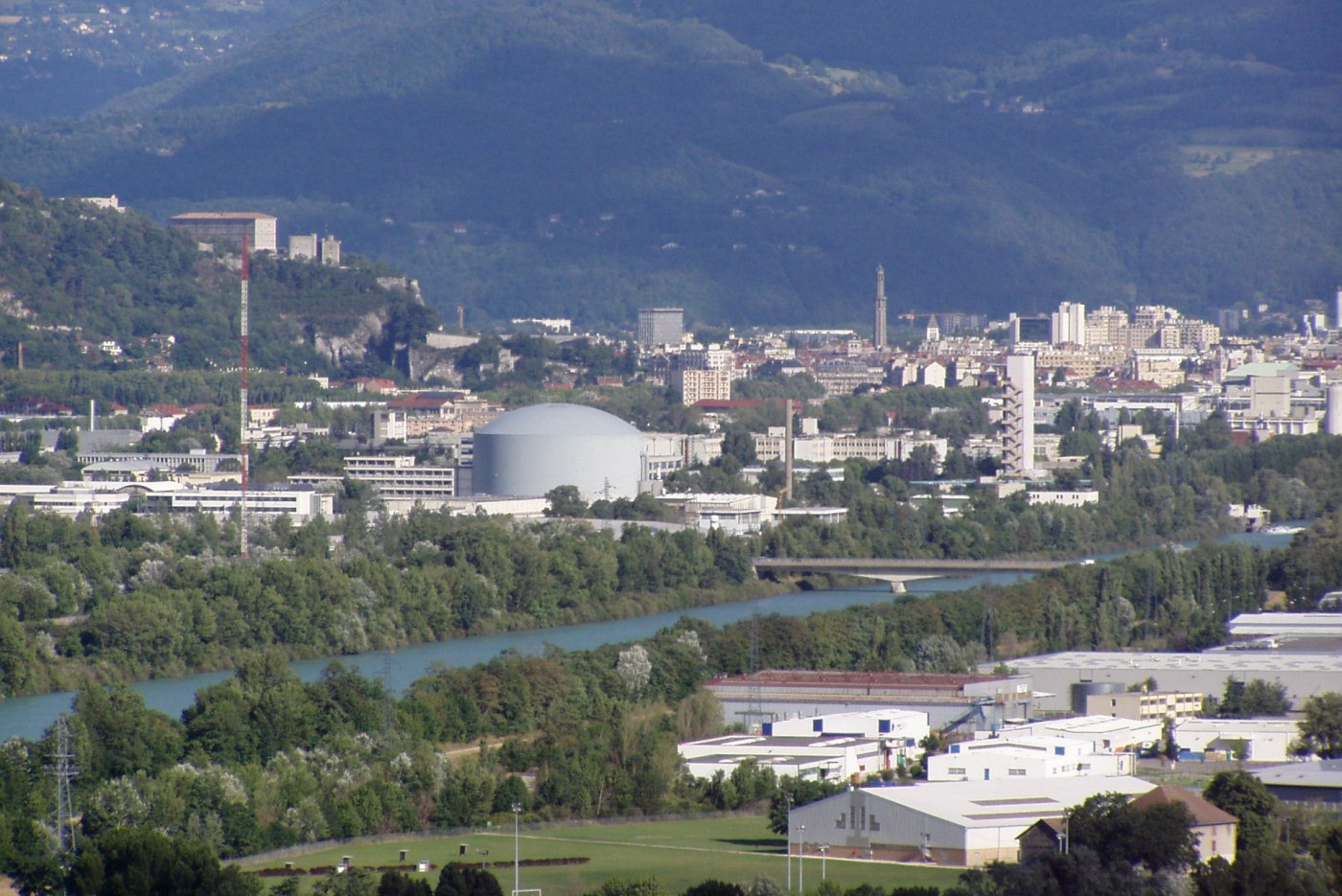
A neutron just above a horizontal mirror cannot have any energy it likes. The mirror keeps it from falling farther, and Earth’s gravity pulls it down. At very low energies, the result is a ladder of distinct quantum states. An Austrian-led project has set up an experiment at the Institut Laue-Langevin in Grenoble, France, to see whether scientists can use those states to hold and manipulate quantum information. A summary in Austria’s research funding database reports progress in controlling them.[1][2]
One particle, more than two levels
Researchers observed gravitational quantum states of neutrons more than two decades ago. The new project does not claim to have discovered the states. It asks whether they can be prepared, deliberately changed and read out in a useful sequence. A uses two levels; this proposal uses a neutron’s ladder to work with more than two. That makes it possible to ask how much information a single particle can handle without assuming that more levels automatically make a computer easier to scale.[1][2][3]
The project summary reports coherent control of gravitational neutron states. In practical terms, that means changing the states while preserving the relationships that let different quantum possibilities interfere. The longer version of the summary also reports within a 16-level system after a sequence of operations and an analysis of those states. Sixteen is the number of available levels in that example, not a count of neutrons or qubits. The public summary does not include the measurements or error estimates needed to assess that result independently.[1]
What the Grenoble setup still has to prove
The report distinguishes the prototype in Grenoble from a separate cryogenic system that was designed and for which major parts were obtained. It also describes studies of magnetic-field control with researchers in Heidelberg. Those are steps toward operating a new kind of processor, not evidence that it already runs a useful algorithm. The team lists more advanced operations on multiple levels as future work.[1]
The next important result would be a detailed account of which levels the team can prepare and distinguish, how accurately it can move between them, and how well a sequence works when several operations are put together. The project would also need to show how the setup could work beyond the limited facilities that provide ultracold neutrons. For now, the report puts an experimental setup behind an unusual idea: use the energy levels produced by ordinary gravity as places to store and manipulate information.[1][2]