
One qubit connects two microwave paths in a quantum routing test
A cryogenic experiment examines a small junction for quantum hardware. Its response to temperature, tuning and signal strength is the useful story.
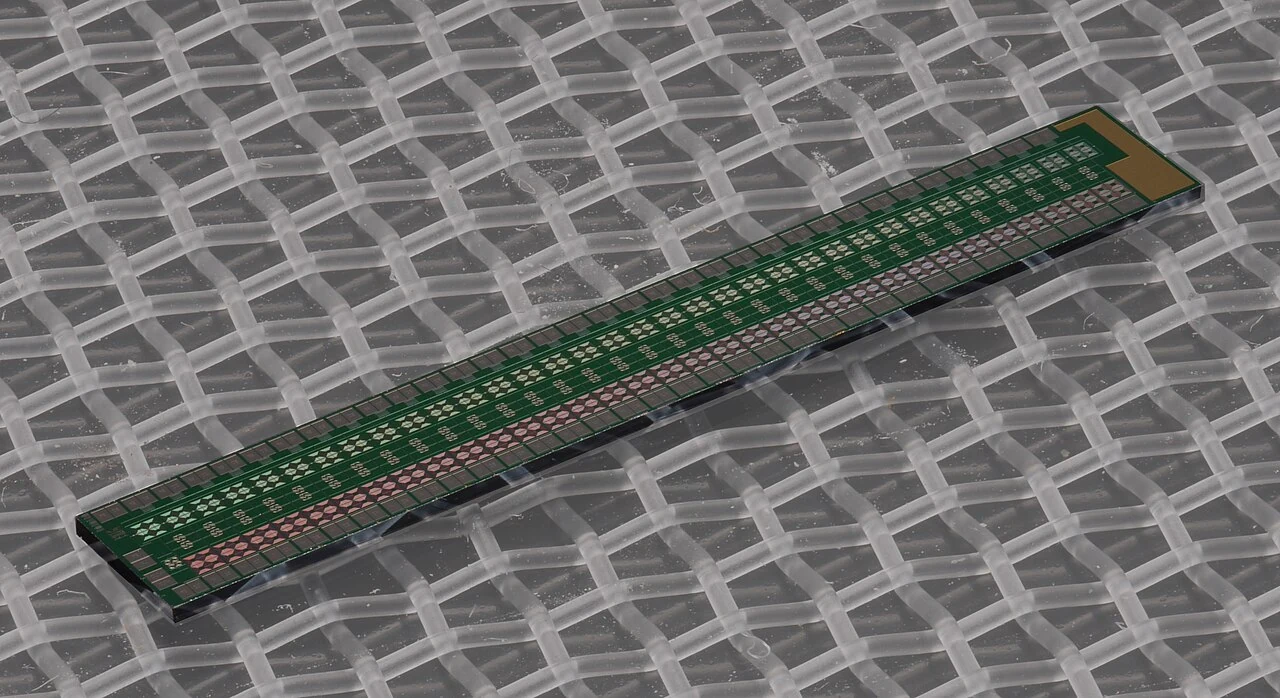

A single can connect two separate microwave paths. Researchers at the Leibniz Institute of Photonic Technology have characterized that junction in a paper published by npj Quantum Information on October 29. The device joins two waveguides through one transmon, a type of superconducting qubit, and tests how signals pass between them.[1]
The operating conditions are part of the result: a temperature of 10 millikelvin, a frequency near 6 gigahertz and an average input signal of about one photon. The work first appeared as a preprint on November 21, 2025. The journal currently presents an early peer-reviewed accepted version that remains subject to final edits.[1][2]
The connection is part of the experiment
Picture two paths, each with an entrance and an exit, connected by an adjustable junction. A signal enters one path. The first question is whether the expected response appears on the other. Then come harder questions: how much response, under which settings, and how reliably? A drawing of the connection cannot supply those answers.
The authors examine the junction through steady-state and time-domain measurements, then vary magnetic bias, temperature and photon number. Their characterization separates properties of the component from contributions of the measurement chain. The published abstract describes low-photon operation, which is more careful than assuming every incoming pulse contains exactly one photon.[1][2]
That distinction is easy to miss in a headline. An average of one item does not require every observation to contain exactly one. A low-power measurement and a test using a deterministic single-photon input therefore ask different questions. Readers should keep the input description beside the result whenever they compare this device with another.

Why changing the settings matters
A junction also deserves more than one favorable photograph or operating point. Imagine evaluating a road crossing only when traffic arrives from one direction at one speed. The attractive example might be real while revealing little about other conditions. For hardware, the equivalent editorial question is what changes when the same component is retuned or its environment changes.
A useful comparison would hold the input, temperature and measurement method steady. How much signal reaches the intended output? What additional noise appears? Does the result repeat after the apparatus is reset? These are proposed comparison questions. They are not extra performance claims made by this paper, and each would require its own reported measurement.
The next scale is a second junction. Connecting components introduces another opportunity for losses, mismatches and unwanted interactions. A strong result from one element does not specify how an entire arrangement behaves. Testing the combined assembly would make the evidence more useful by exposing which properties survive when the pieces have to work together.
A component milestone with a clear next test
Microwave signals belong to the electromagnetic family, but the operating environment here is cryogenic. The reported experiment should not become an illustration of visible light crossing a city or a finished quantum internet. A diagram can show the two paths and four ports without assigning invented travel speeds, transfer probabilities or network capacity.
The value of this work is the detail it adds to a small, physically defined connection. For future coverage, the strongest new evidence would show repeatable behavior in a larger assembly under stated conditions. Quantum hardware needs such connections as well as qubits, and learning where a junction works helps identify what the next engineering experiment must solve.