
Standard Chartered expands its quantum trials. Here’s what the numbers show.
The bank tested AI fine-tuning, forecasting and derivatives pricing. Its results point to where it will keep looking, not to a faster trading desk.
Reading tools for text size, copying, printing and your reading list
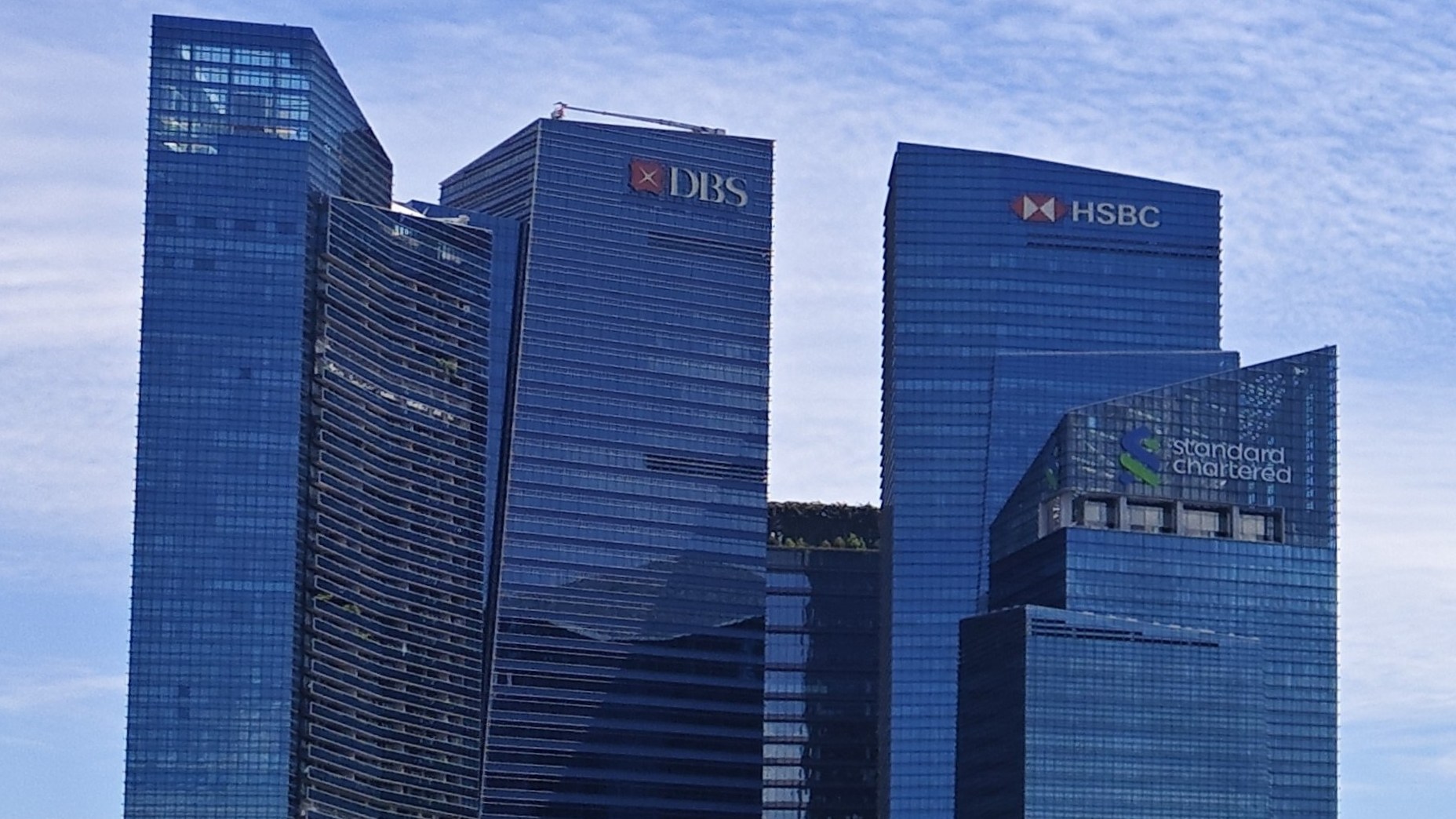
Standard Chartered said on November 25 that it is expanding its quantum computing research after a first year of work supported by Singapore’s central bank. The studies covered three very different jobs: adapting AI models for specialist tasks, forecasting from time-ordered data and pricing derivatives. The bank named Oxford Quantum Circuits, Quantinuum, Rigetti and Qubitra as collaborators and said the next phase would continue testing where quantum methods could help. It did not announce that any of the three methods was going into production.[1][2]
The most eye-catching number in the bank’s announcement appears twice: 18. But it measures two different things. Counting how many settings an AI team needs to adjust is not the same as counting how many times a pricing algorithm repeats a calculation. Neither number on its own tells a bank how long the job took or what it cost.[1]
Less to train isn’t the same as less to run
In the AI work, Standard Chartered explored small add-on components for adapting an existing language model to a specialist task, such as credit risk assessment. The bank said the quantum-inspired approach used about one-eighteenth as many trainable settings as conventional methods described in the research literature. That figure covers what was adjusted during fine-tuning, not the size of the underlying language model or the cost of serving it to users. The bank reported separately that a hybrid forecasting model performed better in its test scenarios with 28% fewer parameters. That is not a claim about predicting live markets.[1]
In the derivatives study, the bank said its quantum algorithms reached comparable pricing accuracy in selected tests with as few as one-eighteenth the number of iterations. A derivative’s value depends on another asset or variable, so pricing can mean evaluating many possible outcomes. Fewer repeats can be useful, but only if the savings survive the cost of each repeat and the work around it. The announcement does not give comparable end-to-end runtimes, costs or enough hardware detail to establish that a quantum system was faster overall.[1]
The next comparison that would matter
There is a useful precedent. In a separate, earlier UK-backed forecasting collaboration, Standard Chartered, Rigetti and academic researchers used conventional computers to simulate quantum circuits via Amazon Braket. That project openly distinguished simulation from running the circuits on a quantum processor. It is a reminder to ask what ran where, rather than assuming the word quantum means a physical machine produced the reported result.[3]
Singapore’s regulator established a grant track to help financial firms explore quantum technology. The bank credits that scheme for supporting its first year, but the announcement does not put a dollar figure on the expansion. A stronger signal from the next phase would be a side-by-side test on the same data, with the same accuracy target and a bill for the entire run. That would give a bank something it could use to decide whether to change how it works.[1][2]