
Pixel-art cats test a quantum computer’s input problem
Moth’s Tessa method spreads data across an IBM chip’s existing connections. Reading it back shows both the promise and the cost.
Reading tools for text size, copying, printing and your reading list
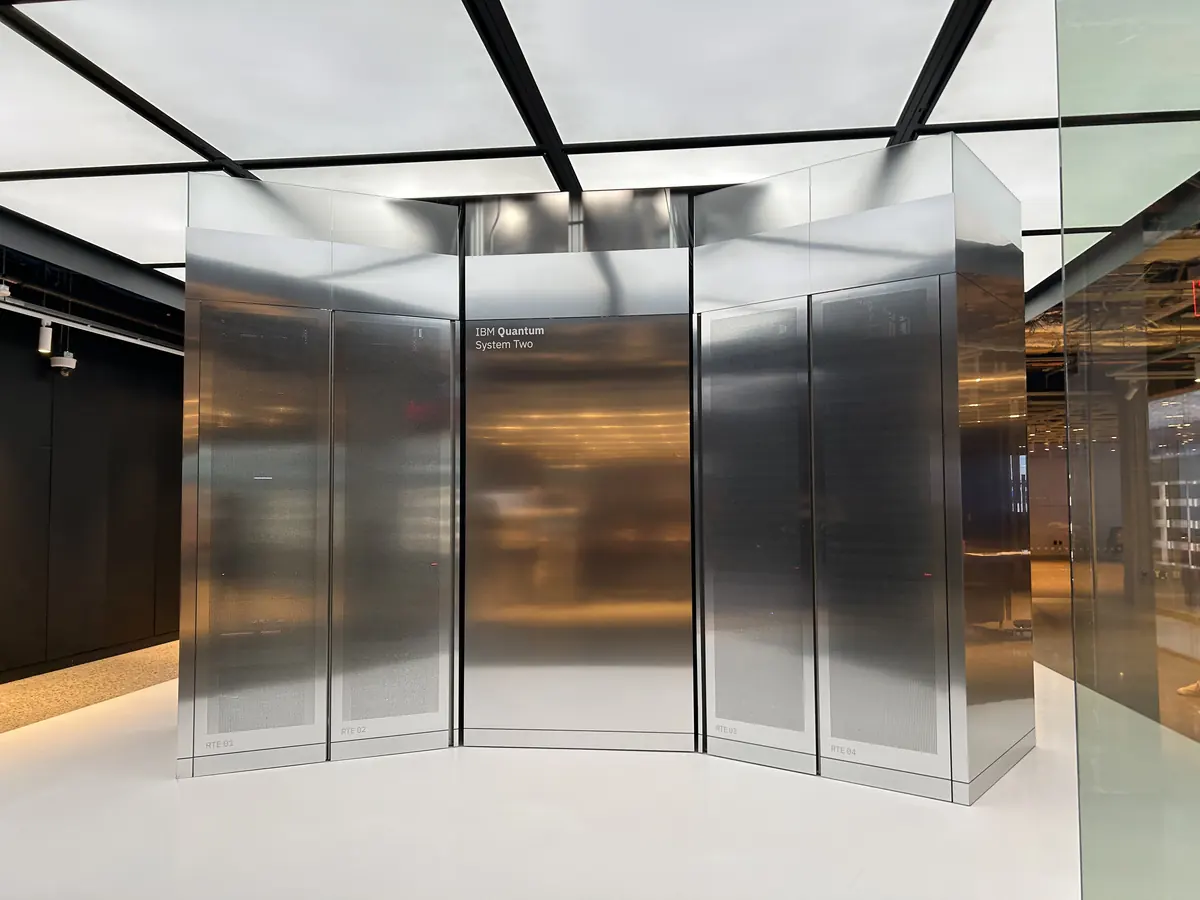
Before a quantum computer can analyze an ordinary image, someone must turn its numbers into a quantum state. Moth Quantum presented a new approach on November 16 using a deliberately recognizable test: pixel-art cats that went into IBM processors and came back out.[1]
The method, called Tessa, works with the connections a chip already has. Some carry data; neighboring qubits help identify which values are being addressed. Sharing those neighbors lets the pattern spread across the device without extra operations that move information between distant qubits.[1]
Daniel Bultrini’s November 13 preprint reports encoding and recovering estimates of 1,568 numerical values on IBM’s 120-qubit Phoenix processor. The results are reported in a preprint, not a peer-reviewed paper.[2]
One demonstration used a 28-by-28 image, or 784 pixels. Encoding brightness and hue, two values per pixel, doubled the numerical payload. That larger version was less accurate: the reported correlation between recovered brightness and input fell from 0.96 to 0.69 on Phoenix. Correlation describes how closely the pattern follows the original, not the percentage of correct pixels.[2]
Reading the data also required repeated runs: 8,192 measurements for each measurement basis. The count is not directly comparable to ordinary computer memory. The reconstruction is an estimate, and sampling and hardware noise affect its precision.[2]
The useful question is what comes after loading. Moth says the intended purpose is to process data further on the chip, rather than merely retrieve it. For researchers exploring quantum machine learning, Tessa offers another input method to test. Whether that helps a useful application depends on the whole calculation, including preparation and readout, not on the number of values alone.[1][2]