
Three-time test reveals quantum memory missed by paired snapshots
In a superconducting-qubit experiment, earlier interactions left traces in a qubit’s later behavior that a three-time test could detect and pairwise snapshots missed.
Reading tools for text size, copying, printing and your reading list
A experiment has revealed quantum information in an environment that tests comparing observations two at a time could not identify. Konstantin Beyer and colleagues report the result in a preprint submitted November 12.[1]
Here, “memory” means information from a system’s past affecting its later behavior. The question is whether ordinary measurement records can explain that influence, or whether the environment must retain quantum information.[1]
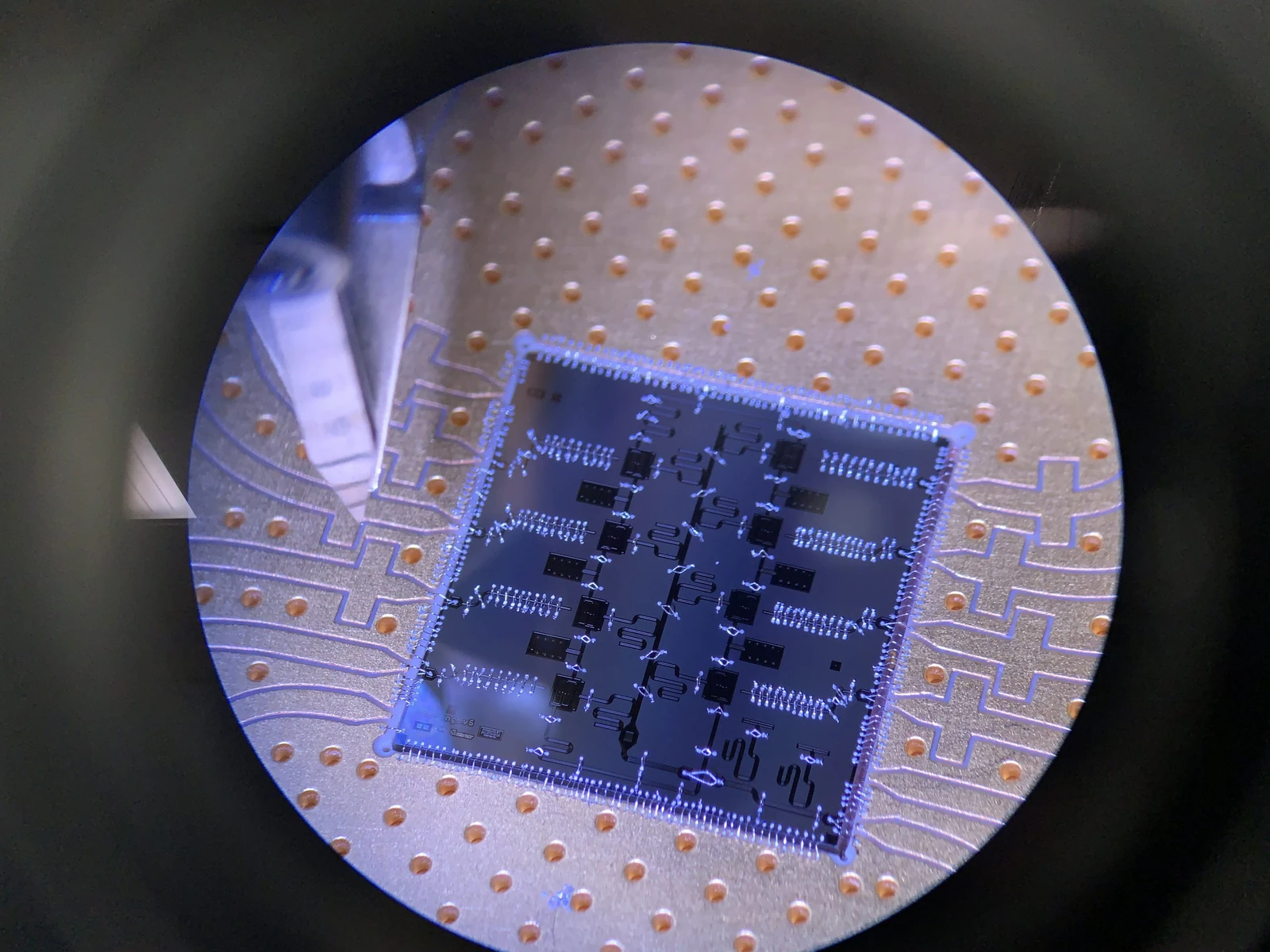
The team used two superconducting circuits called transmon qubits, with one playing the system and the other its environment. They reconstructed how the system evolved in repeated experimental runs, without intervening partway through each run.[1]
Within a selected observation window, numerical models using classical memory could reproduce every measured pair. Combining three observation times, 232, 464 and 832 nanoseconds, ruled out a single classical-memory explanation.[1]
The window matters. Extending observations from 850 to 1,200 nanoseconds made pairwise quantum signatures visible for most relevant settings. Nor is this the first observation of multi-time quantum memory: the advance is certifying it from reconstructed descriptions of the system’s evolution, without intermediate interventions.[1]
For readers, the distinction is between detecting information and building a better storage device. This is a method for testing a system’s surroundings, not evidence of longer-lived computer memory or faster calculations. A useful next question is how well that method works in larger, noisier systems.