
Optical-quantum research as a laboratory activity
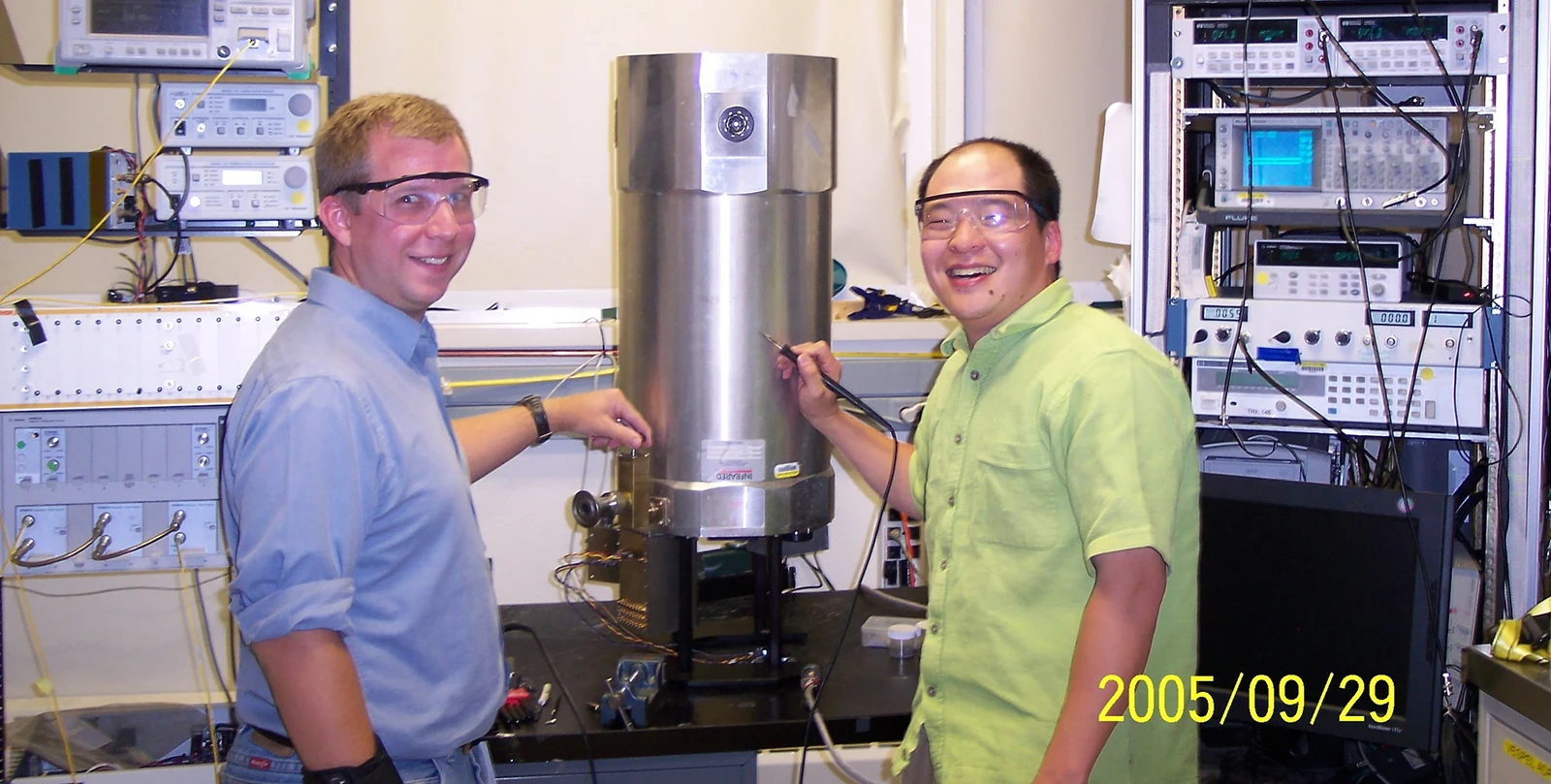
The people and equipment provide a grounded alternative to abstract quantum artwork. NIST identifies the researchers as Scott Glancy and Sae Woo Nam discussing optical approaches to quantum computing. The photograph documents that laboratory setting; it does not establish a finished photonic processor or a particular computing capability. Use the visible camera date to prevent the archive image from acquiring a false contemporary context. A short companion can explain how theoretical proposals, laboratory components and integrated systems represent different stages of work. The image is especially useful when a story needs to show the practical environment in which an optical idea is investigated.
- Organization
- NIST
- Image type
- Photograph
- Capture date
- 2005-09-29
The visible photograph stamp gives September 29, 2005; the 2011 file metadata is not used as the capture date.
- Photographer / creator
- NIST
- Reuse terms
- Public domain
NIST — Potential of Optical Systems for the Development of quantum computing devices (5883950897).jpg — Public domain — https://commons.wikimedia.org/wiki/File:Potential_of_Optical_Systems_for_the_Development_of_quantum_computing_devices_(5883950897).jpg — https://commons.wikimedia.org/wiki/File:Potential_of_Optical_Systems_for_the_Development_of_quantum_computing_devices_(5883950897).jpg#Licensing.
Full original frame retained; EXIF orientation normalized where present, resized without enlargement and converted to WebP. No crop or content alteration.
Read the image
An instrument’s photograph can have more than one date
Scott Glancy and Sae Woo Nam stand beside a tall instrument and electronics in this NIST photograph. The source image carries a September 2005 camera stamp, while later online metadata records a different date. These are not necessarily contradictory events: an image can be created, uploaded and republished at different times.
The physical scene introduces optical quantum research as a collaboration among people, instruments and controls. Protective glasses, the large apparatus and the racks are visible. The exact procedure underway is not established simply by the people’s positions or the shape of the equipment.
For an archive, preserve both kinds of context. The caption should identify the photographed period supported by the visible stamp and original description. The source record can separately retain upload and revision dates. That practice helps readers understand the historical scene and helps editors audit where the reused file came from.
Which date belongs in the visible gallery caption?
Use the best-supported photograph date, with qualification if needed. In this case the September 2005 context should not be silently replaced by a later upload date.
Can protective glasses identify the experiment’s wavelength?
No. Their appearance alone is insufficient. Wavelength and optical hazards require documentation rather than visual inference.
Why keep later metadata?
It supports provenance and file auditing even when it does not describe when the scene was photographed.
An independent QubitWire lesson based on this image and the cited source reading. The image does not establish a performance result.
Keep exploring
More from the same organization or hardware architecture.
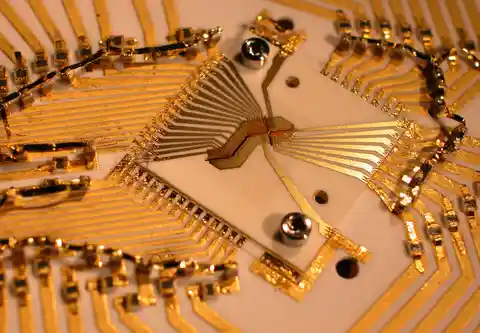 Gold electrodes for trapped ionsBlakestad/NIST · NQI gallery reuse permission
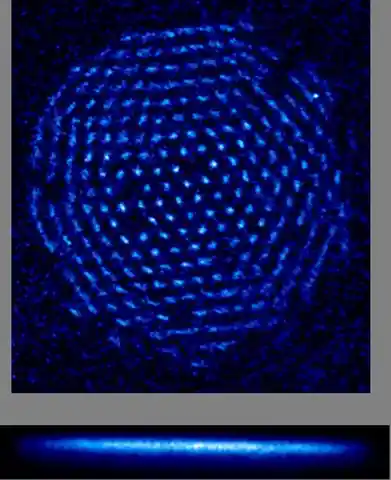 A crystal of trapped ionsNational Institute of Standards and Technology · Public domain (U.S. Government)
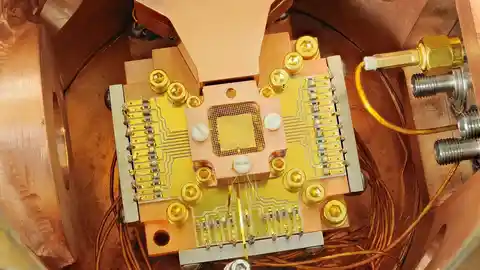 NIST’s beryllium-ion apparatusY. Colombe / NIST · Public domain (U.S. Government)
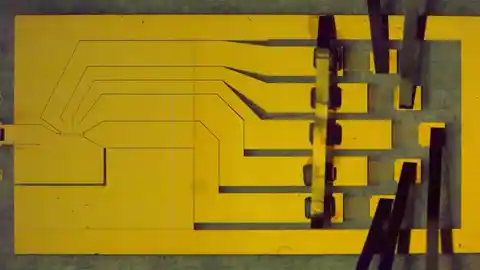 Gold electrodes for trapping ionsSigne Seidelin and John Chiaverini / NIST · Public domain (U.S. Government)
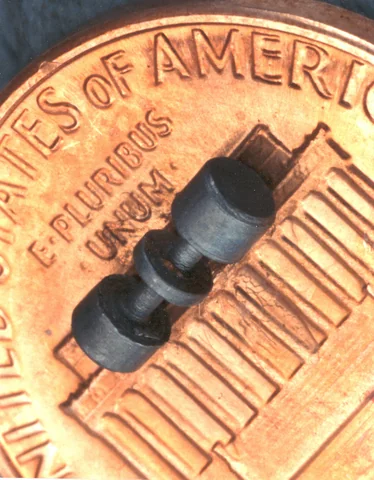 An ion trap resting on a pennyJ. Bergquist and D. Wineland / NIST · Public domain
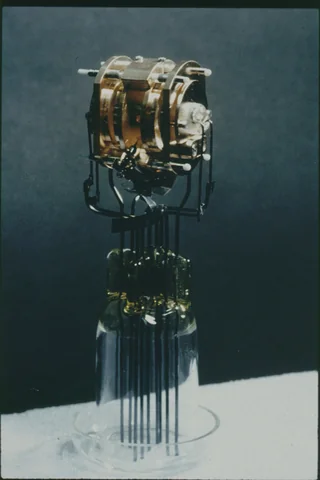 An early laser-cooling ion trapNIST · Public domain
Back to all images · Explore the interactive Model · Image rights and corrections