
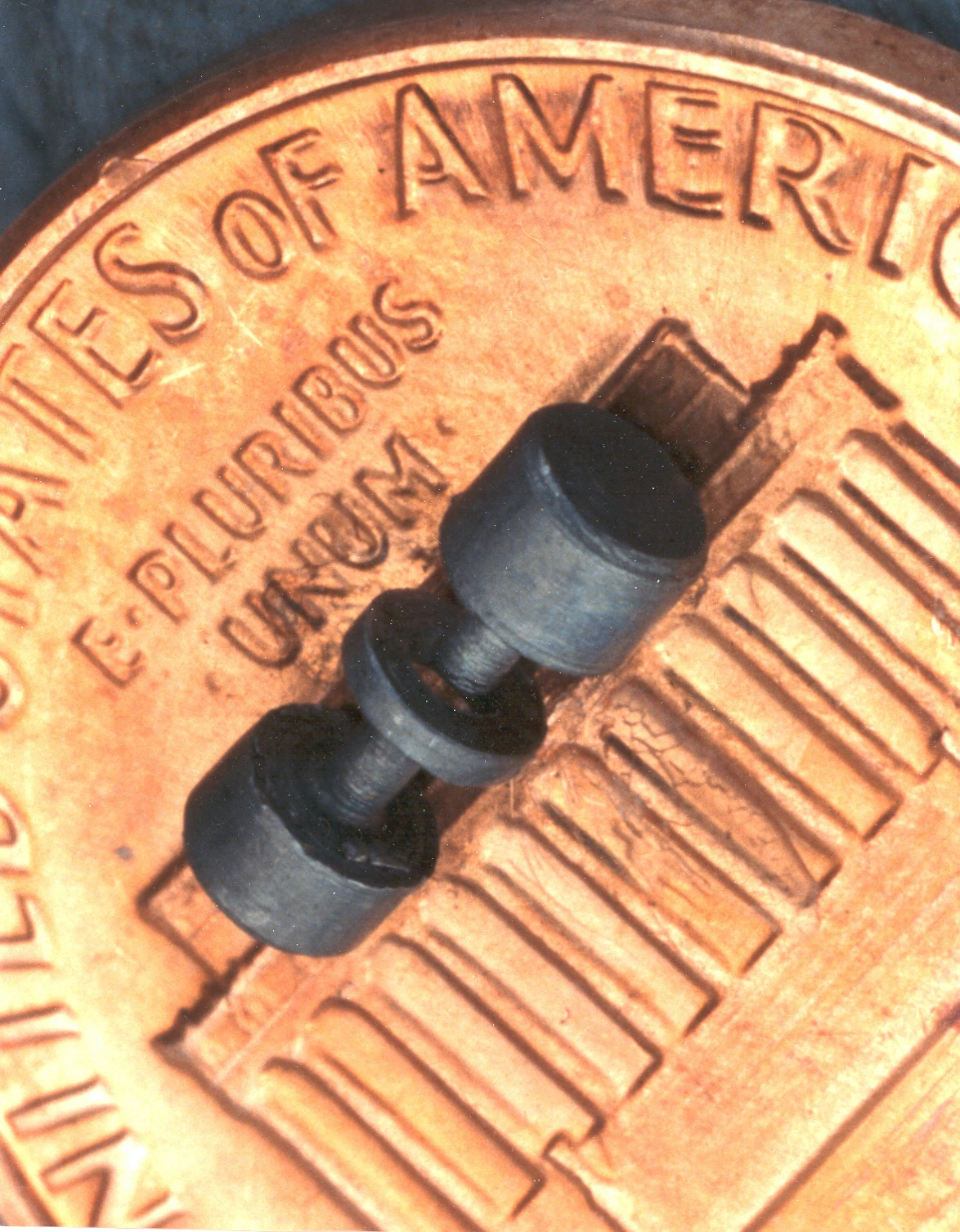
An ion trap resting on a penny
The coin is a scale reference for the trap, not a picture of the ion. That distinction makes this an unusually effective beginner image. The NIST description identifies a device used to hold a single mercury ion in an optical clock. An explanation can then separate the trapped quantum object from the electrodes and the wider equipment used to prepare and observe it. Avoid describing the entire clock as penny-sized: the photograph shows one component. The comparison is memorable precisely because the image permits a careful statement about physical scale without claiming that the surrounding laboratory has disappeared.
- Organization
- NIST
- Image type
- Photograph
- Capture date
- 2006-07-17
- Photographer / creator
- J. Bergquist and D. Wineland / NIST
- Reuse terms
- Public domain
J. Bergquist and D. Wineland / NIST — Ion Trap (5881388433).jpg — Public domain — https://commons.wikimedia.org/wiki/File:Ion_Trap_(5881388433).jpg — https://commons.wikimedia.org/wiki/File:Ion_Trap_(5881388433).jpg#Licensing.
Full original frame retained; EXIF orientation normalized where present, resized without enlargement and converted to WebP. No crop or content alteration.
Read the image
A coin can show the size of a trap without showing the trapped ion
A small metal component rests across a U.S. penny. NIST identifies it as an electromagnetic trap used with a single-mercury-ion optical clock. The photograph makes the component approachable by placing it beside an everyday object with a familiar scale.
The trap and the ion are different physical subjects. Electrodes create fields that confine the ion in a controlled region; the atom does not need to be a visible speck resting on the pictured metal. Light and other supporting equipment are needed to operate and interrogate the clock, extending well beyond this small component.
The image therefore supports a useful scale lesson. A microscopic reference can require a small local trapping structure and a much larger laboratory around it. The coin helps explain one of those levels. A separate apparatus photograph is needed to reveal the others, and a measurement report is needed to establish clock performance.
Is the entire clock sitting on the penny?
No. The source identifies a trap component. The optical, control and measurement systems of the clock are outside this close-up.
Can the ion be located from the metal alone?
Its intended trapping region needs source documentation. Do not add a visible atom marker as though it were recorded by the camera.
Why distinguish mercury from aluminum clocks?
They are different atomic systems with different implementations. A photograph of one should not silently illustrate the detailed method of the other.
An independent QubitWire lesson based on this image and the cited source reading. The image does not establish a performance result.
Keep exploring
More from the same organization or hardware architecture.
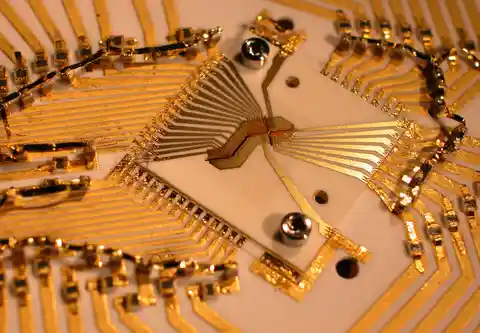 Gold electrodes for trapped ionsBlakestad/NIST · NQI gallery reuse permission
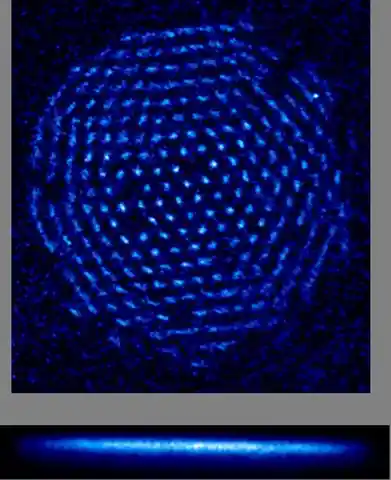 A crystal of trapped ionsNational Institute of Standards and Technology · Public domain (U.S. Government)
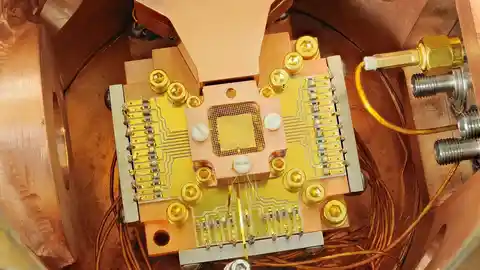 NIST’s beryllium-ion apparatusY. Colombe / NIST · Public domain (U.S. Government)
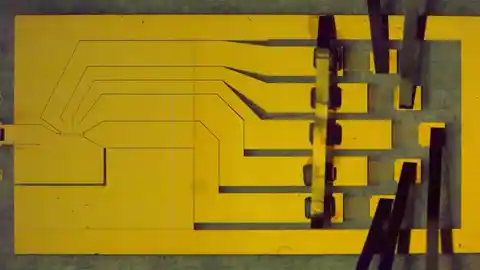 Gold electrodes for trapping ionsSigne Seidelin and John Chiaverini / NIST · Public domain (U.S. Government)
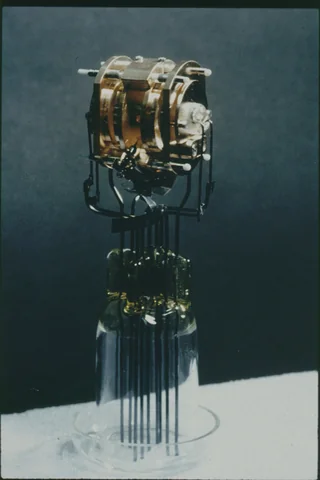 An early laser-cooling ion trapNIST · Public domain
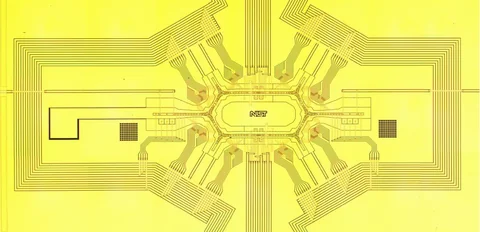 A racetrack for trapped ionsJ. Amini / NIST · Public domain
Back to all images · Explore the interactive Model · Image rights and corrections