
Quantum electrical standards on a chip
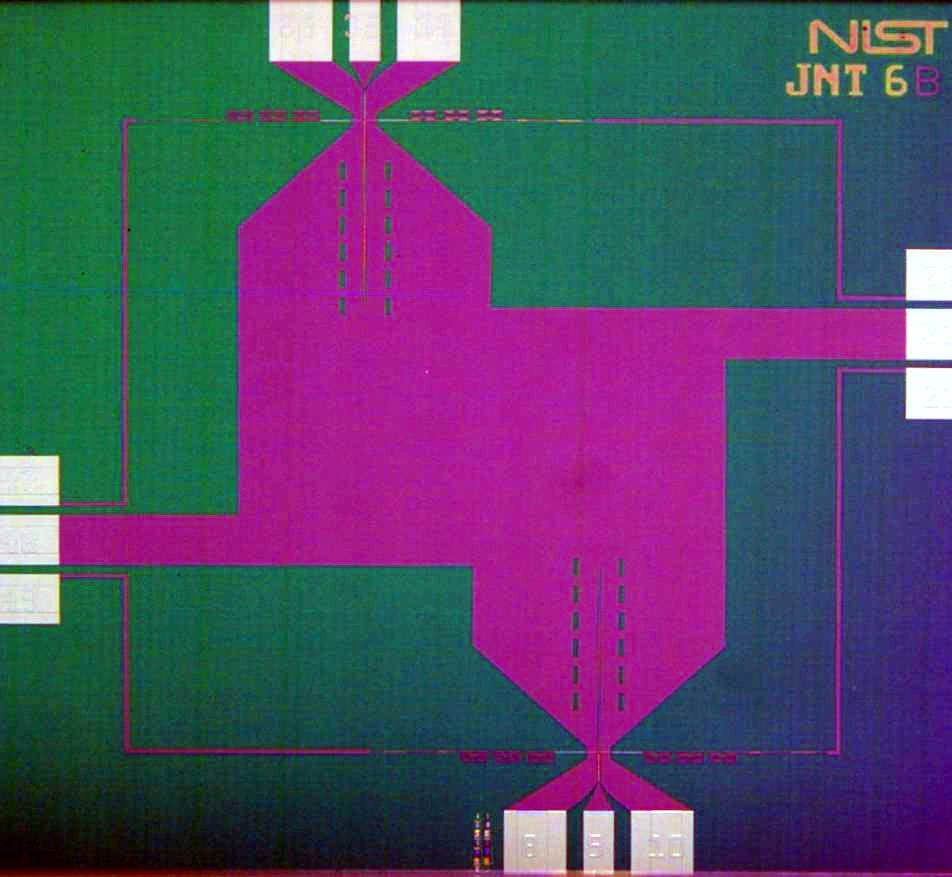
This chip belongs to a measurement story. NIST identifies it with Johnson-noise thermometry, which uses electrical noise in determining temperature and draws on superconducting quantum standards. That context prevents an attractive circuit image from being mislabeled as a quantum-computing processor. The visual can introduce a wider point: quantum technology already appears in metrology as well as in efforts to build new computers. Preserve the markings and any explanatory features of the original image. A companion diagram should distinguish a temperature-dependent signal, its measurement and the reference used for comparison, rather than implying that the photograph itself reveals the numerical result.
- Organization
- NIST
- Image type
- Photograph
- Capture date
- 2008-05-30
- Photographer / creator
- NIST
- Reuse terms
- Public domain
NIST — Johnson noise thermometry (5884301319).jpg — Public domain — https://commons.wikimedia.org/wiki/File:Johnson_noise_thermometry_(5884301319).jpg — https://commons.wikimedia.org/wiki/File:Johnson_noise_thermometry_(5884301319).jpg#Licensing.
Full original frame retained; EXIF orientation normalized where present, resized without enlargement and converted to WebP. No crop or content alteration.
Read the image
Electrical noise can become a thermometer’s signal
Fine patterns and NIST lettering appear on a green-and-purple chip. NIST identifies the circuit with its Johnson-noise thermometry system. The source explains that the instrument uses electrical fluctuations associated with thermal motion and a quantum-based reference to support temperature measurement.
Noise is often treated as something to remove, but in this setting its statistical properties are the subject of the measurement. The challenge is to relate the measured fluctuations to temperature while accounting for the response and imperfections of the measurement chain. A reference signal helps make that comparison controlled.
The image introduces a form of quantum technology that is different from a general-purpose quantum processor. The circuit supports metrology: making a physical quantity measurable with understood uncertainty. Its visible pattern does not reveal a temperature result, and it should not be relabeled as a chip containing computational qubits.
Why can noise carry useful information?
Its statistical properties can depend on the physical conditions producing it. A measurement can use that dependence when the relationship and instrument response are understood.
What does a reference contribute?
It supports a controlled comparison that helps evaluate the measurement chain. The exact reference implementation is specified by the source, not its visual color.
What should the gallery category be?
Place it under quantum metrology or electrical standards, with Johnson-noise thermometry stated explicitly. Avoid classifying it as a computing processor.
An independent QubitWire lesson based on this image and the cited source reading. The image does not establish a performance result.
Keep exploring
More from the same organization or hardware architecture.
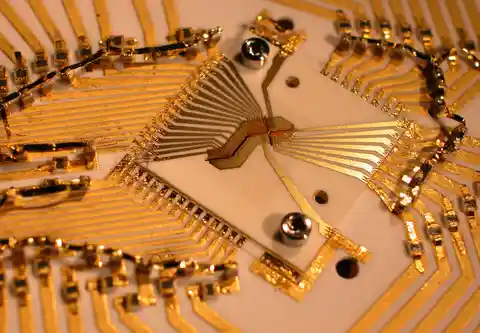 Gold electrodes for trapped ionsBlakestad/NIST · NQI gallery reuse permission
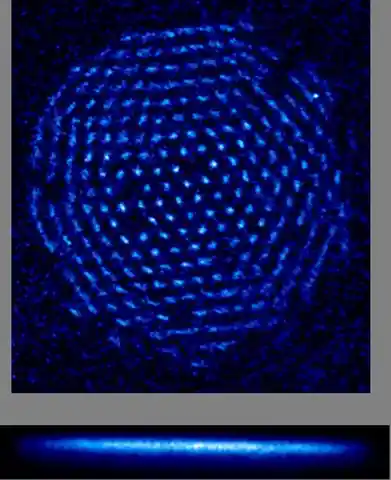 A crystal of trapped ionsNational Institute of Standards and Technology · Public domain (U.S. Government)
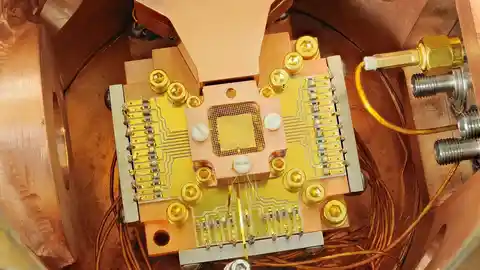 NIST’s beryllium-ion apparatusY. Colombe / NIST · Public domain (U.S. Government)
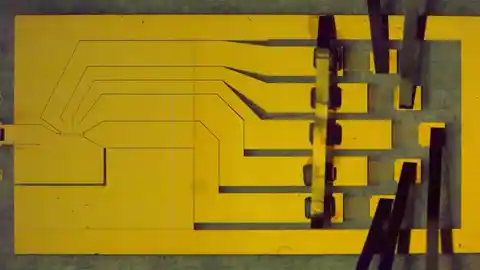 Gold electrodes for trapping ionsSigne Seidelin and John Chiaverini / NIST · Public domain (U.S. Government)
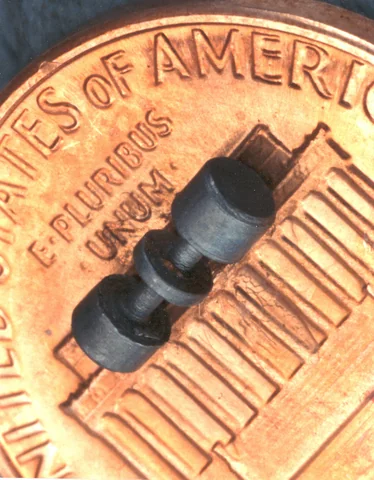 An ion trap resting on a pennyJ. Bergquist and D. Wineland / NIST · Public domain
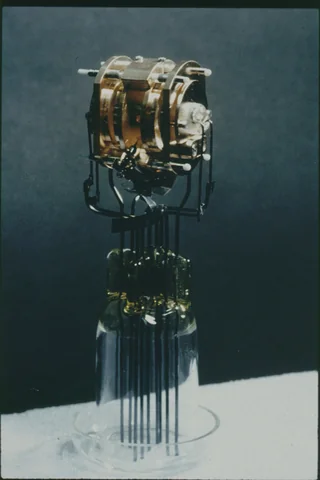 An early laser-cooling ion trapNIST · Public domain
Back to all images · Explore the interactive Model · Image rights and corrections