
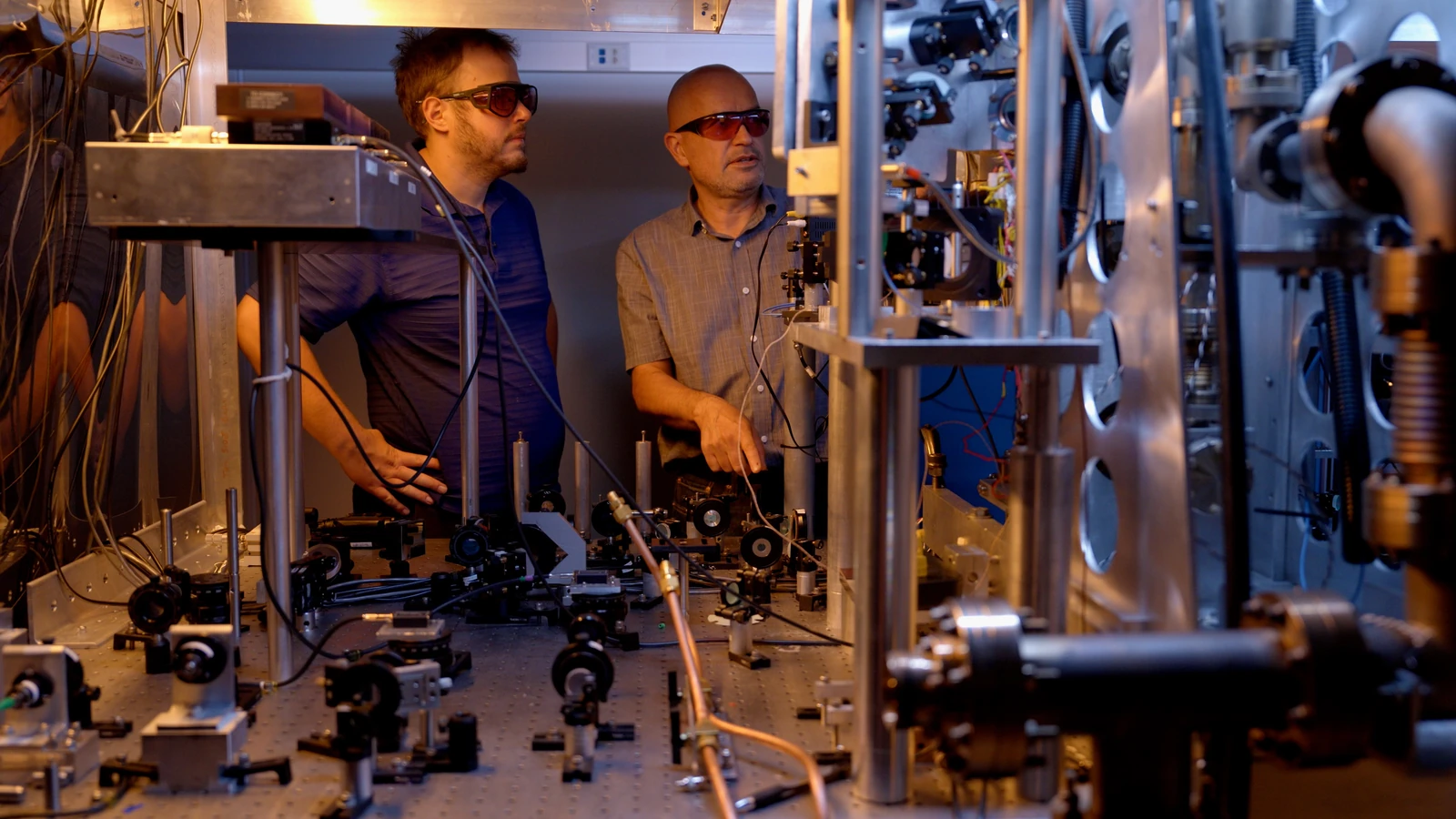
Hoth and Gerginov beside NIST-F4
An atomic clock is an instrument assembled and checked by people. Here, protective glasses, mounts and optical equipment place that work at a laboratory bench. NIST identifies the scene with NIST-F4, an atomic-fountain clock announced in 2025. Use it as an archival introduction to the difference between a physical instrument and the time scale that uses measurements from many clocks. The photograph does not display an error budget or tell us how often the clock contributes to a timekeeping calculation. Those questions belong to the measurement record, not to an inference from how elaborate the apparatus looks.
- Organization
- NIST
- Image type
- Photograph
- Capture date
- Not supplied by source
Source publication and upload dates are separate from capture dates. The capture date is not verified.
- Photographer / creator
- R. Eskalis/NIST
- Reuse terms
- Public domain in the United States; NIST worldwide reuse terms
R. Eskalis/NIST — Hoth and Gerginov beside NIST-F4 — Public domain in the United States; NIST worldwide reuse terms — https://www.nist.gov/image/hoth-and-gerginov-nist-f4 — https://www.nist.gov/open/copyright-fair-use-and-licensing-statements-srd-data-software-and-technical-series-publications.
Full original frame retained; EXIF orientation normalized where present, resized without enlargement and converted to WebP. No crop or content alteration.
Read the image
A clock photograph and a timekeeping claim have different scopes
The image shows people working around an instrument. Protective glasses and metal assemblies give the timekeeping story a laboratory setting. NIST identifies the apparatus with NIST-F4 and the 2025 announcement, so the first obligation is to keep that historical identity attached to the picture.
A useful explanation distinguishes an individual clock from a coordinated time scale. An instrument makes measurements under specified conditions. A timekeeping system uses measurements, comparisons and procedures to maintain a useful reference. A striking photograph of one apparatus does not describe the whole process.
The image also cannot supply an uncertainty budget. An editor should ask which effects were evaluated, how comparisons were made and what interval the reported assessment covers. These questions direct readers toward measurement evidence without demanding that the photograph somehow display precision. Later reuse can remain valuable when labeled as an archival view of this specific instrument.
Does a bigger apparatus imply a better clock?
No. Size alone does not identify the measured quantity, uncertainty or operating duty cycle. Those must be established from the experiment and its evaluation.
What is the safest later-news use?
A clearly labeled archival contextual image when the story explains atomic-fountain timekeeping. It should not imply that the pictured 2025 scene records a new announcement.
An independent QubitWire lesson based on this image and the cited source reading. The image does not establish a performance result.
Keep exploring
More from the same organization or hardware architecture.
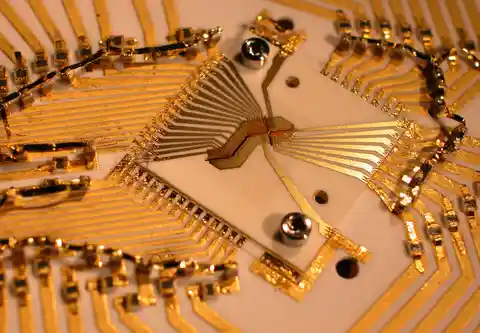 Gold electrodes for trapped ionsBlakestad/NIST · NQI gallery reuse permission
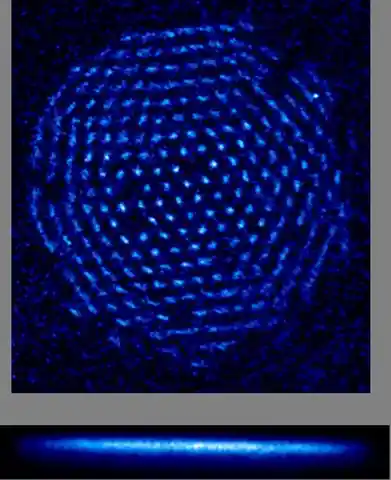 A crystal of trapped ionsNational Institute of Standards and Technology · Public domain (U.S. Government)
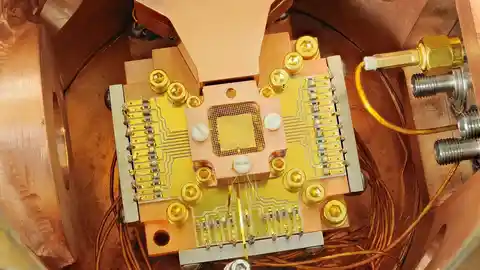 NIST’s beryllium-ion apparatusY. Colombe / NIST · Public domain (U.S. Government)
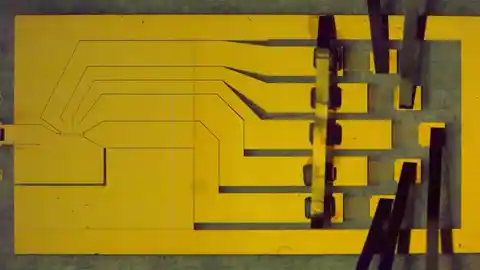 Gold electrodes for trapping ionsSigne Seidelin and John Chiaverini / NIST · Public domain (U.S. Government)
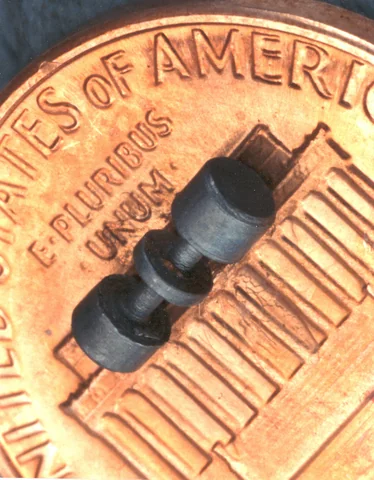 An ion trap resting on a pennyJ. Bergquist and D. Wineland / NIST · Public domain
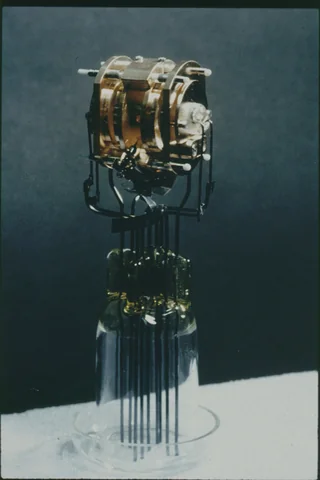 An early laser-cooling ion trapNIST · Public domain
Back to all images · Explore the interactive Model · Image rights and corrections