
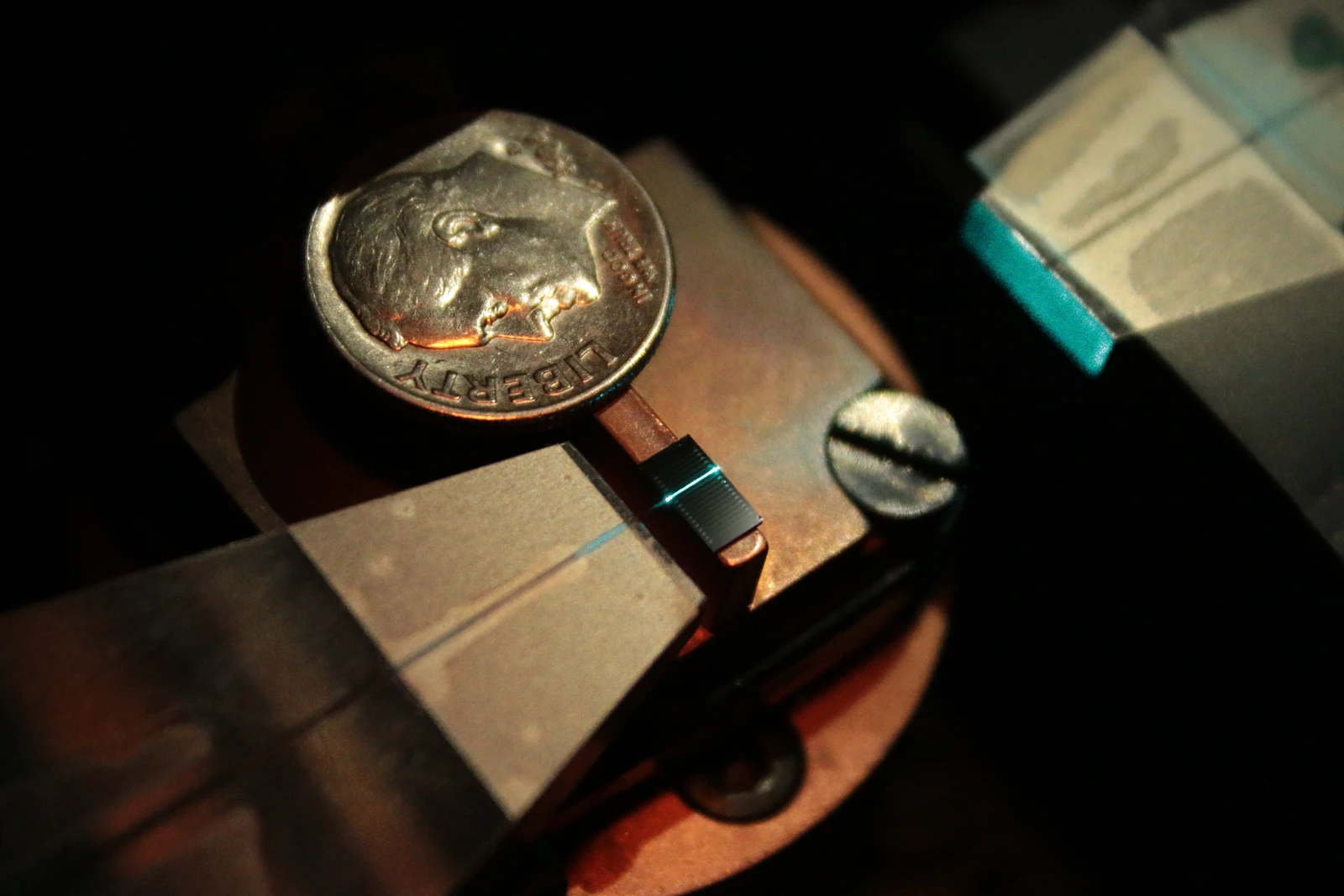
A photonic chip and a dime for scale
The dime provides scale, while the bright blue line gives the optical device a memorable visual feature. NIST associates this chip with integrated wavelength-conversion research. Keep the distinction between the observed blue light and the broader engineering claim clear: a photograph of one output cannot demonstrate every wavelength, efficiency across a range or stability over time. This is a strong lead for the specific photonics story and a useful companion to the team photograph. A reader should leave with a sharper question about the device: which material layers and control steps make the measured output possible, and how was that output characterized?
- Organization
- NIST
- Image type
- Photograph
- Capture date
- Not supplied by source
Source publication and upload dates are separate from capture dates. The capture date is not verified.
- Photographer / creator
- R. Jacobson/NIST
- Reuse terms
- Public domain in the United States; NIST worldwide reuse terms
R. Jacobson/NIST — A photonic chip and a dime for scale — Public domain in the United States; NIST worldwide reuse terms — https://www.nist.gov/news-events/news/2026/04/any-color-you-nist-scientists-create-any-wavelength-lasers-tiny-circuits — https://www.nist.gov/open/copyright-fair-use-and-licensing-statements-srd-data-software-and-technical-series-publications.
Full original frame retained; EXIF orientation normalized where present, resized without enlargement and converted to WebP. No crop or content alteration.
Read the image
A scale reference helps, but does not complete a specification
A familiar coin gives the chip a human scale. The bright blue feature makes the photograph memorable, while the surrounding mount reminds readers that an optical component is held and aligned inside a larger setup. These are useful observations even before a technical explanation begins.
Do not turn the coin into an uncalibrated measuring instrument. Perspective, depth and the relative planes of the objects can affect apparent dimensions. A source-supplied device dimension belongs in a specification; an approximate impression of size belongs in a caption that clearly signals its purpose.
The NIST source associates the image with integrated wavelength conversion. The visible blue output should remain one illustrated operating example. It does not by itself establish a full wavelength range or a conversion-efficiency curve. Pairing the photograph with a careful explanation makes it more persuasive because readers can tell what the image actually contributes.
Does blue light prove that all claimed outputs were demonstrated?
No. It illustrates the displayed condition. A claim covering a range requires measurements or other evidence across the stated range.
Why include the mount in a crop?
It helps preserve context and shows the chip as part of an experimental assembly. An extreme crop can remove useful scale and suggest a different scene.
An independent QubitWire lesson based on this image and the cited source reading. The image does not establish a performance result.
Keep exploring
More from the same organization or hardware architecture.
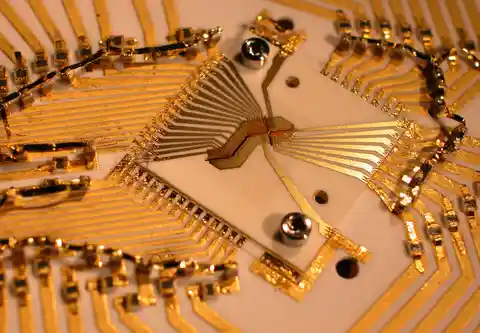 Gold electrodes for trapped ionsBlakestad/NIST · NQI gallery reuse permission
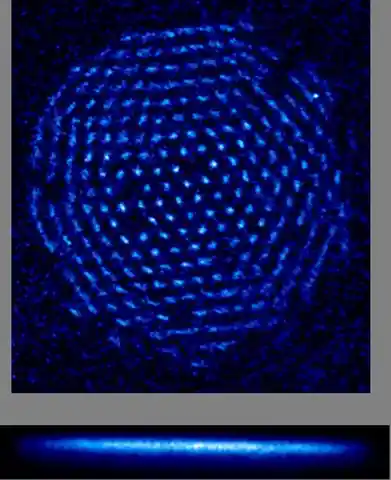 A crystal of trapped ionsNational Institute of Standards and Technology · Public domain (U.S. Government)
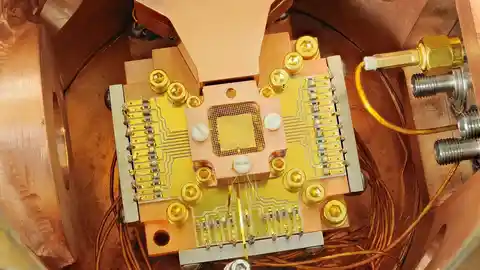 NIST’s beryllium-ion apparatusY. Colombe / NIST · Public domain (U.S. Government)
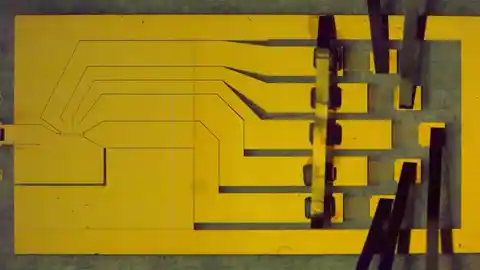 Gold electrodes for trapping ionsSigne Seidelin and John Chiaverini / NIST · Public domain (U.S. Government)
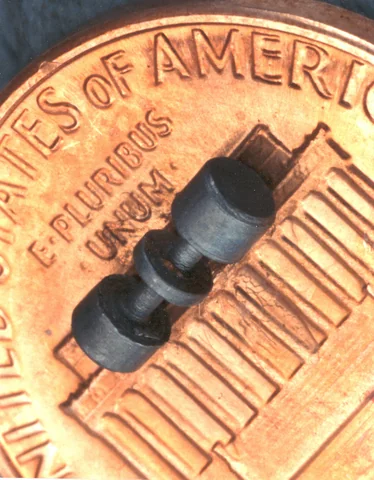 An ion trap resting on a pennyJ. Bergquist and D. Wineland / NIST · Public domain
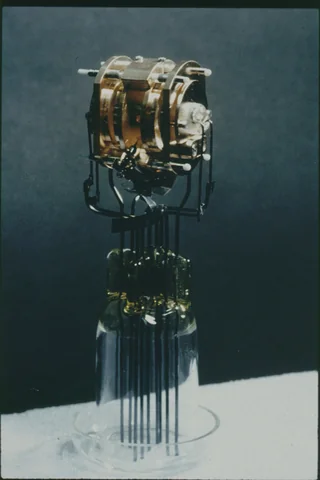 An early laser-cooling ion trapNIST · Public domain
Back to all images · Explore the interactive Model · Image rights and corrections