
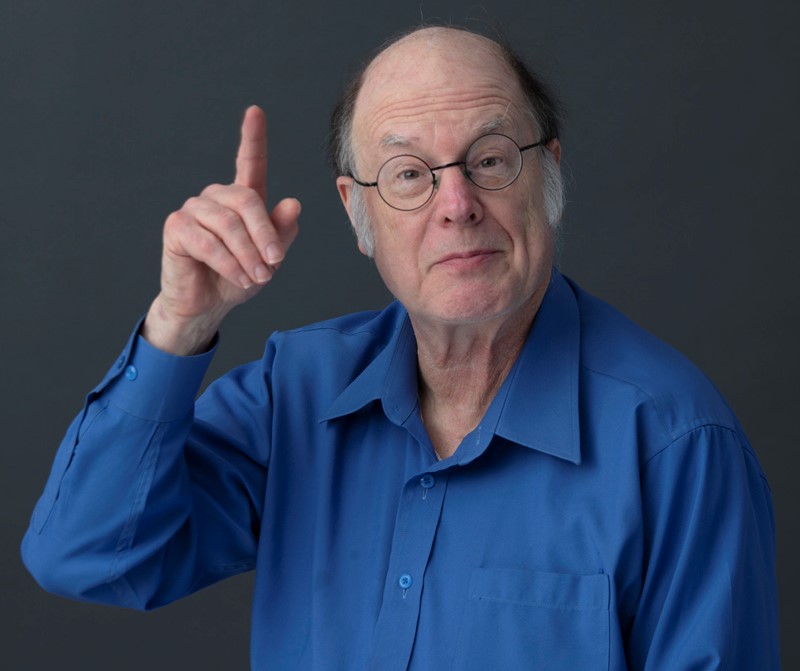


Bennett helped establish quantum information as a discipline, co-developing quantum key distribution and the teleportation protocol that turns shared entanglement into a communication resource.
IBM ResearchPhysical Review Letters / American Physical SocietyBennett’s work recast information as something governed by physical law. The BB84 protocol with Gilles Brassard made quantum states part of a cryptographic procedure, while the teleportation paper with five collaborators showed how entanglement and classical communication can transfer an unknown quantum state. These are defining building blocks for quantum communication and information processing. His inclusion recognizes their conceptual and technical reach, while preserving the conditions that make them meaningful: teleportation needs classical information, and a cryptographic protocol’s security must be assessed together with its assumptions and implementation.
IBM ResearchPhysical Review Letters / American Physical SocietyDoes deleting a bit have a physical cost?
Deleting information looks like a software action. Charles Bennett’s work asks what happens in the physical machine. His 2003 account of Landauer’s principle distinguishes operations that discard information from operations whose inputs can, in principle, be recovered from their outputs. [1]
Erasing a bit can increase entropy in the apparatus or its surroundings. A logically reversible computation can, in principle, use a thermodynamically reversible mechanism. Those statements describe physical limits under specified conditions. They do not assign a fixed energy price to every click, measurement or bit processed, or predict a data centre’s electricity bill. [1][2]
Bennett and Olivia Lanes’s 2021 history places these ideas in a wider conversation involving researchers such as Rolf Landauer, Ed Fredkin and Tom Toffoli. The useful question for today’s energy headlines is which operation loses information, how the machine implements it and what resources the comparison counts. These ideas alone do not establish that quantum computers are greener. [3]
Keep asking: Which part of a computing-energy claim is a physical limit, and which part is a measured engineering result?
Sources for this question
- Notes on Landauer's principle, reversible computation, and Maxwell's Demon — IBM Research.
Bennett’s account of irreversible information operations, entropy and reversible computation.
Paper published 1 September 2003. Checked 2026-10-09. - Charles Bennett — IBM Research.
Current IBM Fellow identification and research clarifying the energy cost of information processing.
Institutional profile; publication date not stated. Checked 2026-10-09. - Celebrating the 40-year anniversary of the Physics of Computation Conference — IBM Research.
Charles Bennett and Olivia Lanes’s account of the wider research conversation around the 1981 conference.
Historical account published 15 March 2021. Checked 2026-10-09.
The work behind the recognition
Work, in context- 1984
Co-developing BB84
With Gilles Brassard, Bennett introduced the quantum key-distribution protocol known as BB84. It uses the behavior of quantum states to support the establishment of a shared secret key; it is a protocol contribution, not a blanket security guarantee for every device that implements it.
BB84 was jointly developed by Charles H. Bennett and Gilles Brassard.
Source-supported recordIBM Research - 1993
Quantum teleportation
Bennett, Brassard and four coauthors proposed transferring an unknown quantum state using shared entanglement, a measurement and classical communication. The protocol established a reusable quantum-information primitive and does not permit faster-than-light signaling or the copying of an arbitrary unknown state.
Coauthored protocol by Charles H. Bennett, Gilles Brassard, Claude Crépeau, Richard Jozsa, Asher Peres and William K. Wootters.
Source-supported recordPhysical Review Letters / American Physical Society
The evidence map
Both views link each contribution to its sources. Choose a contribution on the map or read them all in the list.
Co-developing BB84
Charles H. Bennett
Supports: IBM Fellow, Yorktown Heights affiliation, BB84 with Brassard in 1984 and teleportation in 1993.
Checked 19 Sept 2026Credit & limits: BB84 was jointly developed by Charles H. Bennett and Gilles Brassard.
Read the full contribution| Contribution | Evidence & what it supports | Credit & limits |
|---|---|---|
| Co-developing BB841984 | Institutional recordCharles H. Bennett IBM Fellow, Yorktown Heights affiliation, BB84 with Brassard in 1984 and teleportation in 1993. Checked 19 Sept 2026 | BB84 was jointly developed by Charles H. Bennett and Gilles Brassard. |
| Quantum teleportation1993 | Primary paperTeleporting an unknown quantum state via dual classical and Einstein-Podolsky-Rosen channels Bennett and coauthor attribution; entanglement plus classical communication protocol. Published 1993 · Checked 19 Sept 2026 | Coauthored protocol by Charles H. Bennett, Gilles Brassard, Claude Crépeau, Richard Jozsa, Asher Peres and William K. Wootters. |
Follow the evidence
2 sourcesPrimary papers, institutional records and attributed announcements. Each source supports the claims linked above.
- IBM ResearchInstitutional record
Charles H. Bennett
IBM Fellow, Yorktown Heights affiliation, BB84 with Brassard in 1984 and teleportation in 1993.
Checked 19 Sept 2026 - Physical Review Letters / American Physical SocietyPrimary paper
Teleporting an unknown quantum state via dual classical and Einstein-Podolsky-Rosen channels
Bennett and coauthor attribution; entanglement plus classical communication protocol.
Published 1993 · Checked 19 Sept 2026