
Skip to content

2026 SELECTION

QubitWire 100

100 people recognized for contributions to quantum computing. Unranked and alphabetical by surname.

An unranked collection. Browse by surname or start with an idea.

Browse by topic
Explain these topics
Error correction
Methods that protect encoded quantum information by detecting and correcting certain errors.
Neutral atoms
A hardware approach that stores quantum information in electrically neutral atoms.
Quantum networks
Links that distribute quantum information or entanglement between locations.
Algorithms & complexity
How quantum calculations work and what resources they require.
Foundations
The concepts and physical principles that quantum information builds on.

The 2026 selection4 of 100 people

About foundations
Foundations
The concepts and physical principles that quantum information builds on.

Jump to surname

C

1 person

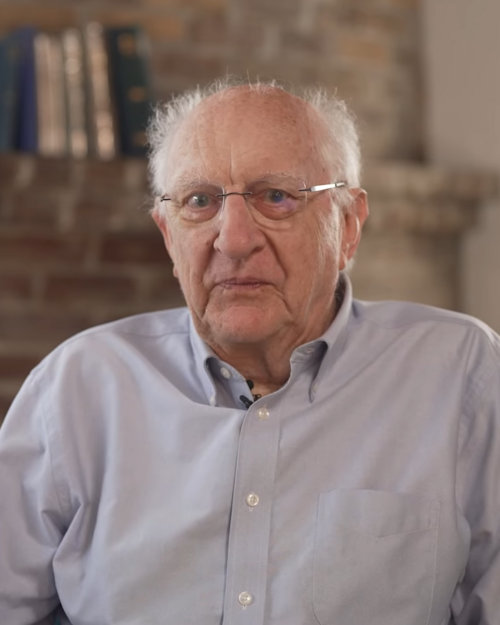
Helped demonstrate macroscopic quantum tunnelling and quantized energy levels in electrical circuits, establishing experimental foundations for superconducting quantum devices and precision qubit measurement.

University of California, Berkeley

Professor Emeritus of the Graduate School

Read profile
Why included? 3 sources

Clarke’s contributions connect the foundations of superconducting quantum behavior to the problem of measuring a quantum device. The 1985 experiments with Michel Devoret and John Martinis demonstrated tunnelling and discrete energy levels in Josephson-junction circuits. His subsequent research includes SQUID detection and controllable coupling between superconducting qubits. These links make his work relevant to how electrical circuits can store, manipulate and reveal quantum information. The profile treats those achievements as collaborative experimental results, without equating the foundational demonstrations with today’s complete processors.

FoundationsControl & measurement

Documented work base: United States

Identification checked Explore the contributions and sources
D

1 person

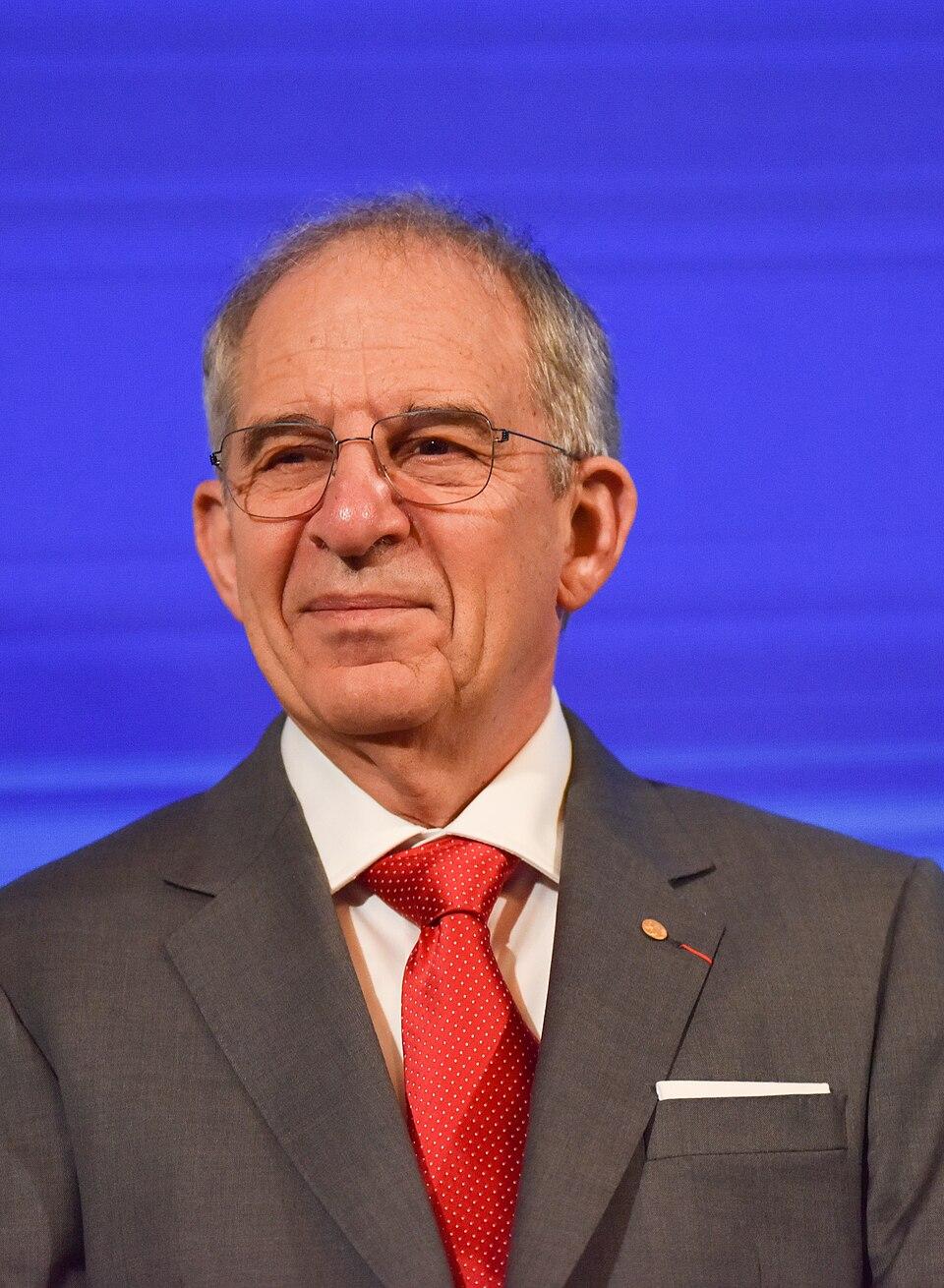
An experimental physicist whose circuit-quantum research connects macroscopic quantum behavior with superconducting qubit designs, including collaborative development of the charge-noise-resistant transmon.

University of California, Santa Barbara; Google Quantum AI

Professor of Physics at UC Santa Barbara and Chief Scientist of Google Quantum AI

Read profile
Why included? 2 sources

Devoret’s work links foundational tests of quantum mechanics in electrical circuits with the engineering of superconducting quantum processors. His early experiments with John Clarke and John Martinis established macroscopic quantum behavior in circuit systems. Later collaborative work contributed to the transmon qubit. That path matters because building a processor requires both confidence in the underlying physical system and designs that reduce its sensitivity to environmental disturbances while preserving control.

Quantum hardwareControl & measurement

Documented work base: United States

Identification checked Explore the contributions and sources

G

1 person

A theoretical physicist whose collaborative research helped establish circuit quantum electrodynamics and the transmon, linking superconducting circuits with controllable interactions between qubits and microwave fields.

Yale University

Sterling Professor of Physics and Professor of Applied Physics

Read profile
Why included? 3 sources

Girvin’s work helps explain how superconducting electrical circuits can function as engineered quantum systems. The circuit-QED architecture he coauthored described how microwave resonators could support interactions, control and measurement. His subsequent participation in the transmon proposal addressed a key source of qubit noise. These ideas connect theoretical descriptions of light–matter interaction with the design choices needed to build and operate circuit-based quantum processors.

Quantum hardwareControl & measurement

Documented work base: United States

Identification checked Explore the contributions and sources

T

1 person

Studies how quantum information can survive noise, combining rigorous limits on quantum memories with error-correction theory and research connected to physical qubit architectures.

QuTech, Delft University of Technology

Group leader

Read profile
Why included? 3 sources

Terhal’s work asks which kinds of protection quantum information can actually obtain from a physical system. A rigorous limitation on passive stabilizer-code memories clarifies what some architectures cannot provide automatically. Her broader work on quantum error correction explains the active codes, thresholds and decoding strategies used to pursue reliable storage and computation. This combination of constructive theory and carefully stated limits makes her research valuable for judging hardware proposals without confusing a promising design with proven resilience.

Error correctionFoundations

Documented work base: Netherlands

Identification checked Explore the contributions and sources
About these checks

Linked sources support selected statements in each profile. Research sources include papers and preprints. A source count is not a ranking or a quality score.

The identification check date relates to the recorded professional description. Individual sources have their own check dates. The fixed 2026 selection stays separate from later profile corrections.

THE EDITORIAL VIEW

Why these people.
Why this field.

Quantum computing is shaped by more than headline breakthroughs. Progress also depends on the people who establish its limits, make its systems more reliable and turn difficult ideas into tools others can use.

The QubitWire 100 recognizes contributions across that work. Each profile explains what is being recognized and connects the account to its supporting evidence.

View the permanent 2026 record