
Skip to content

2026 SELECTION

QubitWire 100

100 people recognized for contributions to quantum computing. Unranked and alphabetical by surname.

An unranked collection. Browse by surname or start with an idea.

Browse by topic
Explain these topics
Error correction
Methods that protect encoded quantum information by detecting and correcting certain errors.
Neutral atoms
A hardware approach that stores quantum information in electrically neutral atoms.
Quantum networks
Links that distribute quantum information or entanglement between locations.
Algorithms & complexity
How quantum calculations work and what resources they require.
Foundations
The concepts and physical principles that quantum information builds on.

The 2026 selection7 of 100 people

About neutral atoms
Neutral atoms
A hardware approach that stores quantum information in electrically neutral atoms.

Jump to surname

B

2 people

Bloom founded Atom Computing and coauthored research on long-lived nuclear-spin qubits, connecting precision atomic physics with the development of scalable neutral-atom quantum computers.

Atom Computing

Founder and Chief Executive Officer

Read profile
Why included? 2 sources

Bloom’s contribution combines a specific qubit approach with building an organization to develop it. Atom Computing uses optically trapped neutral atoms, while his coauthored research demonstrates preparation and individual control of nuclear-spin states with long measured coherence. That work addresses the need to retain information while a processor performs operations and measurements. As founder and current chief executive, he also directs the company’s development toward logical qubits and fault tolerance. The profile credits that technical and organizational role without equating a long memory lifetime with a complete error-corrected computer.

Quantum hardwareControl & measurement
Identification checked Explore the contributions and sources
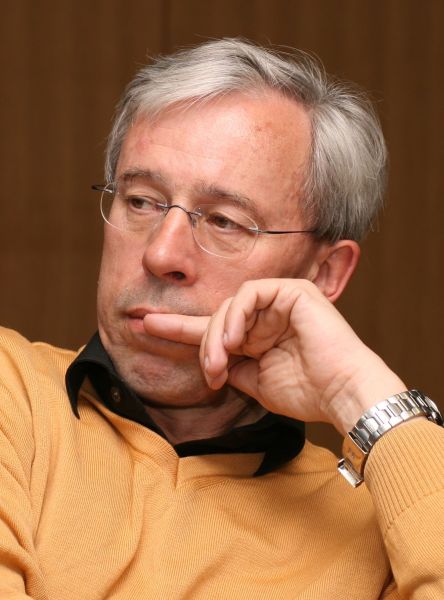
Bluvstein develops reconfigurable neutral-atom processors, helping demonstrate coherent transport of entangled atoms and programmable operations on encoded logical qubits in collaborative laboratory experiments.

Caltech / Oratomic

Neutral-atom quantum-computing researcher; Visiting Associate at Caltech

Read profile
Why included? 4 sources

Bluvstein’s research addresses the geometry of a quantum computer: which qubits can interact, how they move, and how information is protected while operations proceed. His coauthored transport experiment used movable atom arrays to create flexible connectivity. A subsequent logical-processor experiment combined that architecture with encoded qubits and error detection. The significance is a concrete route from physical control to logical operations, supported by measured experiments. Harvard’s alumni page lists a Caltech visiting appointment, and Oratomic lists him on its team.

Quantum hardwareError correction

Documented work base: United States

Identification checked Explore the contributions and sources

H

1 person

Henriet connects neutral-atom hardware with algorithms, studying dissipative effects in variational optimization and helping articulate the capabilities and development path of programmable atom-based computers.

Pasqal

Chief Technology Officer, Pasqal

Read profile
Why included? 3 sources

Henriet’s work spans the theoretical behavior of neutral-atom algorithms and the practical task of organizing a hardware platform. His study of variational optimization under spontaneous emission asks how a realistic noise process changes performance. A collaborative review then sets out how controllable atom arrays support analog and digital computation. Pasqal currently identifies him as CTO, following a period as CEO. The profile emphasizes these documented technical and organizational contributions without treating a roadmap as demonstrated capability.

Algorithms & complexityQuantum simulation
Identification checked Explore the contributions and sources

N

1 person

Built Google’s quantum research program around superconducting processors, quantum algorithms and error correction, helping connect experimental milestones with a sustained effort toward useful large-scale computing.

Google

Vice President of Engineering; Founder and Lead, Google Quantum AI

Read profile
Why included? 5 sources

Neven’s contribution is the creation and leadership of a research program that joins hardware, algorithms and error correction. His own account dates the founding of Google Quantum AI to 2012. The Willow announcement documents a later milestone: logical error rates falling as the error-correcting code grows. Together these show both institutional continuity and a technically meaningful target. The profile credits the experiments to the research team and distinguishes benchmark or error-correction demonstrations from general commercial usefulness.

Quantum hardwareError correction

Documented work base: United States

Identification checked Explore the contributions and sources

R

1 person

Connects early research on individually trapped atoms with the development of Pasqal, now leading strategic alliances as the company builds its neutral-atom quantum-computing business.

Pasqal

Co-Founder and Chief Strategic Alliances Officer

Read profile
Why included? 2 sources

Reymond links the laboratory origins of neutral-atom control with the organization of a company around that platform. Pasqal’s leadership biography identifies his doctoral work with Philippe Grangier and a 2001 single-atom trapping publication. It also documents his role as a founder and the executive who helped develop the company internationally. His current responsibility is strategic alliances, a different remit from the founding chief executive role. The profile recognizes those documented contributions without crediting every Pasqal technical result to him personally.

Quantum hardwareIndustry & commercialization

Documented work base: France

Identification checked Explore the contributions and sources

S

1 person

Develops neutral-atom quantum processors, with research spanning multi-qubit entanglement, quantum algorithms and measurements that preserve the information stored in neighboring atomic qubits.

University of Wisconsin–Madison

Johannes Rydberg Professor of Physics

Read profile
Why included? 3 sources

Saffman connects the physics of individually controlled atoms to the operations a programmable quantum computer needs. His publications address both entangling several qubits and measuring selected atoms while protecting other qubits. These are distinct engineering steps: preparing useful quantum states does not by itself provide the repeated measurements required for error correction. His inclusion reflects documented experimental contributions to that progression and an active neutral-atom research program at Wisconsin.

Quantum hardwareError correction

Documented work base: United States

Identification checked Explore the contributions and sources

Z

1 person

Co-proposed a trapped-ion quantum-computing architecture and controllable ultracold-atom simulations, translating theoretical quantum information into physical systems that experimental laboratories could build and study.

University of Innsbruck

Professor emeritus

Read profile
Why included? 3 sources

Zoller helped bridge abstract quantum computation and concrete atomic experiments. The Cirac–Zoller proposal explained how trapped ions and laser control could implement quantum logic, while optical-lattice work showed how ultracold atoms could realize tunable many-body models. Both contributions give experiments a physical blueprint rather than only a mathematical target. His current identification is professor emeritus at Innsbruck; his inclusion is grounded in those collaborative architectures and their connection to quantum simulation and controlled quantum dynamics.

Quantum hardwareQuantum simulation

Documented work base: Austria

Identification checked Explore the contributions and sources
About these checks

Linked sources support selected statements in each profile. Research sources include papers and preprints. A source count is not a ranking or a quality score.

The identification check date relates to the recorded professional description. Individual sources have their own check dates. The fixed 2026 selection stays separate from later profile corrections.

THE EDITORIAL VIEW

Why these people.
Why this field.

Quantum computing is shaped by more than headline breakthroughs. Progress also depends on the people who establish its limits, make its systems more reliable and turn difficult ideas into tools others can use.

The QubitWire 100 recognizes contributions across that work. Each profile explains what is being recognized and connects the account to its supporting evidence.

View the permanent 2026 record