
Alice & Bob estimates 22,593 cat qubits for RSA-2048
The blueprint depends on demanding hardware assumptions. It remains a resource estimate for a machine that has not been demonstrated.
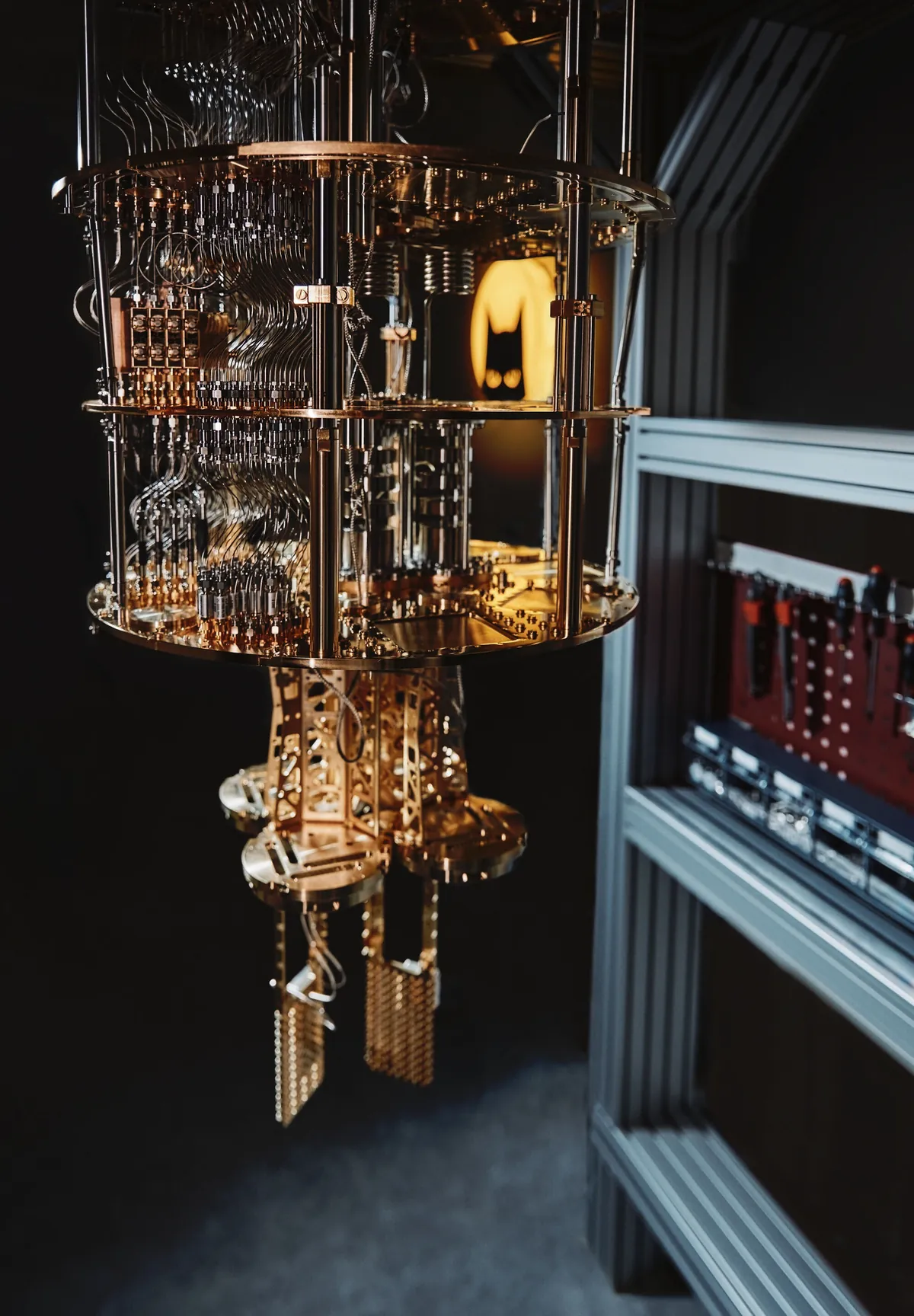

A team including Alice & Bob researchers estimates that a hypothetical fault-tolerant machine could factor an RSA-2048 integer with 22,593 physical cat in 3.14 days. The preprint appeared on October 28. Its base assumptions include a one-microsecond correction cycle, a ten-microsecond reaction time, circuit-level phase-flip probability of 5 x 10^-4 and no bit flips.[1]
That last assumption carries much of the story. The abstract associates it with a characteristic bit-flip time of roughly 100 years. An added correction layer would allow a roughly one-hour bit-flip time and raise the estimate to about 45,000 cat qubits. The headline machine size is therefore inseparable from the required error behavior.[1]
A resource estimate translates a proposed computation into an engineering target. It can show where an architecture saves hardware, where it spends time and which component assumptions most strongly affect the answer. It cannot establish that those assumptions will hold together in a built machine.
The company's explanation frames the work around a complete computation and the trade between size and speed. The practical question is whether the required performance can survive the full chain of preparation, operations, and control for the duration of that computation.[2]
The work sharpens a question about future cryptographic capability. It is not an executed attack or a calendar prediction. For organizations planning a security transition, a new resource calculation is useful context; the applicable migration guidance and the inventory of systems that need changing remain separate inputs.