
AMD and Qblox test the fast replies quantum computers need
A controller-to-processor prototype measures microsecond responses, while leaving the harder question of realistic error correction open.
Reading tools for text size, copying, printing and your reading list
AMD and Qblox have tested a connection that lets quantum-control equipment exchange messages directly with ordinary processors. The goal is to give researchers more choice over the hardware and software handling time-critical decisions.[1]
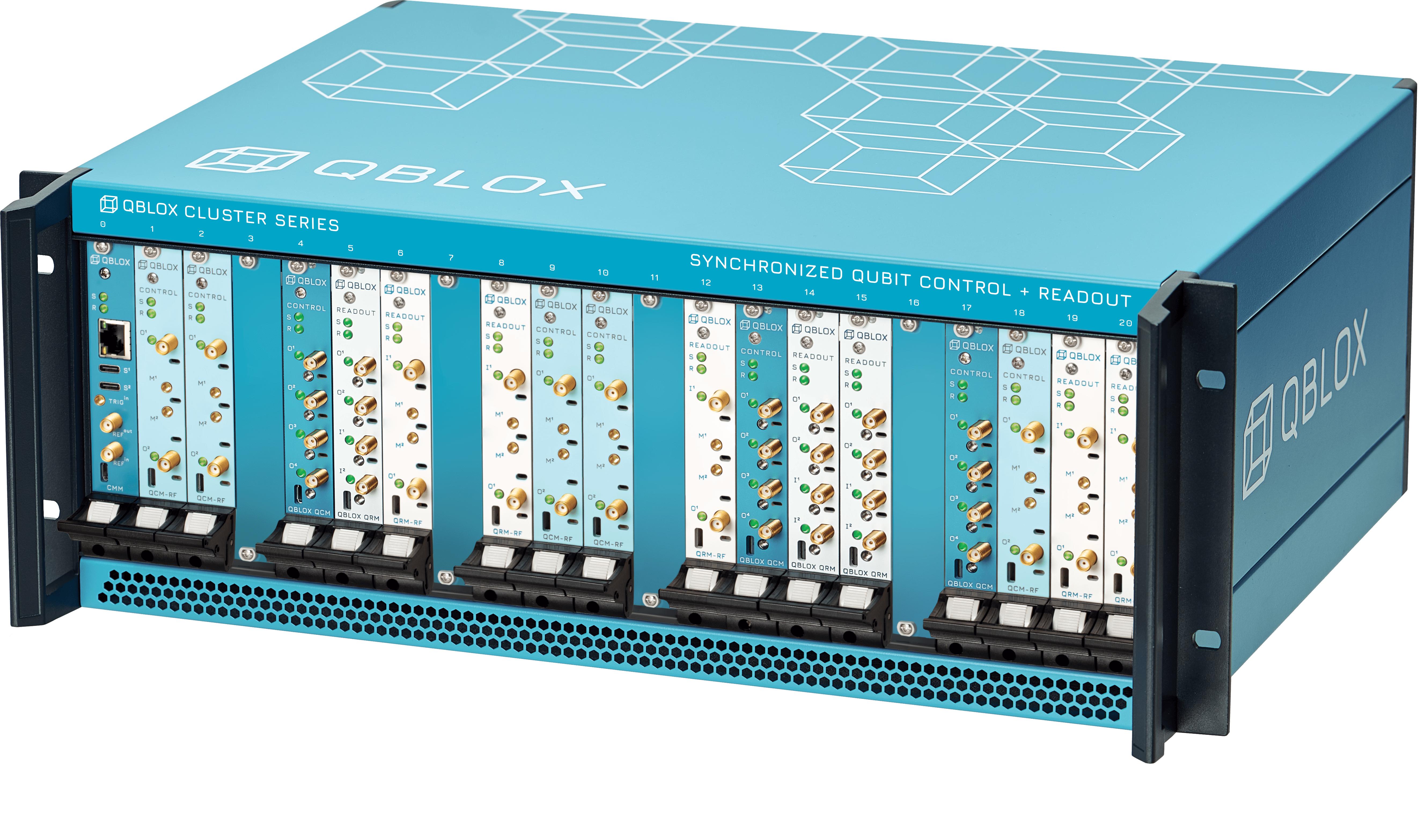
In a November 12 technical report, AMD describes a prototype linking a Qblox Cluster controller to classical computers through a programmable link card. Across 10,000 request-and-reply rounds per processor, median responses took 2.70 microseconds on one EPYC 9015 CPU core and 4.05 microseconds on an MI210 GPU. A microsecond is a millionth of a second.[1]
These are simple echo tests, not evidence of correcting errors in working . Moving an error report quickly and calculating the right correction are separate jobs. A CPU can win a tiny response test without being the best choice for heavier decoding work.[1]
View Qblox’s full-size photograph of its Cluster controller (PNG, 4.2 MB). Photograph by Qblox.
The software is designed to accommodate Python, C and OpenMP code through a shared library, rather than require one programming framework. It remains a research prototype; interfaces can change, and different software paths add overhead.[1]
Unlike Qblox’s earlier NVIDIA link, this report examines AMD hardware and a shared software interface. The setups do not support a direct speed ranking. Realistic decoding workloads and larger networks of devices are the next meaningful tests.[1]