
Chicago put a quantum computer behind a street-level window
IBM’s operational machine at Hyde Park Labs arrives before its permanent campus. Here is what that milestone does, and does not, establish.
Reading tools for text size, copying, printing and your reading list
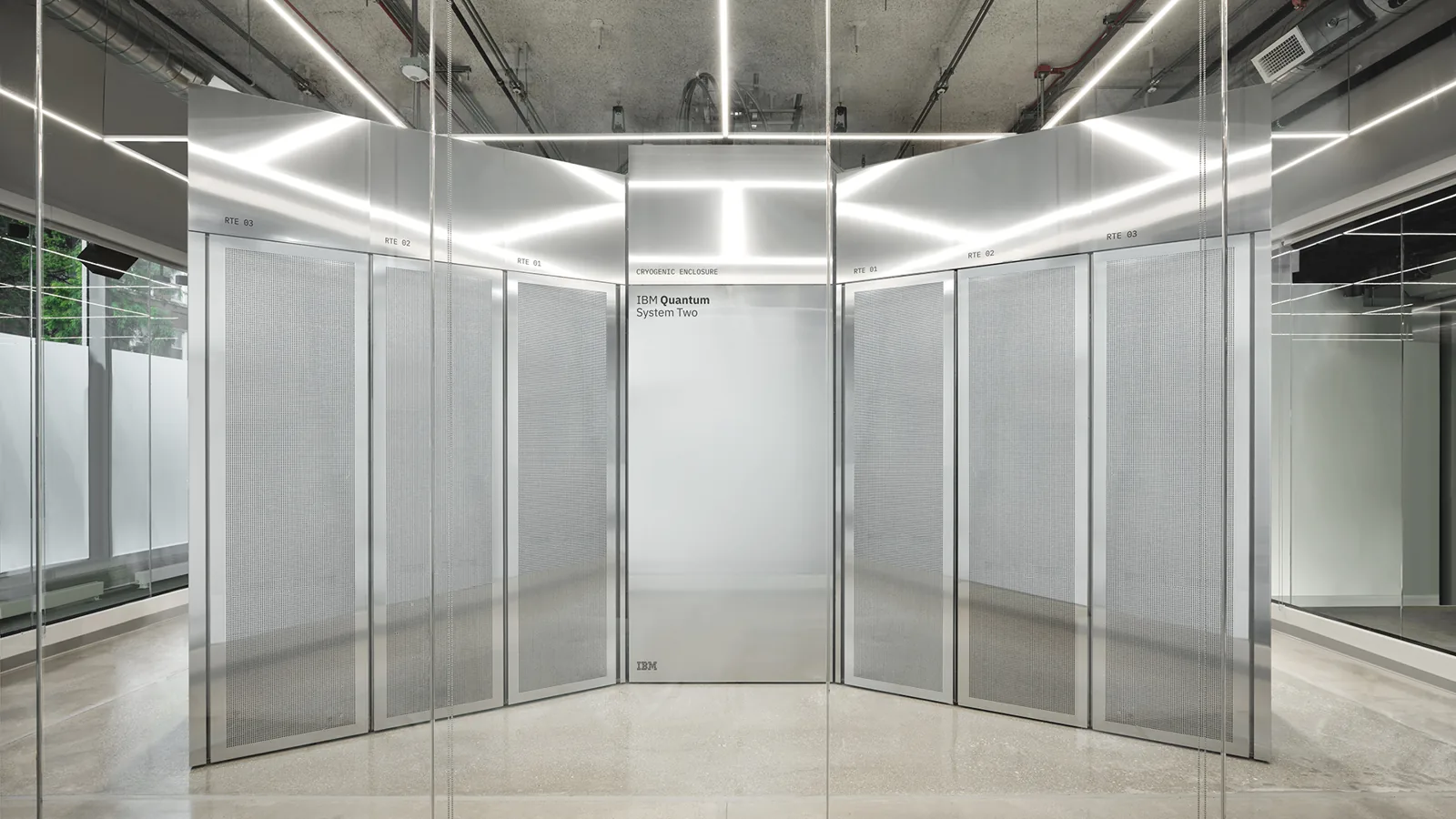
A passerby on Chicago’s Harper Avenue can now look through a street-facing window at an operating quantum computing system. IBM and the University of Chicago unveiled the machine at Hyde Park Labs on November 6, bringing a technology usually encountered through diagrams and distant cloud services into view from a city sidewalk.
The unusual display makes a larger development tangible: researchers have a working installation before the completion of its intended permanent home. IBM says the system will eventually move to the Illinois Quantum and Microelectronics Park, a campus still under construction. The announcement does not give a firm relocation date.
That is a meaningful infrastructure milestone. It is not, by itself, a measurement of how much faster a useful calculation can run. The distinction matters when an impressive machine arrives amid promises about a new industry.
What Chicago can see
The system is IBM Quantum System Two, powered by a Nighthawk processor. UChicago places it on the ground floor of Hyde Park Labs at 5207 S. Harper Ave., behind windows facing the avenue. The university says it is now running. Visibility from outside is not a promise of public interior access or unrestricted computing time.
The machine anchors the National Quantum Algorithm Center, where participating researchers and companies work on algorithms and applications. IBM describes projects spanning molecular simulation for drug discovery and optimization for power grids. Those are research directions, not evidence that the new Chicago installation has already improved a drug or a utility’s operations.
The enclosure in the photograph is not simply a large computer chip. Quantum systems include equipment needed to operate and control the processor. Cabinet size therefore offers a sense of physical infrastructure, not a measure of useful computing power.
Three milestones, three different claims
The timeline helps separate what has actually changed. The National Quantum Algorithm Center was established in 2024. Hyde Park Labs opened in 2025. The November 6, 2026 unveiling marks the arrival of an operational quantum system at that building. The future campus move remains another milestone, rather than something already accomplished.
These events answer different questions. A partnership establishes who plans to work together. A building provides a place to do that work. An operating machine makes experiments possible. A well-documented result establishes what a particular experiment achieved. None of those steps can substitute for all the others.
This is also why a processor specification should not be read as an application result. Counting , the hardware units used to carry quantum information, does not establish how many reliable a system can protect with . Nor does either count alone establish an advantage over a conventional computer on a useful task.
The next evidence to look for
For a consequential application claim, the useful comparison would name the task, problem size, quality of the answer and classical method used as a baseline. It would include the surrounding work: preparing data, coordinating conventional computation, repeating measurements and checking the result.
A fast quantum step can sit inside a slower overall process. Equally, a machine can have substantial research value before it delivers a commercial advantage. Experiments that expose a bottleneck or rule out an approach can improve the next design. The installation announcement is the beginning of that opportunity, not a head-to-head benchmark.
A reader following Illinois’s quantum ambitions now has two concrete developments to watch separately: what researchers publish using the Chicago system, and when the permanent campus can receive it. Clear methods and reproducible comparisons will make the first question answerable; a completed relocation will settle the second.
For now, the window provides a useful kind of public access: a view of the infrastructure. The next kind of visibility will matter more to the science: results that people beyond the ribbon-cutting can examine.