
A cold circuit spots a single photon in about 14 nanoseconds
Moving the readout next to a superconducting detector lets it flag one detected photon in real time, without sending a delicate analog signal out of the refrigerator first.
Reading tools for text size, copying, printing and your reading list
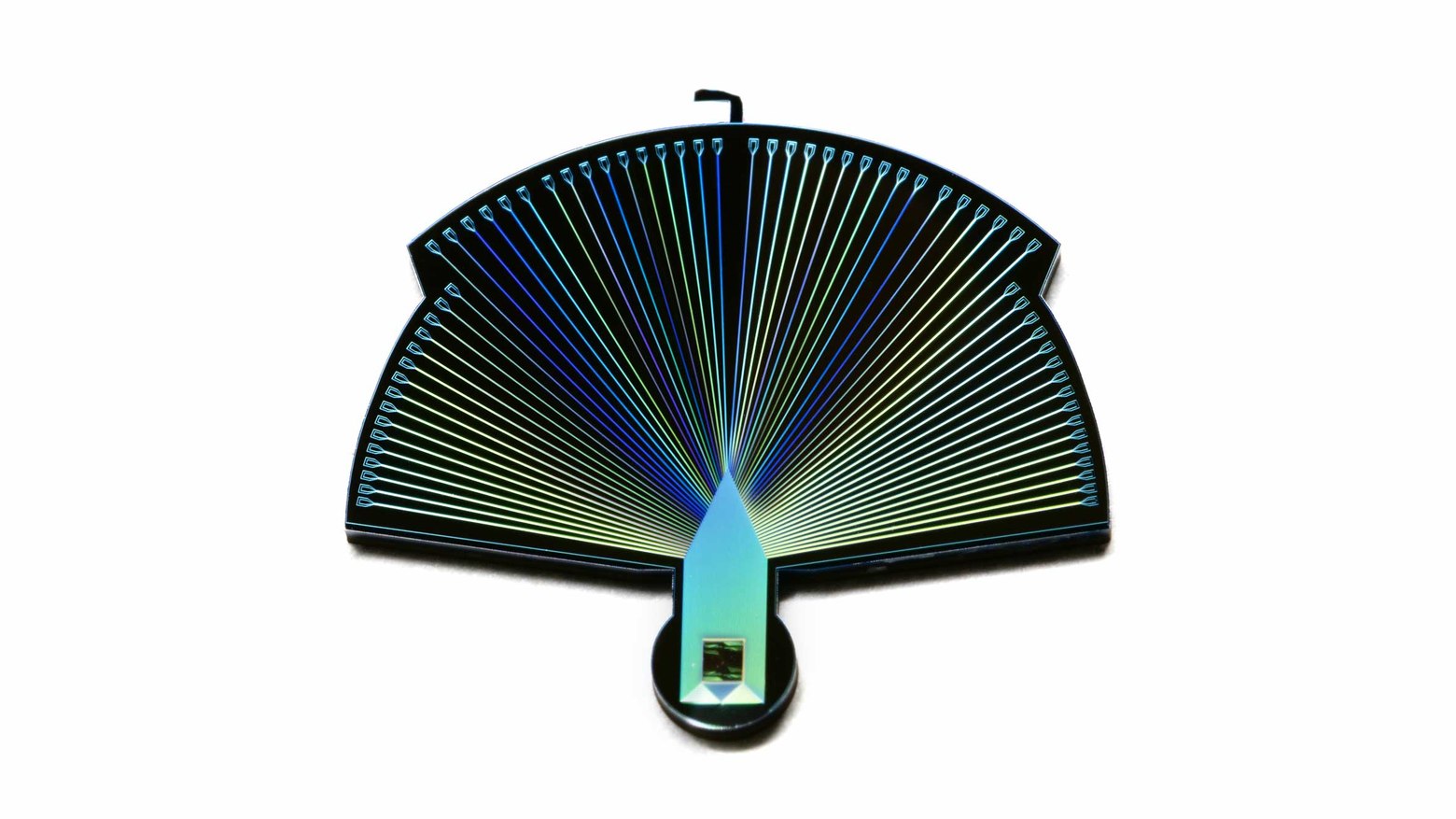
When a quantum experiment uses light, it can matter whether a detector saw one photon or several. It can also matter how quickly the rest of the experiment finds out. In a new preprint, researchers at Paderborn University, the National Institute of Standards and Technology and the University of Colorado Boulder report that a circuit mounted inside a refrigerator flagged a single-photon detection in 13.9 ± 0.3 nanoseconds. The experiment demonstrated the readout and used it to signal the presence of a partner photon; it did not use that signal to control a quantum operation.[1]
Make the decision where the pulse starts
A superconducting detector creates a tiny electrical pulse when photons hit its sensing strip. In the kind of detector used here, simultaneous hits can make the pulse rise faster. That means the time it takes to cross a fixed electrical threshold, measured relative to the laser clock, carries information about how many photons arrived. The differences can be as small as fractions of a nanosecond.[1]
One way to read that information is to send the analog pulse up a cable to a room-temperature instrument that measures its timing. Instead, the researchers placed a small circuit near the detector, on the refrigerator’s stage at about four kelvin. It compared the arrival time with an adjustable cutoff and produced a digital flag for the one-photon band. The measured delay is from detection to the filter output after calibrating for cable delays. It is not the time to run a complete experiment based on the result.[1]
The detector can’t count what never gets there
To put the flag to work, the team generated pairs of photons and monitored one path to infer what was in the other. Compared with accepting any detection event at the same laser power, selecting single-photon events reduced their measured indicator of unwanted multiple photons by about 24%, with an uncertainty of five percentage points. The authors estimate that roughly 64% of the photons in the monitored path were lost before detection. A pulse containing several photons can still look like a single hit if the others disappear on the way.[1]
The circuit can distinguish no detection, one photon, and two or more in its present form. It does not separate two from three or more, and the cutoff needed recalibration when the detection rate changed. A practical test would connect the flag to a switch that routes the partner photon, then measure both the total delay and how often the switch gets a usable photon. That would show whether the speed at the detector survives the rest of an optical system.[1]