
A tiny power-grid test exposes a quantum computing trade-off
A finer voltage encoding offered a better answer but returned it less often in a test linking DelftBlue with Quantum Inspire.
Reading tools for text size, copying, printing and your reading list
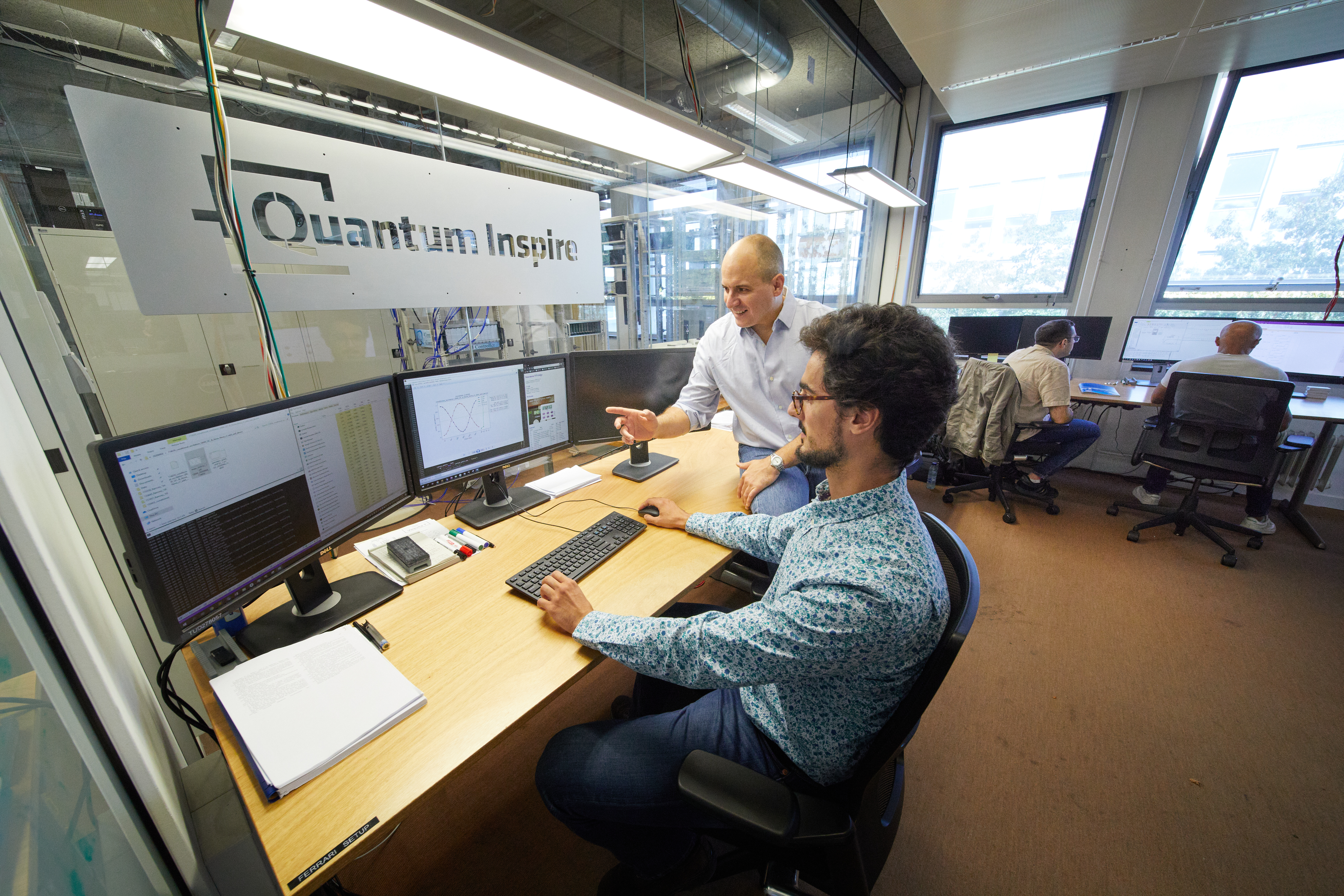
TU Delft has tested a complete route from its DelftBlue supercomputer to QuTech’s Tuna-17 quantum processor using a tiny electricity-grid problem. Reported on November 12, the experiment shows both the value of connecting the machines and the difficulty of getting useful answers back.[1][2]
Researcher Zeynab Kaseb studied voltages in a two-point network. DelftBlue prepared the problem and tuned a quantum circuit in simulation; Quantum Inspire then sent the circuit to hardware and returned measurements for analysis. This was a workflow demonstration, not evidence of an advantage over ordinary computers.[1][2]
According to TU Delft, the revealing comparison used four and six . The more detailed version could represent a voltage answer that fit the grid equations better: its best residual, a measure of mismatch, was 0.003262 rather than 0.01053. But its circuit grew from 30 layers to 165.[1][2]
The four-qubit run returned its best candidate 215 times in 1,024 measurements. The six-qubit run found its best candidate just 16 times. QubitWire’s arithmetic puts those rates at about 21% and 1.56%; 16 in 1,024 is exactly one in 64, the uniform-sampling reference for six bits.[1][2]
That distinction matters beyond this small test: allowing a better answer is not the same as reliably finding it. The next useful benchmark is whether larger, deeper calculations can improve both answer quality and the chance of obtaining it, with the full classical workload included.