
Skip to content
RESEARCH

A new test checks the software behind quantum error correction

DEMVal compares error models instead of relying on sampled outputs.

Published Source report Sources checked
Reading tools for text size, copying, printing and your reading list
My reading list
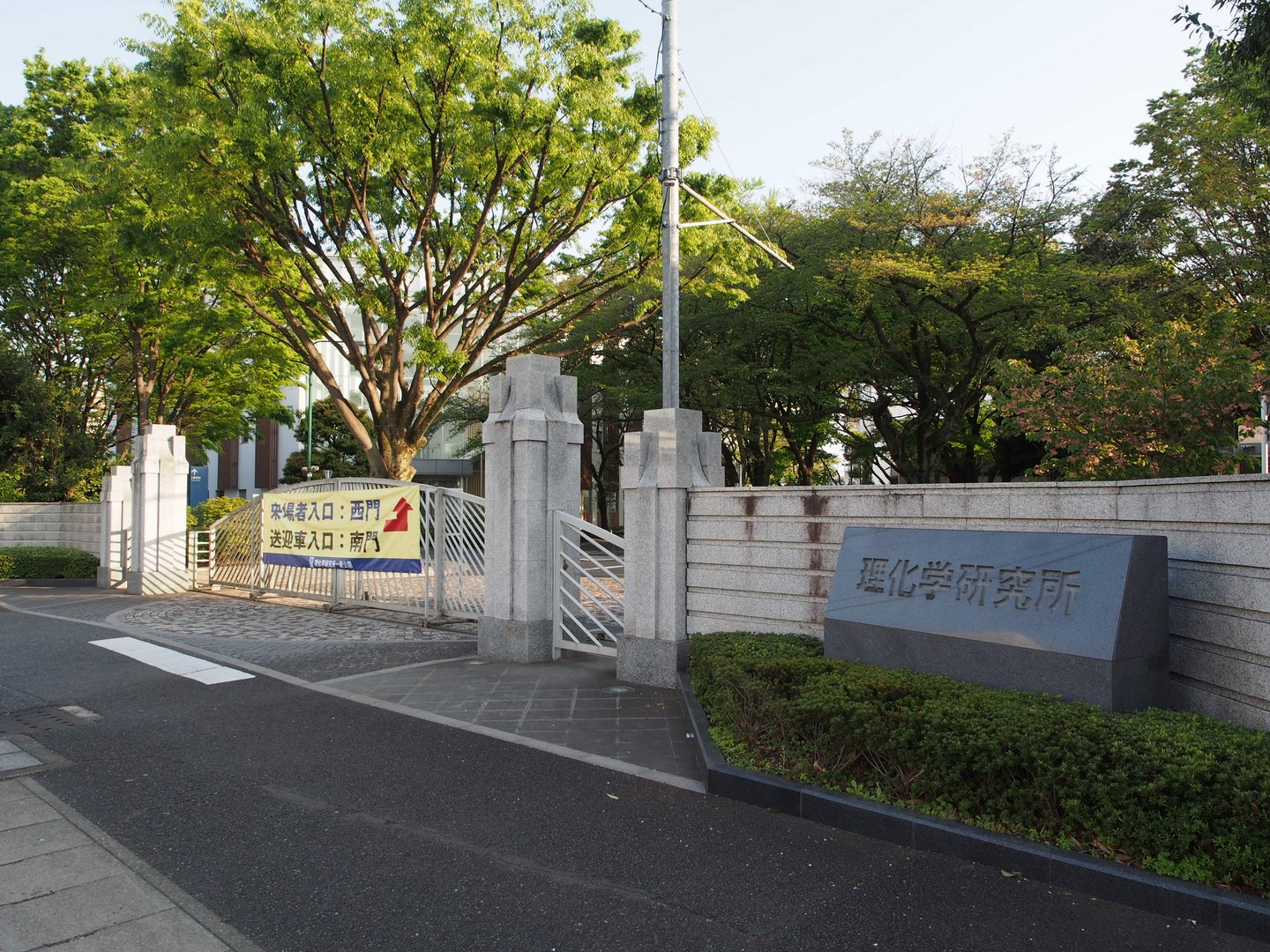
The entrance to RIKEN’s Wakō campus in Japan.
The Wakō campus of RIKEN in Saitama, Japan. DEMVal’s authors work at RIKEN’s Center for Quantum Computing.Illustrative photoKestrel

In , a decoder reads a pattern of checks and uses an error model to decide which correction to make. RIKEN researchers developed DEMVal to check the model that software gives the decoder. If the model assigns the wrong probabilities to errors, the decoder can choose a less reliable correction.[1]

Their November 16 preprint reports six defects across tested versions of NVIDIA CUDA-Q QEC, Riverlane Deltakit and Microsoft QDK-EC’s deq component. The underlying issues were publicly reported in June: this is a new research account, not a fresh disclosure of vulnerabilities.[1][2]

Instead of estimating agreement from repeated simulated outcomes, DEMVal compares each generated error model with a reconstructed reference. The authors tested 551 memory-experiment configurations and report that developers confirmed the six defects and accepted fixes.[1]

The study concerns software models, not failures measured on quantum processors. Its conclusions depend on the reference construction and tested configurations; it does not certify every compiler or error model.[1]

Keep your reading trail

Evidence & context

2 linked sources

Software-model study; earlier public bug reports.

How to read the evidence and dates

An announcement records what an organization stated. An experiment reports an observation. A simulation or resource estimate depends on its assumptions. QubitWire’s analysis connects these sources; the labels are not quality scores.

Published is the article’s first QubitWire publication. Updated marks a substantive content change. Sources checked records a review of the underlying evidence. An older paper can support a new explanation, and another press release about the same work is not independent replication.

Sources

  1. Luo and Suzuki, arXiv preprint

    First submitted November 16; not peer-reviewed.

  2. Earlier issue reports

    Public June 12 report; linked fix activity.

Keep up with these topics

Explore the subjects covered in this story.

READ NEXT

Continue exploring

All Research stories
  1. Explore measurement and sampling

    A new sampler looks for rare quantum-code failures without getting trapped

    A classical simulation method addresses the difficulty of finding rare failures.

    Published · Source report · Sources checked · About 1 min read
  2. Explore measurement and sampling

    Merlin Makes More Quantum Error-Correction Circuits Practical to Simulate

    An October 5 preprint gives exact polynomial-time simulation for a restricted non-Clifford circuit class. Its benchmarks reveal why the best simulator depends on the workload and sampling budget.

    Published · Source report · Sources checked · About 6 min read