
A gaming GPU kept up with a microsecond stream of simulated quantum errors
An RTX 5090 handled a stream of simulated error clues by working on several batches at once. The answers still took roughly 60 to 140 microseconds in the typical case.
Reading tools for text size, copying, printing and your reading list
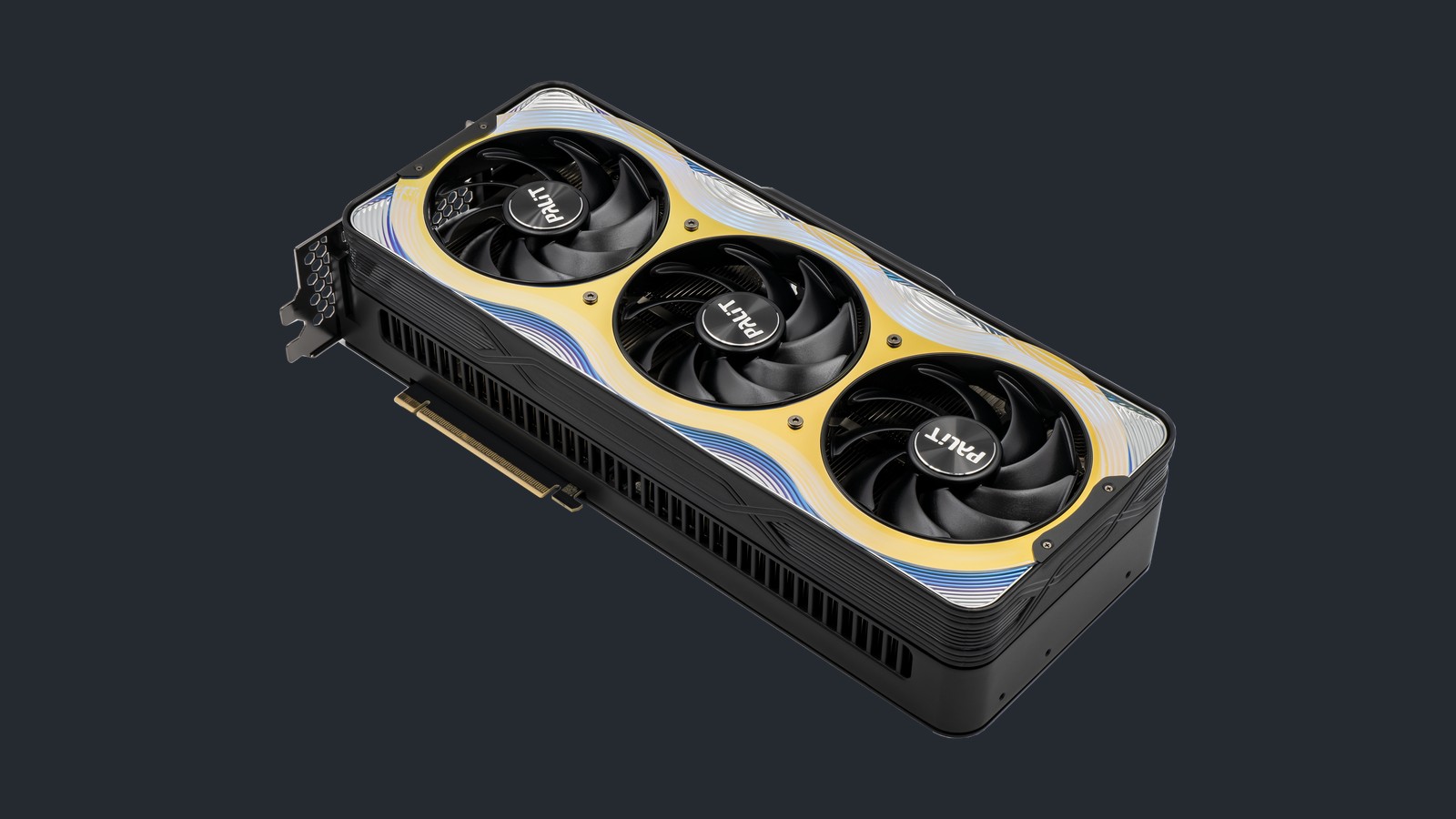
A quantum computer can produce its next set of error clues long before software has finished interpreting the last one. In a November 25 preprint, Aditya Sodhani and Keshab K. Parhi report that a single NVIDIA GeForce RTX 5090 kept up with a new round arriving every microsecond in tests of four quantum error-correcting codes. The GPU was real. The faults and measurement records came from a simulation, not a live quantum processor.[1]
Keeping up is not the same as answering instantly
repeatedly measures checks that reveal signs of faults without directly reading the information the computer is trying to protect. A decoder combines overlapping clues to decide what likely went wrong. If clues arrive faster than the decoder can process them, the queue grows. But a decoder can stay ahead of that backlog even if each individual answer takes longer than the interval between rounds. Think of a kitchen that starts several orders at once: it can finish a dish every minute without cooking any one dish in a minute.[1]
On the largest code they tested, the authors' sequential method ran into a backlog when rounds arrived less than 120 microseconds apart. Their parallel method sustained rounds one microsecond apart on the same GPU. That's a 120-fold gain in the arrival rate the software could sustain in that comparison, not a claim that a gaming GPU answers every quantum error 120 times faster. In a separate capacity test at the one-microsecond arrival rate, median time from a round's scheduled arrival to a committed decision ranged from 63 to 144 microseconds across the four code designs.[1]
The trick was to stop slow batches blocking the rest
The software divides the stream into overlapping time windows. Different parts of the GPU work on multiple windows concurrently. If one batch needs another pass, others can keep moving instead of waiting in line. Extra checks around the edges of each window also help the decoder avoid making decisions based on too little of the surrounding record. The researchers found that this check improved accuracy on the three larger codes in a separate simulated test.[1]
The experiments focused on bivariate bicycle codes, a family designed to store multiple protected units of quantum information together. The largest design would encode 12 using 144 data qubits. Those numbers describe the code that the software modeled, not a chip the team built or controlled. The study also used preloaded records and two simulated streams of the same type to approximate the workload of both types of checks. It did not use the correlations between those two types to improve the corrections.[1][2]
What a live test still has to show
A quantum machine would have to collect measurements, send them to a decoder and make the result available to the control system when needed. This benchmark didn't measure that full path. And while a steady backlog is one problem, a decision that arrives too late to guide the next operation is another. The preprint gives engineers a reason to test this design on hardware: an off-the-shelf GPU kept up with the simulated workload. The next question is whether it can do the same when a real machine supplies the clues and needs the answers back.[1]
Keep your reading trail
Keep up with these topics
Explore the subjects covered in this story.