
Silicon qubits stayed coherent longer but needed a stronger drive
Two silicon chip designs exposed a trade-off. Qubits made with Intel’s process resisted some electrical noise better, while RIKEN’s reference needed less microwave power to turn a spin.
Reading tools for text size, copying, printing and your reading list

Why a quieter qubit can be harder to steer
A chip designer wants an electron’s spin to hold its timing between instructions, then turn promptly when a pulse arrives. A nearby magnet helps with the second job, but also makes the spin sensitive to stray electrical disturbances. A team at RIKEN and QuTech measured both effects in two different chip layouts.[1][2]
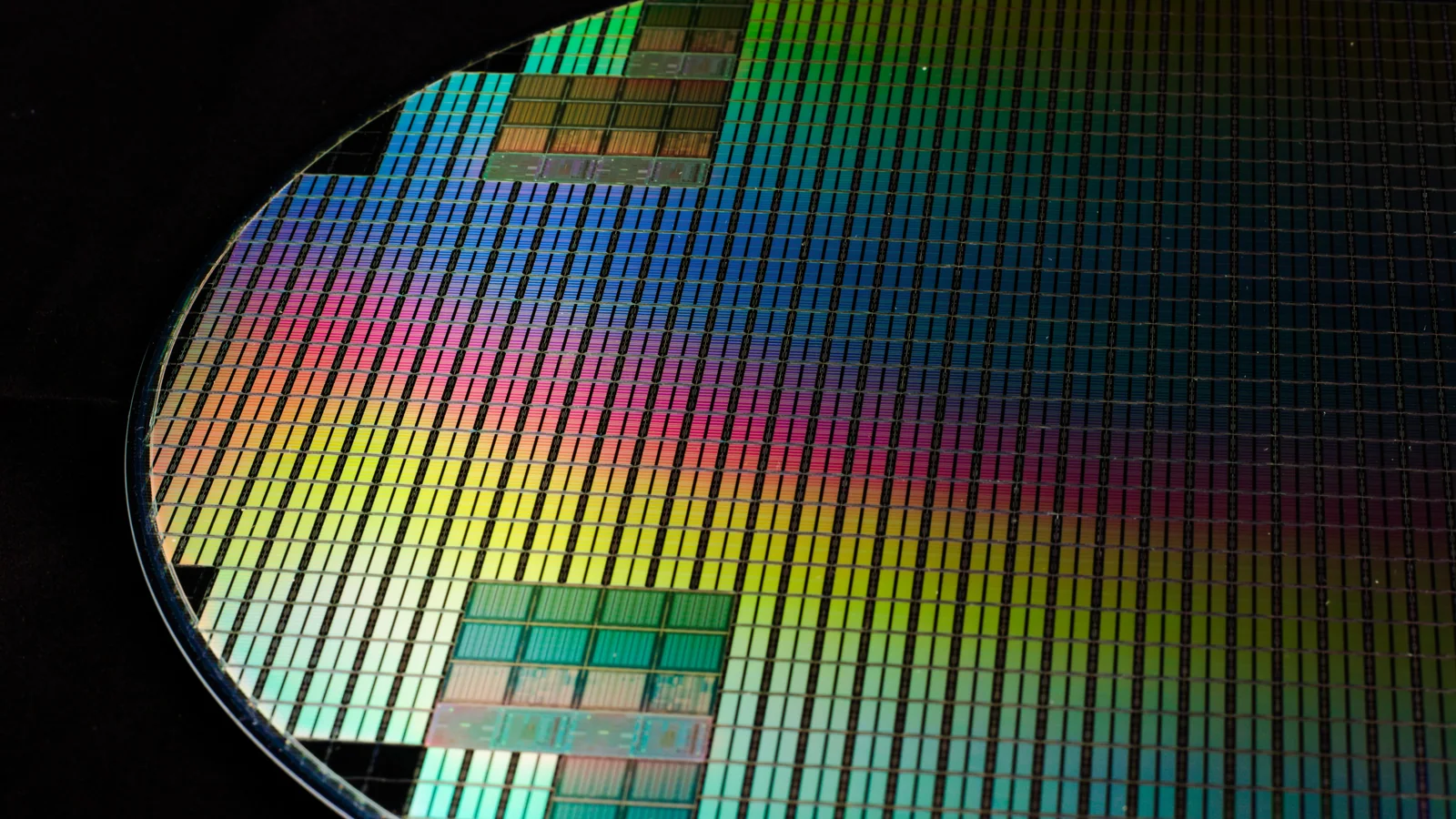
Leon Camenzind and colleagues compared silicon spin made with Intel’s 300-millimeter wafer process with qubits made in RIKEN’s cleanroom. The industrial layout placed the micromagnet farther from the electrons. Its shape, the wiring and the fabrication process differed too, so this was a comparison of finished designs, rather than a test in which one magnet was moved.[1][2]
In one test, a pulse halfway through the wait refocused the spins, much as runners who turn around together can meet again despite different speeds. The median time over which the spins retained their phase was about 200 microseconds in the industrial devices and 70 in the reference. Driving a rotation at the same rate took about six times as much power at the microwave source. The researchers measured that power at the source, outside the cold chip.[2]
The space between magnet and qubit
The industrial layout placed the magnet farther from the qubits. The researchers measured longer coherence and needed more microwave power to rotate the spins.
What the gate benchmark measures
To test active control, the team applied random sequences of rotations followed by a final operation designed to undo the sequence. From the way the return signal faded with sequence length, they inferred fidelity near 99.99% for a quarter turn on the industrial qubits. The reference peaked near 99.999%. These figures describe a single-qubit operation under benchmark conditions.[2]
The distinction matters for chip design. Moving the magnet closer might improve control, but a magnet placed in a lower wiring layer competes for space with the connections needed to address many qubits. The experiment points to a layout constraint that engineers can change. It does not establish a universal distance every manufacturer should use.[2]
The next manufacturing test
The manufacturing question is how often this balance holds across a wafer. Measuring the spread in control power and gate errors across many arrays would show how much individual tuning each chip needs. Driving neighboring qubits at the same time would test whether a layout that works well for one spin can also support a sequence of two-qubit operations.