
LTM brings AI noise cleanup to IBM’s quantum software catalogue
The new service adjusts results after a quantum experiment runs. It supports Heron processors and does not make them fault-tolerant.
Reading tools for text size, copying, printing and your reading list
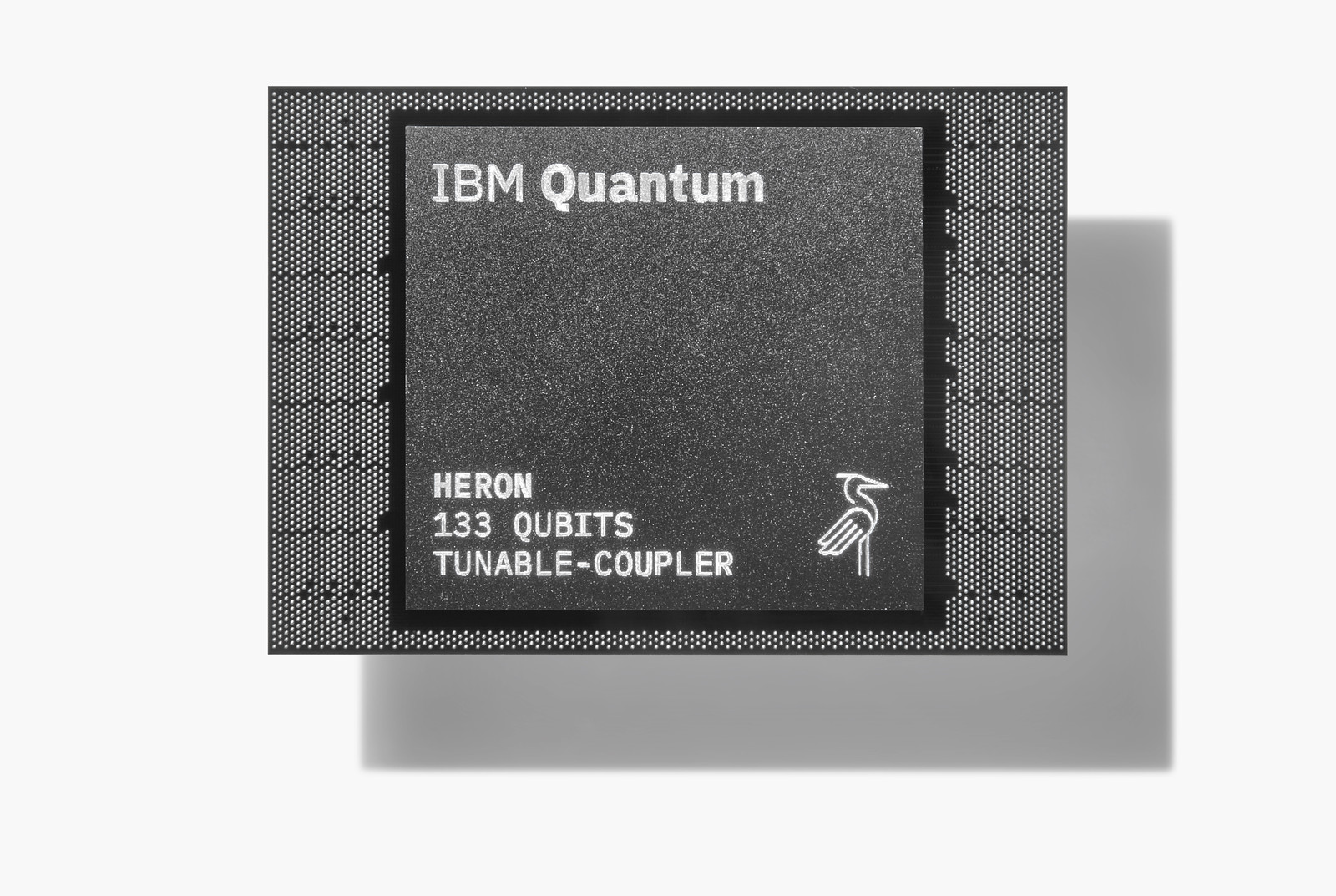
LTM has made its AI-based quantum error-mitigation service available through IBM’s Quantum Functions Catalog, giving eligible users another tool intended to improve noisy experimental results without running extra quantum circuits specifically for mitigation.[1][2]
Time on a quantum processor is a limited resource. AI-QEM shifts this cleanup step to a conventional computer. That does not eliminate computing costs or turn today’s hardware into an error-corrected quantum computer.[1][2]
LTM announced the availability on November 12, following IBM’s description of the function in its November 11 developer-conference update. IBM’s public catalogue lists the service among tools that simplify the work of running quantum experiments.[1][4][5]
Quantum experiments often estimate an average property, such as a model magnet’s magnetization, from repeated measurements. Noise can shift that estimate. AI-QEM uses a trained model informed by the circuit, processor and measured property to calculate an adjustment after the hardware has produced its results.[2][3]
IBM’s documentation sets two important limits: the current release supports its Heron processor family, and it applies mitigation only when the magnitude of the noisy expectation value, the estimated average, is at least 0.1. Smaller measured signals are left alone.[2]
Avoiding additional quantum runs during use is different from needing no quantum data at all. The documentation describes training datasets that pair hardware measurements with ideal values calculated through simulation. The resulting model is then reused for inference, the step that generates an adjustment for a new input.[2]
IBM’s worked tutorial uses an Ising model, a simplified description of interacting magnetic spins. It compares AI-QEM with zero-noise extrapolation, which uses measurements at deliberately varied noise levels to estimate a less noisy answer. The tutorial estimates 23 seconds of quantum processing for AI-QEM against 52 seconds for the comparison on Heron r2, while warning that runtime can vary. These are example QPU-time estimates, not total elapsed time or a universal speedup.[3]
The practical question is whether a learned correction improves the particular quantity a researcher needs, on the circuits and processor they actually use, at an acceptable total cost. Spending less time on the quantum machine is useful only alongside a trustworthy answer.[2][3]
Access makes that question easier for eligible teams to investigate. The service remains beta. Its documentation lists IBM Premium and Flex plans, plus On-Prem access through IBM’s platform API; this is not a claim of unrestricted free access.[2][4]
The next meaningful test is how reliably the learned adjustments work on unfamiliar workloads and changing device noise, alongside the classical processing they require. Catalogue availability establishes a route to try the tool. It does not establish independent scientific validation or practical quantum advantage.[2]