
Different light makes quantum behavior easier to verify
Quantum evidence, not computing speed.
Reading tools for text size, copying, printing and your reading list
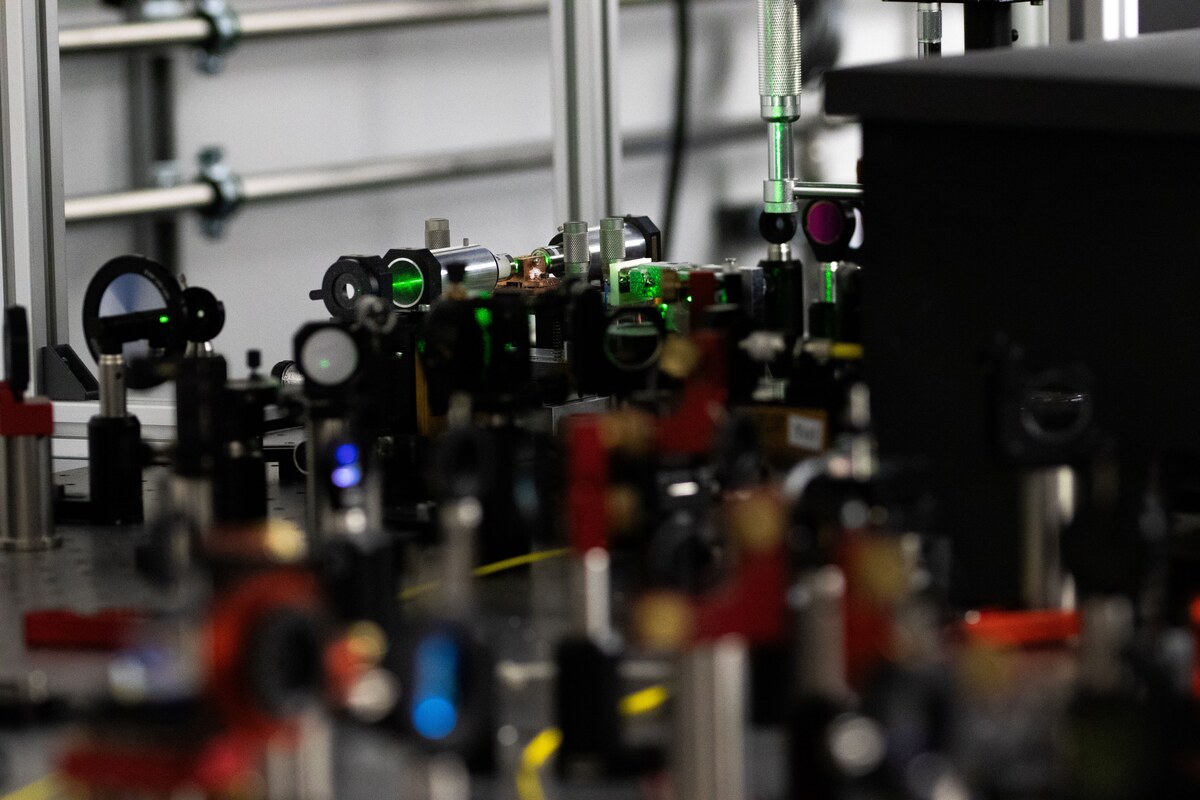
Changing a quantum machine’s light source can change its results. Researchers used the Paderborn Quantum Sampler (PaQS) to compare those inputs without switching machines, helping isolate which resources strengthen evidence of quantum behavior.[1]
Changing the light
PaQS sends eight inputs through 12 optical paths, then counts detected light. It compares Gaussian and non-Gaussian states: families of light with different statistical patterns. PRX Quantum published the study on November 17; Paderborn University highlighted it on November 18.[1][2]
The test asks whether classical input light could reproduce the measurements, without prior knowledge of the inputs or optical network. Non-Gaussian inputs gave stronger evidence of nonclassical behavior under the proposed metric. That is a prerequisite for quantum advantage, not proof of faster computation.[1]
An existing platform, a published comparison
This is a journal-publication milestone, not a first unveiling. The study first appeared as a preprint on December 9, 2025, with its latest revision on October 1, 2026. Paderborn introduced PaQS publicly in October 2024. The archival photograph accompanying this article comes from that earlier announcement, not verified documentation of the new configuration.[3][4]
Some light inputs require harder preparation. These comparisons help researchers judge what that effort buys, separating the input’s contribution from differences between machines.[1]