
Xanadu says its quantum light switch loses less light. Here is why that adds up.
A new 7-millidecibel result targets a real obstacle in photonic computing, but component loss is not a measure of computer speed or a finished fault-tolerant machine.
Reading tools for text size, copying, printing and your reading list
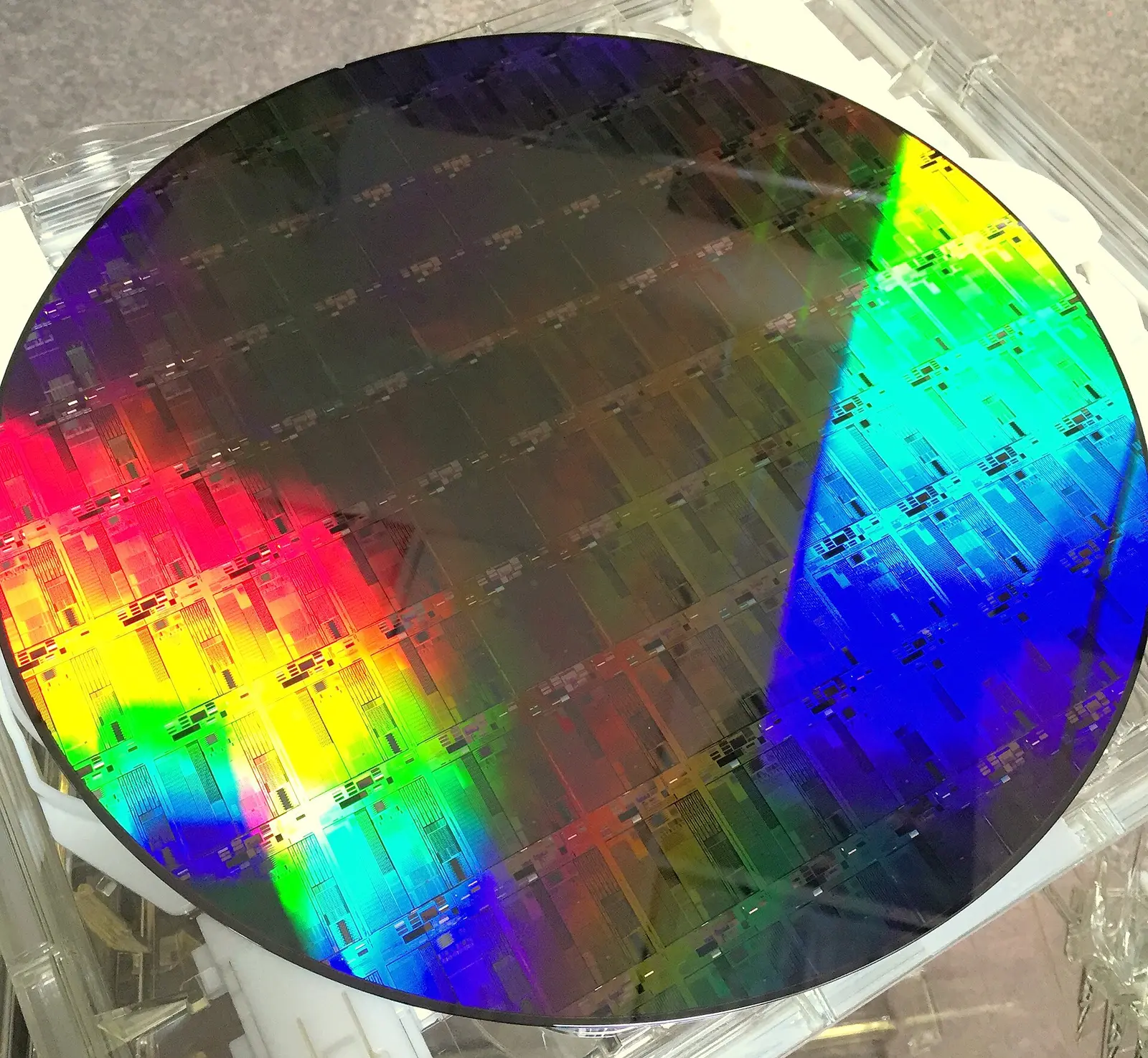

Xanadu and HyperLight say they have reduced the light lost in an optical switch to 7 millidecibels, down from their previous 20-millidecibel benchmark. Announced November 10, the result addresses a practical difficulty in computers that use photons: losing a little light at each step can eventually mean losing a lot.[1]
The companies say the switch was demonstrated using HyperLight’s thin-film lithium-niobate manufacturing platform. This is a company-reported component result, not a demonstrated threefold increase in computing speed, and not evidence that a complete fault-tolerant quantum computer is ready.[1]
A small number that compounds
A millidecibel is one-thousandth of a decibel, the logarithmic unit used to express optical loss. At 20 millidecibels, about 99.54 percent of incoming light survives the stated loss. At 7 millidecibels, about 99.84 percent survives.
That sounds like a small difference because, for one component, it is. Repeating the calculation makes the engineering point clearer.
For this illustration, assume each quoted loss applies to the same component boundary and operating conditions. The release does not provide enough measurement detail to independently establish that comparability. Imagine a hypothetical route through 100 identical switches, with no other losses. At the older figure, about 63.1 percent of the light would remain. At the new figure, about 85.1 percent would remain. These are QubitWire calculations, not measurements of a Xanadu circuit. One hundred switches is an illustrative choice, not a disclosed machine design.
Real hardware adds other losses and errors. Creating the photons, coupling them between components, transporting them and detecting them all matter. The arithmetic therefore explains why better components can help without predicting the performance of a complete machine.[2]
Compare the component, not just the number
An optical switch routes light. A phase shifter changes its phase, the wave’s position in its oscillation, and can be one part of a switching circuit. A useful comparison has to establish precisely which section was measured, at which operating conditions, rather than lining up numbers with the same unit.
That is why competitor rankings need care. The PsiQuantum preprint linked from Xanadu’s announcement describes a barium-titanate phase-shifter section with roughly 100 millidecibels of insertion loss. It discusses broader switching networks as a further step. This is not a matched test of the two companies’ complete computers.[2]
The same paper separates high fidelities, meaning accurate quantum operations, measured when photons arrive from the probability of those photons arriving at all. A quantum operation can look accurate among detected events while loss remains a separate obstacle. Both questions need answering.[2]
What the announcement still leaves open
Xanadu’s release describes good manufacturing yield and repeatability but does not provide a numerical yield distribution, sample count or measurement uncertainty for the 7-millidecibel result. Its expectation of better economics and a production ramp remains a forecast.[1]
No independent replication of the new result was identified in the sources reviewed for this article. The reported improvement deserves attention as a component milestone, with the next useful evidence being repeatable performance across devices and a clear accounting of how it changes a working system’s total loss.
For readers following the business, that is a more useful test than treating “nearly threefold” as a verdict on an entire quantum-computing architecture. The immediate claim is about keeping more light alive through a switch. The larger commercial promise still has to be demonstrated.