
A photon count cannot tell you when a quantum computer wins
A new H100 simulation study proposes a common comparison for light-based computers. Its useful lesson is to check the task and output rate before declaring an advantage.
Reading tools for text size, copying, printing and your reading list
A quantum computer made from light does not become useful simply by containing more photons. A new study from Quandela, NVIDIA and CNRS-linked researchers proposes a clearer comparison: how long an ordinary computer needs to produce one sample drawn from the same probability distribution.[1]
The November 9 preprint compares exact sampling, up to numerical rounding, on an NVIDIA H100 graphics processor. Its proposed yardstick is one output per second under specified conditions. The work supplies a way to discuss competing claims, not proof that a particular light-based machine has beaten the best conventional computer.[1]
Ask what the computer must reproduce
An output, or sample, is one possible result drawn with the probabilities the device assigns to it. The possible results and their relative probabilities both matter. Producing a list that merely looks complicated is not the same task.
Think of comparing two weather services. One might produce a rough forecast quickly while another returns a detailed forecast slowly. Neither the number of computers nor the length of the report settles which service performs better. You first need to agree on the requested result and tolerated error. That is an analogy for fair comparisons, not an application demonstrated by this paper.
Why the benchmark contains a decimal photon
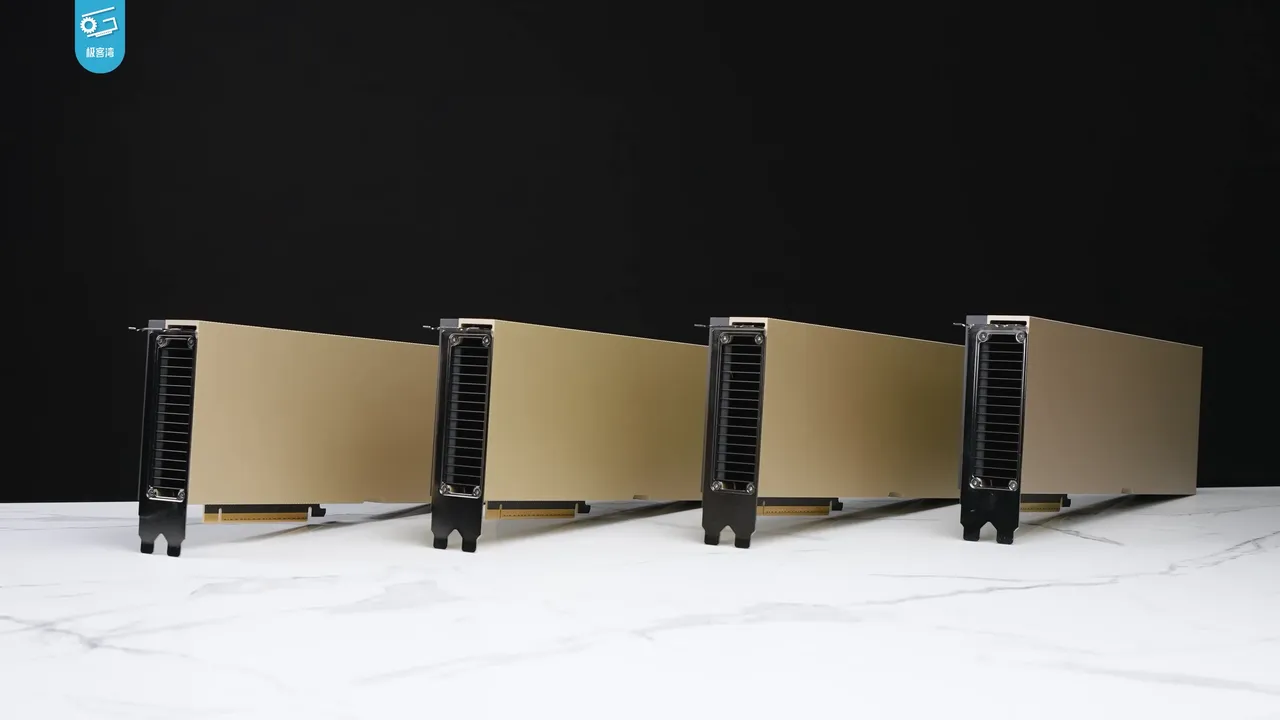
For one specified case, the researchers estimate a crossing at 38.3 single-photon inputs. It uses random interferometers, twice as many optical modes as inputs, detectors that distinguish photon numbers, and one H100 PCIe GPU. The decimal is a fitted timing boundary between integer sizes, not a device containing a fraction of a photon.[1][2]
An interferometer mixes paths that light can take. The input state, circuit, detector model and allowed numerical accuracy all affect the simulation task. A photon count stripped of those conditions loses much of its meaning.
The chosen rate also deserves attention. At one sample per second, 1,000 samples take about 16 minutes and 40 seconds; 10,000 take about two hours and 47 minutes. That arithmetic excludes other overhead and does not compare the study with a particular quantum machine. It explains why the rate of outputs matters alongside their size.
The reported boundary establishes what the tested classical approach can do. It does not establish that larger problems are beyond every classical algorithm, a larger machine or an approximate simulation. Better conventional methods can move the boundary.[1]
What independent checks would establish
Public code accompanies the paper, but the authors say released version 0.2.1 was not remeasured: the reported runs used prerelease revisions. Its public benchmark document also retains release-preparation notes. QubitWire has not independently reproduced the runs.[1][2]
The practical reader checklist is short: same task, same tolerated error, stated hardware budgets and measured rates of useful outputs? If a quantum-advantage headline does not answer those questions, its headline number cannot do all the work.
Independent reproduction, complete run records and comparisons against improved classical methods would make the proposed yardstick more useful. For now, the contribution is a more explicit comparison to examine, rather than a universal number of photons that guarantees a quantum win.
Keep your reading trail
Keep up with these topics
Explore the subjects covered in this story.