
A photonic experiment learns to tell quantum states apart
A new preprint studies a focused laboratory decision and the limits of a promising learning method.
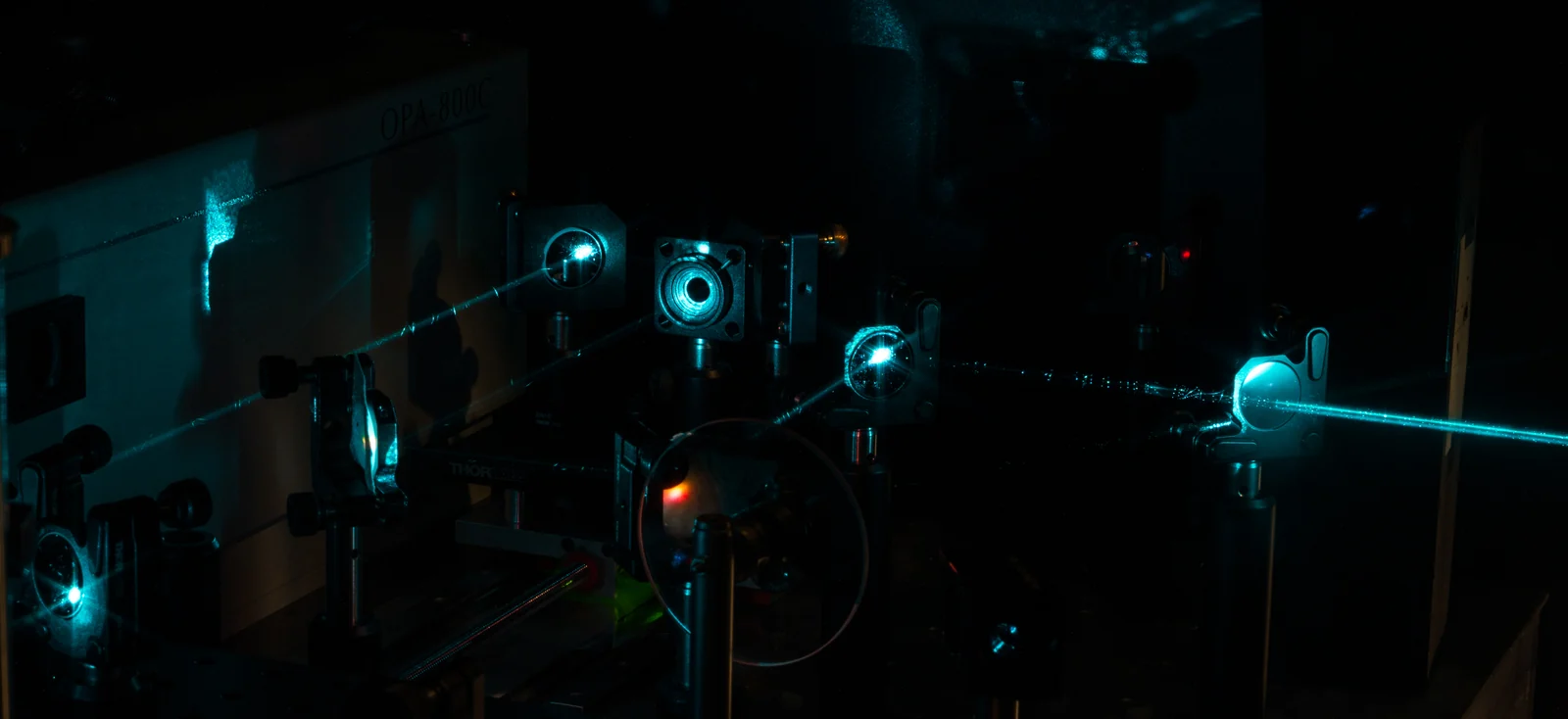

A photonic experiment has classified quantum states by comparing them with examples, tackling a laboratory question: what kind of state did we prepare? Keitaro Anai and colleagues report a test involving 180 single-mode states, separated into stellar ranks zero and one. Their preprint was submitted on 29 October and appears in arXiv's 30 October listing. The quantum hardware estimates similarities; a classical computer trains the classifier.[1][2]
The paper also gives conditions under which the measurement requirement grows polynomially with system size. Those conditions concern coverage and separation of the data classes. The authors explicitly acknowledge that their small experiment does not establish quantum advantage.[1]
A label or a full description
The distinction between classification and reconstruction explains why the question matters. Quantum state tomography builds a mathematical description from repeated preparations and measurements in a complete collection of settings. Qiskit's documentation describes that process directly. If a laboratory needs one label, reconstructing a whole state may answer a much larger question than the one it actually asked. That last observation is an experimental-design argument, rather than a demonstrated saving in this particular experiment.[3]
A label and a full description
- Classification
- Which defined category fits this input?
- Check accuracy for the stated classes and test conditions.
- Reconstruction
- What mathematical description fits the state?
- Check the measurements used and the reconstruction assumptions.
Stellar rank describes the non-Gaussian resource content of states of light; rank zero includes Gaussian states. The underlying formalism, published in 2020, links the hierarchy to the minimum number of single-photon additions needed to construct certain states, alongside Gaussian transformations. It gives the classification task a physical meaning: the categories describe ingredients in state preparation.[4]
There is a useful earlier benchmark for the story. In 2024, Anai and colleagues demonstrated a continuous-variable quantum kernel on a programmable photonic processor. That study reported classification accuracies comparable to a classical kernel on its datasets. It is a reminder to ask what the input is, which comparison is being made and what successful classification means before treating any photonic learning result as a broad claim about artificial intelligence.[5]
The comparison that would matter
Consider an ordinary quality-control task. A manufacturer may need to decide whether a component belongs in one bin or another; it need not recover a complete microscopic description of the component. A useful classifier trades breadth for a specific decision. The analogy is limited, because quantum measurements and state preparation have their own rules, but it clarifies the practical objective. The output must be judged against the decision a user needs to make.
QubitWire's assessment is that the next convincing comparison should begin with an equal accuracy target and an explicit accounting of resources. A fair resource comparison includes preparation attempts, detector events, calibration, classical training and evaluation on new examples. A method that requires fewer measurement settings could still demand more repetitions. A method with favorable mathematical scaling could also carry an awkward overhead at the sizes a laboratory can currently use. Both possibilities deserve measurement, rather than assumption.
There is a productive way to frame the opportunity: evaluate a narrowly specified laboratory decision first, then expand the range of states and conditions only as the evidence supports it. A comparison that identifies when the classifier should refuse to give a confident answer would be particularly useful. Knowing the boundary of a diagnostic can be as valuable as improving its score inside a convenient test set.