
The quantum chip searched for answers. A classical step checked the rules.
A D-Wave benchmark met four constraints in five of six full-chip tests after conventional software cleaned up the candidates. It did not establish a speedup.
Reading tools for text size, copying, printing and your reading list
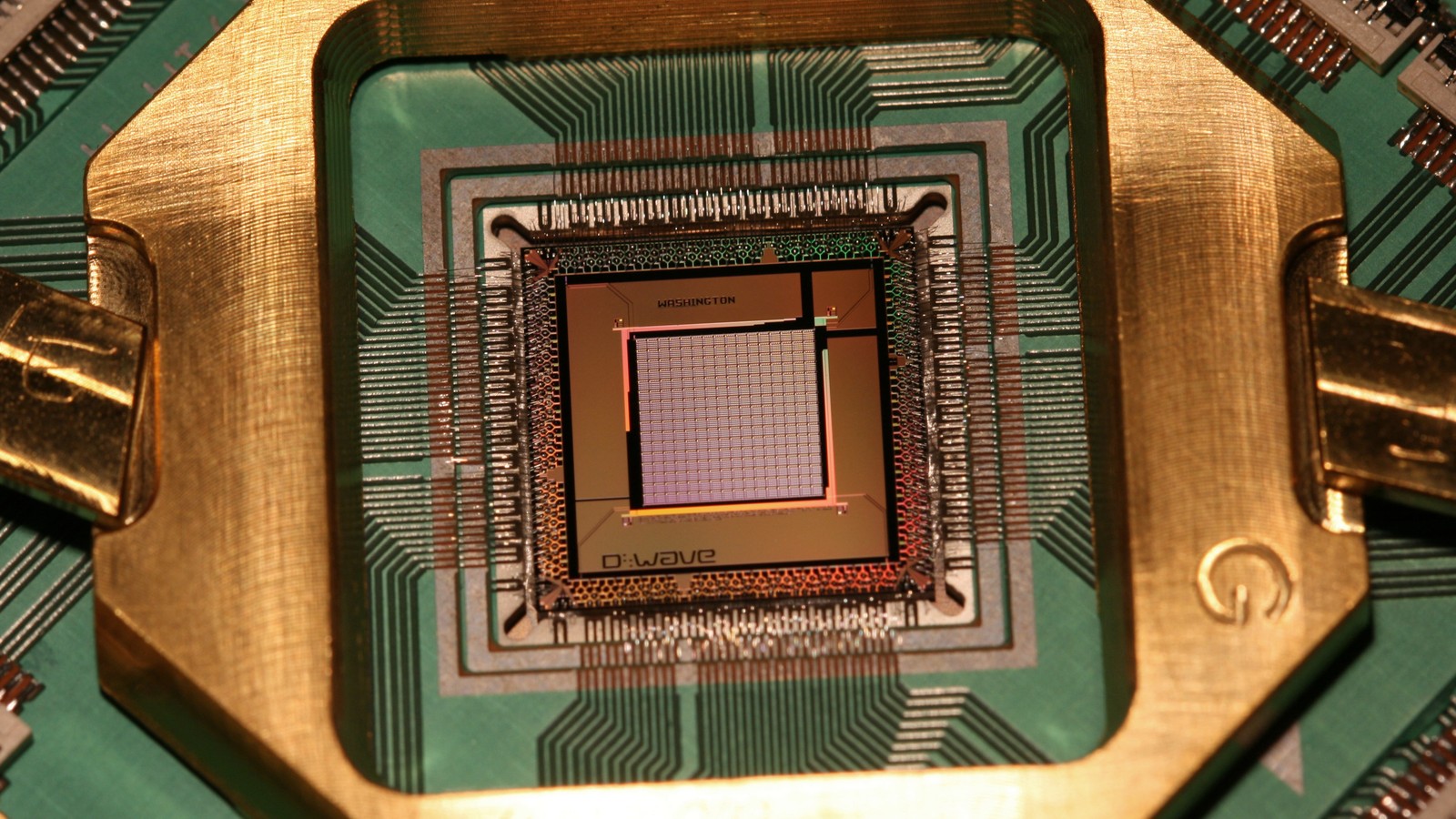
Finding a cheap delivery route is useless if the truck cannot carry everything on it. The same distinction matters in optimization: a promising answer has to meet the rules before it can compete on cost. In a new preprint, Chia-Ho Ou reports a way to push a D-Wave quantum annealer toward those rules. On its largest Advantage2 test, the combined quantum and classical workflow met all four constraints in five of six trials after a classical cleanup step.[1]
The tests were deliberately structured benchmarks, not delivery routes or commercial jobs. They used 4,560 active in the Advantage2 processor’s connected region. The paper describes 891 hardware runs across two processors and several experimental phases. Five of six is the result for one specific group of tests, not an 83% success rate across that larger campaign.[1]
How the rules get into the machine
A quantum annealer samples arrangements of binary choices. Each arrangement has an energy set by the programmed biases and interactions, with lower energy normally representing a better candidate. A common way to handle rules is to add a penalty for breaking them. Some penalties require extra interactions between choices, which can be a problem when the chip can link only certain pairs.[1][2]
Ou's method kept the original pairwise couplings for the tested linear constraints. It adjusted the biases on individual qubits in response to earlier samples, steering the next batch toward acceptable answers. The reported check came after an ordinary computer made local repairs, changing one choice at a time. That makes the result a benchmark of the whole workflow, not of the chip operating alone.[1][2]
Two numbers to ask for
The full-chip setup used 30 iterations of 2,000 reads each. That is 60,000 samples per trial, not one quantum shot per answer. The first question is how often the final candidate meets every rule. The second is how good the candidate is once it qualifies. Five feasible trials answer the first question on this test; they do not establish that any answer was the best possible.[1]
A smaller comparison used a conventional solver with a five-second CPU budget and reported quantum processor access time separately. That is not a comparison of end-to-end elapsed time: it leaves out work around the quantum processor, including the classical updates and cleanup. A useful follow-up would time the complete workflow and run the same tests with the same final quality targets, including a classical method that gets the same opportunity to repair its best candidates.[1]
The paper has not been peer reviewed. Ou also reports being the sole inventor on a provisional patent application covering the method. The benchmark gives other researchers a specific claim to test: whether the chip still contributes a worthwhile improvement once the classical steps are counted.[1]