
Skip to content
RESEARCH · QUANTUM INFORMATION

Choosing what to measure could help quantum devices spot change

A theory paper weighs detection speed against false alarms.

Published Source report Sources checked
Reading tools for text size, copying, printing and your reading list
My reading list
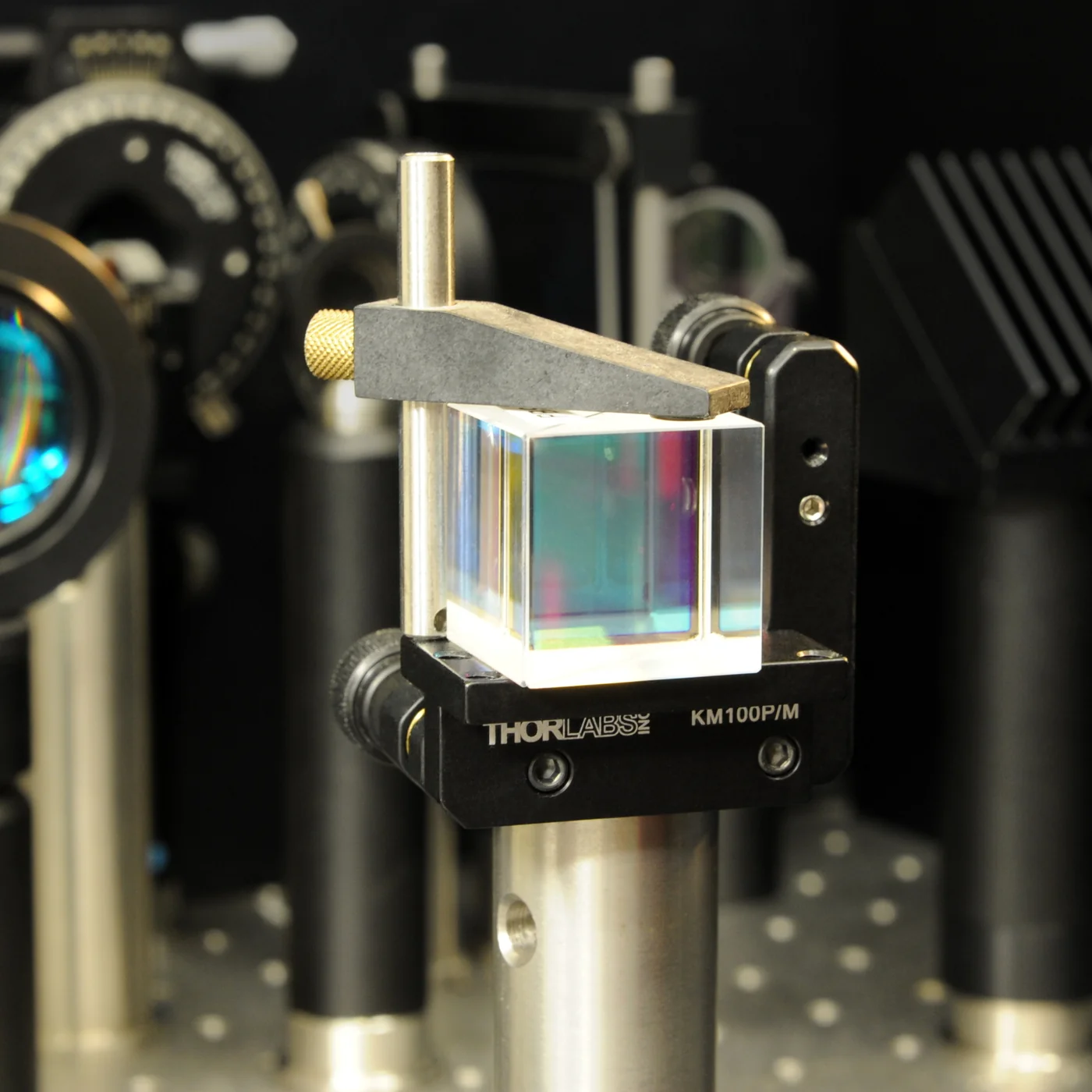
A transparent cube held in a metal mount shows faint bands of color along its edges.
A polarizing beam splitter routes orthogonal polarizations into different paths. With detectors, it gives a physical example of the projective measurements considered in this theoretical study of change detection.Illustrative photoGeek3

How quickly can a quantum device warn that something has changed, without constantly raising false alarms? A paper published November 17 in npj Quantum Information tackles that question by optimizing what to measure before deciding when to sound the alarm.[1]

The researchers combine quantum measurements with classical change-detection rules. They consider both known and unknown changes, and extend the approach to processes that transform quantum states. In some idealized cases, an outcome impossible under normal conditions can flag a change especially quickly.[1]

This is a mathematical and simulation study, not a deployed monitoring system. Its assumptions include an exactly known starting condition, ideal measurements and independent samples. The calculations also grow exponentially with the number of .[1]

The potential contribution is a better measurement strategy for detecting changes, rather than a faster quantum processor. Handling imperfect models and scaling to larger systems remain open challenges.[1]

Keep your reading trail

Evidence & context

1 linked source

Theory and simulation.

How to read the evidence and dates

An announcement records what an organization stated. An experiment reports an observation. A simulation or resource estimate depends on its assumptions. QubitWire’s analysis connects these sources; the labels are not quality scores.

Published is the article’s first QubitWire publication. Updated marks a substantive content change. Sources checked records a review of the underlying evidence. An older paper can support a new explanation, and another press release about the same work is not independent replication.

Sources

  1. Fu and colleagues, npj Quantum Information

    Peer-reviewed article in press, November17.

READ NEXT

Continue exploring

All Research stories
  1. Hardware / Device readout

    A readout circuit makes high-resistance 2D quantum devices easier to measure

    A tunable capacitor improves charge detection in two-dimensional devices. The October announcement describes a study published in August.

    Published · Source report · Sources checked · About 3 min read
  2. Research

    Quantum-network study works around mismatched memories

    In a simulated link, choosing where to put each memory and how often its light source emits photon pairs helped compensate for differences between devices.

    Published · Source report · Sources checked · About 1 min read