
Four quantum stocks fall up to 7.9% in Friday’s tech selloff
IonQ, Rigetti, D-Wave and QCi all fell more than the S&P 500. The closing numbers and the company disclosures to watch next.


Four closely watched quantum stocks fell more sharply than the S&P 500 on Friday, October 30. IonQ, Rigetti, D-Wave and Quantum Computing Inc. lost between 3.23% and 7.87% at the regular-session close. The moves put a familiar question back in front of investors: which part of a quantum company's story is changing, its share price, its business or its technology?[1][2][3][4][5]
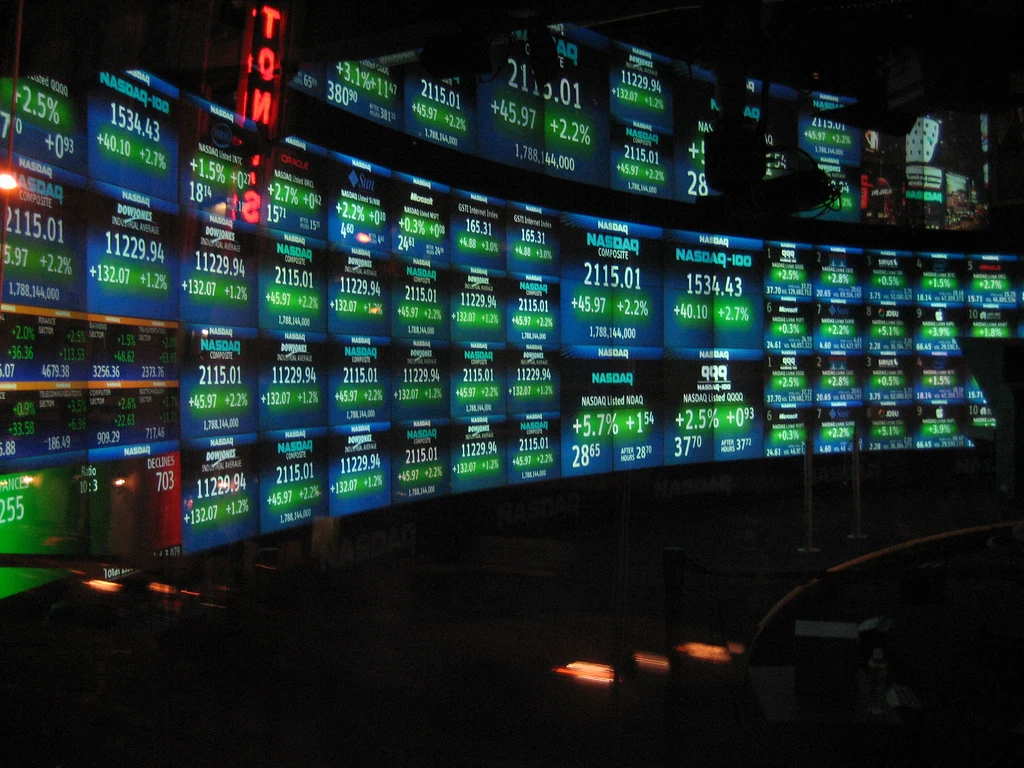
The broader market was under pressure. The S&P 500 fell 1.82% and the Nasdaq Composite lost 2.86%. Reuters connected the technology selloff to Intel and Amazon results and concern about the returns on enormous AI spending. That is the documented market backdrop. It does not establish why each quantum shareholder sold.[1]
The closing snapshot below freezes the comparison at 4 p.m. Eastern on October 30. It excludes after-hours trading and covers four selected companies, not every quantum-related stock. Using the same session matters: an intraday low for one company and a closing price for another can turn an ordinary comparison into a misleading one.[2][3][4][5]
One session. Four quantum stocks.
4:00 p.m. Eastern / 1:00 p.m. Pacific. Prices in US dollars. Daily changes are relative to the previous close.
| Company | Close | Change |
|---|---|---|
| IonQIONQ | $30.04 | -5.30% |
| RigettiRGTI | $11.25 | -6.72% |
| D-WaveQBTS | $10.65 | -7.87% |
| Quantum Computing Inc.QUBT | $6.60 | -3.23% |
Four selected stocks, not a sector index. Historical snapshot, not live quotes. Company links open the price records; benchmark source: Reuters.
What the selloff can tell us
A falling share price is a market observation. It is not a measurement of , a cancelled customer contract or evidence that an experiment failed. The reverse also holds: a successful experiment does not settle what a business is worth. Those questions require different records and different tests.
Our interpretation is that a session like this increases the value of separating technical progress from the expectations attached to it. A laboratory milestone may improve the engineering case while leaving the cost of delivery, timing of customer demand and eventual profitability unresolved. The size of Friday's decline cannot tell us how much weight investors assigned to each uncertainty.
Financing adds another layer. A company can gain more resources to develop its systems while issuing additional ownership claims. Existing investors then need to assess both the enlarged business and the shares or warrants that may participate in its future value. A funding announcement should therefore be read alongside its terms, not simply as a vote for or against the technology.
Read the numbers behind the headline
IonQ's October disclosures provide concrete examples. Its proposed Elisity acquisition carries $1.15 billion in stock consideration at closing and up to $150 million more tied to revenue milestones. The SEC filing also describes a separate $100 million employee retention pool in restricted stock units. Closing conditions still apply. These figures describe different obligations and should not be compressed into a completed cash purchase.[6]

IonQ also announced pricing of a $2 billion equity offering on October 14, involving common shares, pre-funded warrants and seven-year warrants for additional shares. The financing is relevant to assessing resources and potential dilution. It was already public before Friday and the available evidence does not identify it as the cause of this day's decline.[8]
On October 27, IonQ announced $7.5 million in follow-on AFRL funding. Its release explicitly says that sum was included in the $21.1 million collaboration announced in January 2025. Adding the figures would overstate the award. Nor does an announced contract amount establish how much revenue has been recognized.[7]
Four questions for the next results
The next results offer a more useful test than trying to infer business performance from a red trading screen. Start with revenue quality: what came from existing operations, acquisitions, system deliveries or continuing customer use? Use the issuer's actual reporting categories and comparable periods. A strong headline growth rate can contain several distinct stories.
Then read cash flow and financing together. A cash balance is only one input. Operating spending, acquisition commitments and equity issuance affect the resources available and the claims on them. A simple cash-divided-by-loss calculation can obscure those moving parts; its assumptions must be stated before it becomes a meaningful runway estimate.
For technical claims, ask what task was demonstrated, on which hardware and against which alternative. For customer claims, distinguish a partnership announcement from a funded deployment, actual use and a repeat purchase. These are practical reading questions, not a prediction that any company will pass or fail them.
The next dated checkpoints
Issuer announcements currently schedule IonQ's results for November 5 and QCi's for November 9, both after the close. D-Wave plans to report before the open on November 10, with Rigetti after the close that day. The calendar below includes the announced call times. These are scheduled disclosures, not promises about market reactions.
What to watch next
November 2026 reporting dates announced by each issuer. Checked October 30. Schedules may change.
- November 5IonQ resultsAfter closeCall: 4:30 p.m. ET / 1:30 p.m. PT
- November 9QCi resultsAfter closeCall: 4:30 p.m. ET / 1:30 p.m. PT
- November 10D-Wave resultsBefore openCall: 8:00 a.m. ET / 5:00 a.m. PT
- November 10Rigetti resultsAfter closeCall: 5:00 p.m. ET / 2:00 p.m. PT
A lower share price alone proves neither that a company has become a bargain nor that quantum computing has failed. The useful follow-up to this selloff is specific: identify the new evidence, check its date and decide whether it changes the technology, the business or only the price being paid for its possibilities.