
Skip to content
RESEARCH

AI finds alternatives to fixed routes in quantum-network simulations

In simulations with intersecting paths, a learning algorithm distributed quantum entanglement more effectively by adapting to the links available at each step.

Published Source report Sources checked
Reading tools for text size, copying, printing and your reading list
My reading list
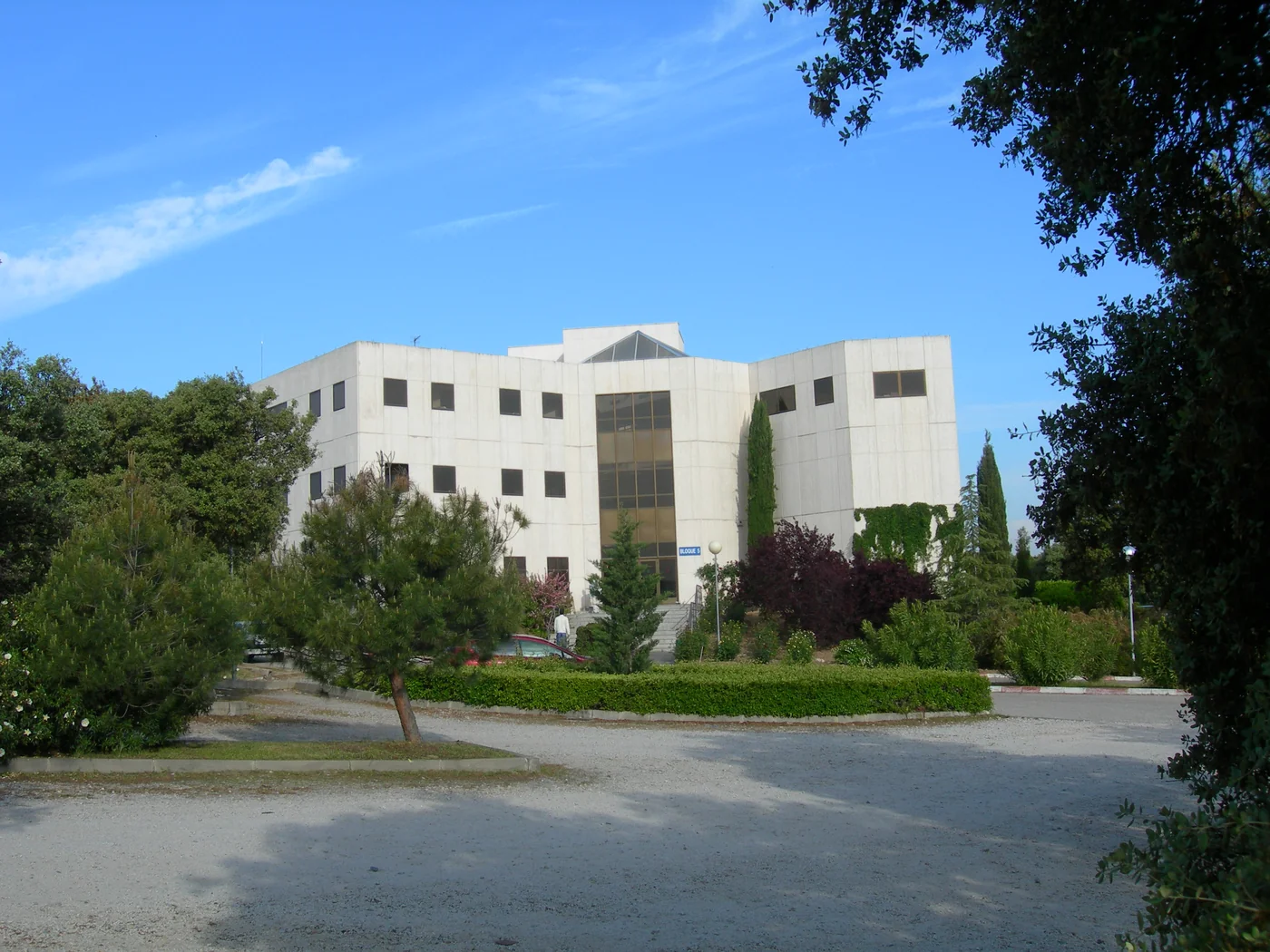
A light-colored faculty building faces a tree-lined drive at the Technical University of Madrid.
Several authors of the simulated repeater-network study are affiliated with the computer science school at the Technical University of Madrid. The campus photograph dates from 2006.Illustrative photoSantiago Urueña Pascual

Researchers report that reinforcement learning can improve distribution in simulated quantum networks with intersecting paths. Their November 16 preprint compares learned protocols with a strategy that selects routes and performs entanglement swaps as soon as possible.[1]

The agent can adapt its operations to the connections available at each step instead of staying within the selected routes. A five-station chain showed no advantage, underscoring that network structure matters.[1]

This is a simulation result, not a working quantum internet. The benchmark measures logarithmic negativity, an entanglement quantity, rather than delivered secret-key throughput. The representative eight-station example assumes perfect initial states and memories without decoherence; distillation and more detailed communication-delay handling remain future work.[1]

Keep your reading trail

Evidence & context

1 linked source

Preprint simulations; no deployed-network demonstration.

How to read the evidence and dates

An announcement records what an organization stated. An experiment reports an observation. A simulation or resource estimate depends on its assumptions. QubitWire’s analysis connects these sources; the labels are not quality scores.

Published is the article’s first QubitWire publication. Updated marks a substantive content change. Sources checked records a review of the underlying evidence. An older paper can support a new explanation, and another press release about the same work is not independent replication.

Sources

  1. Agustí Casado et al., arXiv:2611.21414v1

    Preprint version 1 dated November 16, 2026; simulated quantum networks.

READ NEXT

Continue exploring

All Research stories
  1. Quantum error correction

    Google’s Modular QEC Design Trades a Few Long Links for Far Fewer Qubits

    Circuit simulations suggest flat roughly 100-qubit modules with sparse boundary connections could cut memory overhead tenfold or more versus surface codes.

    Published · Source report · Sources checked · About 2 min read
  2. Quantum interference

    Oxford’s tiny quantum loop turns two routes into no way through

    Two qubits and two vibrations recreate a counterintuitive effect: possible paths can cancel. Oxford’s trapped-ion simulator makes quantum interference tangible.

    Published · Source report · Sources checked · About 7 min read