
Quantum chip startups need more than a clever design. They need a factory.
A new U.S. policy report proposes shared access to chipmaking and testing. The question is who gets to use the equipment, and on what terms.
Reading tools for text size, copying, printing and your reading list
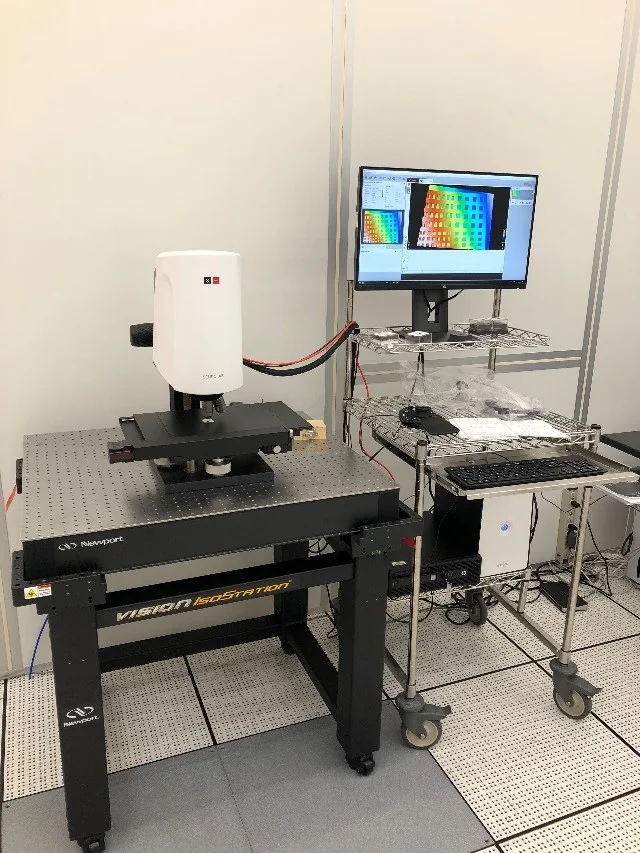
A quantum chip that works in a laboratory still has to be manufactured, packaged and tested reliably. For a small company, access to the equipment and people who do that work can be as important as the chip design itself.
A preliminary report released on November 10 proposes a shared route into those facilities. The Commission on U.S. Quantum Primacy recommends a National Quantum Foundry Access Program, intended to give researchers and companies shared routes into fabrication and testing across different quantum technologies.[1][2]
The commission was convened by the Special Competitive Studies Project, or SCSP, a private operating foundation. Its report offers recommendations to policymakers. It does not itself commit federal agencies to fund or run the proposed program.[1][3]
What shared access would cover
A foundry makes devices using controlled manufacturing processes. The proposed access program reaches beyond making a chip: the report includes precision measurement, packaging, pilot production and testing. Each stage helps answer whether a design can become a reliable product.[2]
The report also recommends a partnership led by the National Institute of Standards and Technology (NIST) for common benchmarks and compatible interfaces. That would address a different problem: making it easier to compare systems and connect quantum equipment with conventional computing. These are proposed roles, not agency commitments announced by the commission.[2]
Building capacity and opening access
Federal support for quantum manufacturing already exists. Commerce finalized an R&D award of up to $375 million for GlobalFoundries on September 8 and an award of up to $1 billion for IBM subsidiary Anderon on September 16. Both announcements support efforts to establish quantum foundries. Those figures describe award ceilings, not money shown to have been spent.[4][5]
The useful question raised by the new report is how manufacturing capacity becomes accessible to a wider set of teams. A facility can exist while a particular startup still lacks a compatible process, an affordable development run or the expertise to use it.
There is already a commercial example in QubitWire’s coverage of SkyWater’s OnRamp program. Its terms separate no-cost engineering work to plan a manufacturing route from paid access to selected prototype wafer runs. The scope and availability depend on the project.[6]
That comparison suggests two separate tests. For a commercial offer, a startup asks what it can obtain now and on what terms. For a national access proposal, the question is how the rules would allocate capacity among teams, technologies and facilities. More equipment alone would not answer who gets a place in the queue.
The decisions still to watch
The preliminary report does not specify a budget, operator, eligibility rules or application opening for its proposed foundry-access program. The commission’s final report is planned for spring 2027. That leaves practical decisions for a later stage.[1][2]
For readers following the business opportunity, the next useful evidence would be an implementing announcement with a responsible agency, funding terms and a route for users to apply. Until then, the November report provides a framework for judging future access offers: who can use the tools, what work is covered and which costs remain with the customer.