
A 30-nanometer coating cut microwave losses in a quantum chip component
An Abu Dhabi team found that a tantalum-coated resonator chip still lost less energy to surface defects after six months on the shelf than a freshly made uncoated chip.
Reading tools for text size, copying, printing and your reading list
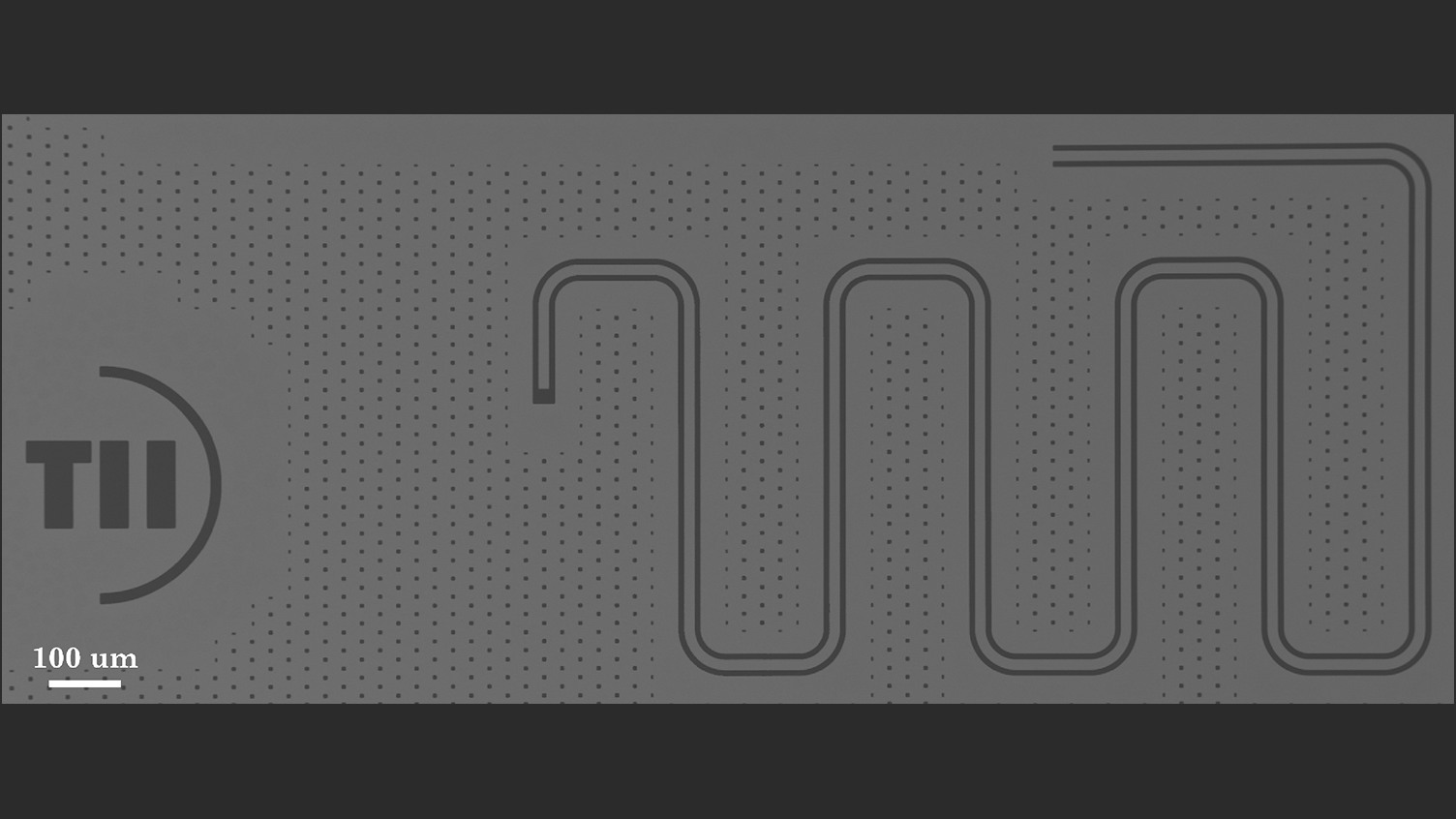
A chip built to hold faint microwave signals still had an advantage after six months in storage. Its secret was a layer of tantalum just 30 nanometers thick, deposited on top of the superconducting metal niobium. In a peer-reviewed paper published November 28 in Scientific Reports, researchers at Abu Dhabi’s Technology Innovation Institute report that after storage the coated chip had about 36% lower loss from one modeled source of dissipation than a fresh niobium-only reference, based on the rounded median values in the paper.[1][2]
The test did not measure a qubit’s lifetime. It measured resonators: looping metal traces that hold microwave energy and help engineers diagnose where it goes. Resonators can also help read out . If the circuit itself absorbs some of the faint microwave signal, that can complicate the job of measuring a qubit without drowning out the information it carries.[1][2]
What the thin layer changed
The team used the same basic chip layout for three coated chips and the uncoated reference. Each chip had eight resonators patterned on silicon, with the same design used across groups. The tantalum was deposited on top of the niobium before the metals were exposed to air. The idea was to change which oxide formed on the top surface, not to replace the niobium circuit. The sidewalls were not coated.[2]
Why should the oxide matter? Tiny defects in and near an oxide can behave as though they have two possible energy states. At the very low temperatures of this experiment, some can absorb microwave energy. As the team increased the strength of the signal, fewer of those defects could keep absorbing more. That change with signal strength let the team estimate this contribution separately from a background loss that did not vary with power in the model. The team did not directly measure the cap’s crystal phase or establish the identity of every defect.[2]
The shelf test, in three numbers
Figure 9 puts the median loss attributed to those defects at 4.7 parts in 10 million for the fresh uncoated chip, 2.0 for the fresh coated chip and 3.0 for that same coated chip after six months. So the coated chip lost some of its initial edge but did not lose it entirely. The six-month chip and the fresh reference were tested in the same refrigerator; the initial coated-chip measurements were taken in a different one. This is a comparison of a fitted loss contribution, not of the chips’ overall efficiency.[2]
The six-month test already appeared in the team’s April preprint. The new journal paper reports the comparison using medians and adds a chart separating defect-related losses from the background for individual resonators. It also makes a limit explicit: there was no uncoated chip stored for the same six months. So this study can say that the stored coated chip still beat a fresh uncoated one on this measure, but not that the coating made the chip age more slowly.[2][3]
Even on the fresh coated chip, the defect loss accounted for only 21% to 44% of the modeled low-power loss across the eight resonators. The rest was background. Making the surface better therefore leaves another engineering problem, which might involve how the chip is mounted or how the circuit interacts with the metal box around it. Testing coated and uncoated chips after identical storage and then measuring actual qubits would tell engineers how much of this improvement carries through to a working processor.[2]