
Skip to content
HARDWARE · RESEARCH INFRASTRUCTURE

Turkey plans a 54-qubit IQM computer at TÜBİTAK for 2027

The minister’s announcement emphasizes local control and research access; the system has not been reported commissioned.

Published Source report Sources checked
Reading tools for text size, copying, printing and your reading list
My reading list
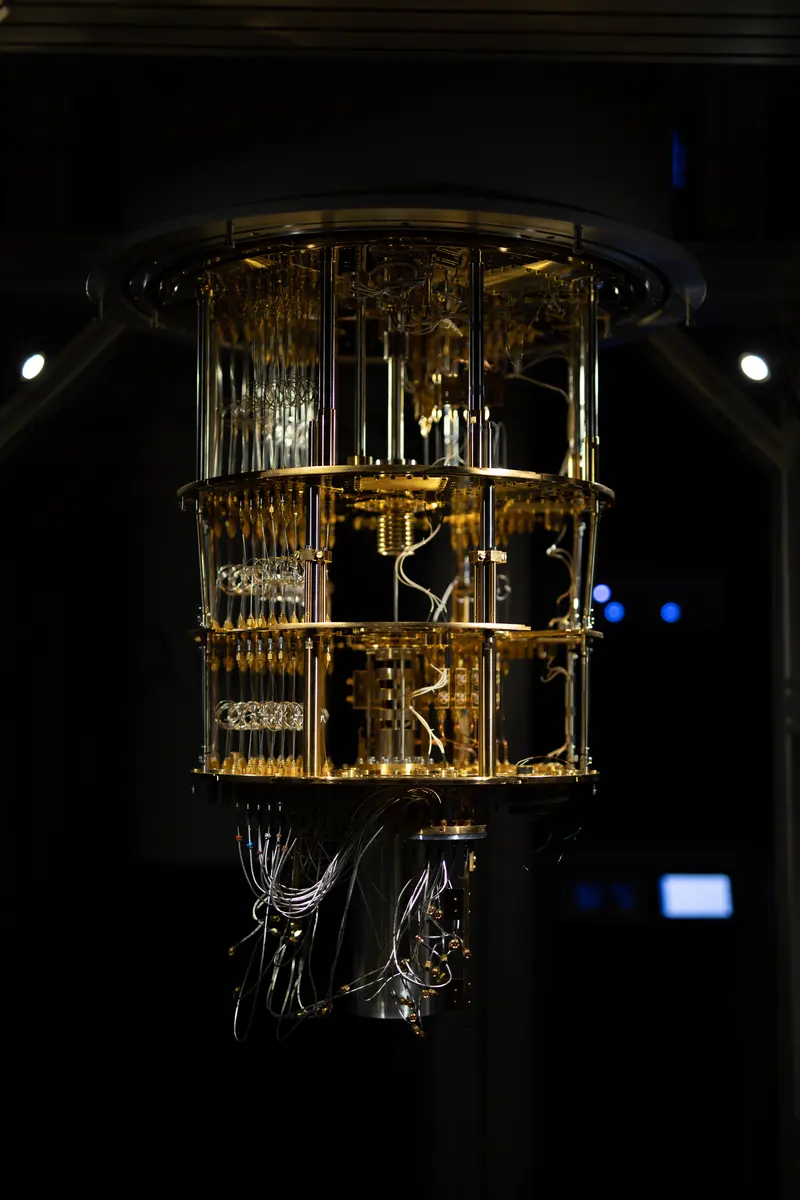
An exposed cryogenic assembly of IQM quantum hardware in Espoo, Finland.
Illustrative photoRagsxl

Turkey plans to put a 54- IQM Radiance R3 quantum computer into operation at TÜBİTAK in 2027, according to Industry and Technology Minister Mehmet Fatih Kacır. The November 14 announcement concerns a future installation, not a machine already available to researchers.[1][2]

The minister’s emphasis was on operating the system locally: retaining control of hardware, data and intellectual property developed through projects. He said universities, research centres and industry would be served, with domestic algorithm and software development among the aims. His post does not disclose a price, a commissioning month or rules for allocating access.[1]

That distinction matters. Owning a quantum computer can create a place to train researchers and test applications, but it does not by itself demonstrate an advantage over conventional computing. The announcement provides no results from the proposed Turkish installation.[1]

IQM describes Radiance as an on-premise product family designed for high-performance computing centres, with options including 54 qubits and access to low-level control pulses. This makes the project relevant to hands-on engineering as well as running algorithms: researchers can work with the hardware rather than only submit jobs to a remote service.[3]

Those supplier capabilities should not be confused with acceptance results for this particular installation. The next useful evidence will be commissioning, access arrangements and measurements showing how reliably the delivered system runs. A qubit count alone does not establish useful computational performance.[3]

Keep your reading trail

Evidence & context

3 linked sources

Announcement and product documentation.

How to read the evidence and dates

An announcement records what an organization stated. An experiment reports an observation. A simulation or resource estimate depends on its assumptions. QubitWire’s analysis connects these sources; the labels are not quality scores.

Published is the article’s first QubitWire publication. Updated marks a substantive content change. Sources checked records a review of the underlying evidence. An older paper can support a new explanation, and another press release about the same work is not independent replication.

Sources

  1. Minister’s announcement

    Dated November 14 by contemporaneous reporting.

  2. Anadolu Agency, November 14

    Contemporaneous chronology, not independent performance validation.

  3. IQM Radiance product documentation

    Supplier product-family context, not Turkish installation acceptance results.

READ NEXT

Continue exploring

All Hardware stories
  1. Hardware / Education

    Madrid’s next quantum computer is about access, not a speed record

    Telefónica and IQM plan an education and research installation at UPM. Delivery and hands-on access are the milestones still to come.

    Published · Source report · Sources checked · About 2 min read
  2. Error mitigation

    DLR tests a better noise yardstick on IBM and IQM quantum chips

    A new DLR preprint broadens tests of benchmarked-noise extrapolation, with the same total measurement budget and some wider uncertainty.

    Published · Source report · Sources checked · About 2 min read