
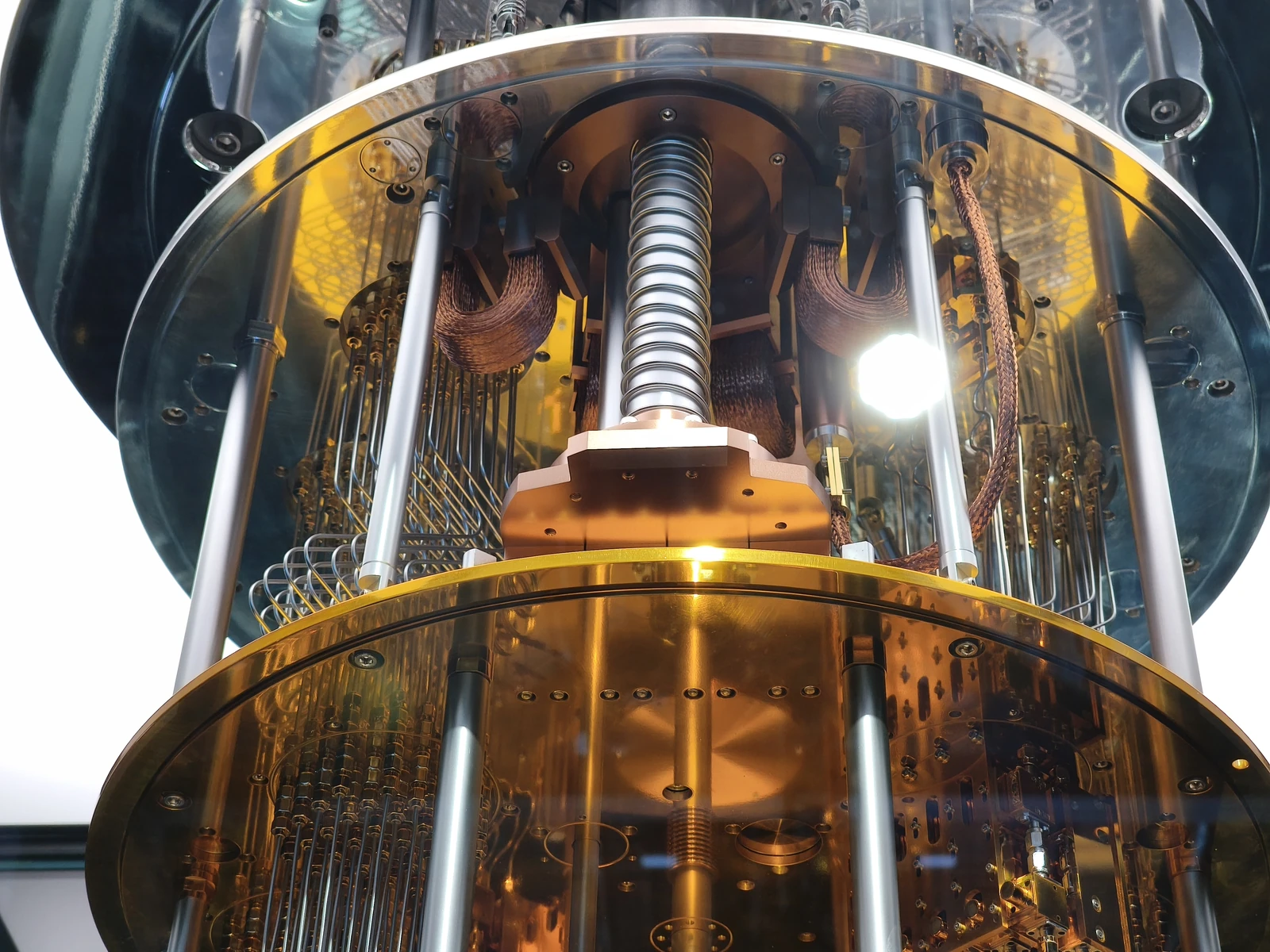
The upper stages of a displayed cryogenic assembly
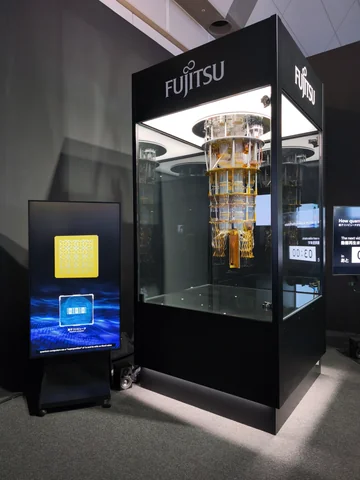
A close-up replaces the spectacle of the complete machine with a specific engineering question: why are there several separated metal stages? Readers can follow the visible plates and the central corrugated structure while learning that cryogenic systems organize thermal and mechanical functions at different locations. The photograph is an exhibition view, so do not infer temperatures, materials or operating conditions from color and shape alone. Keep a small contextual reference to the full stand alongside this image. That pairing allows a newcomer to place the detail within the larger object without confusing a teaching description with a measured specification.
- Organization
- Fujitsu
- Image type
- Photograph
- Capture date
- 2025-10-31
- Photographer / creator
- RuinDig/Yuki Uchida
- Reuse terms
- CC BY 4.0
RuinDig/Yuki Uchida — Japan-Mobility-Show-2025-RuinDig 0575.jpg — CC BY 4.0 — https://commons.wikimedia.org/wiki/File:Japan-Mobility-Show-2025-RuinDig_0575.jpg — https://creativecommons.org/licenses/by/4.0.
Full original frame retained; EXIF orientation normalized where present, resized without enlargement and converted to WebP. No crop or content alteration.
Read the image
Separate the visible stack from the temperature diagram
A corrugated tube passes between reflective circular plates in this upper-stage view of the Fujitsu display. The stacked arrangement is visually distinctive, but the photograph does not attach a temperature or thermal function to every surface.
Cryogenic systems can use staged cooling so that components and incoming connections are managed across different thermal conditions. That general principle is a helpful companion to the photograph. It should be drawn as a conceptual temperature-stage diagram unless a verified specification identifies the exact displayed assembly.
The distinction is useful because readers often treat a golden plate as a self-explanatory part. Appearance is not a measurement. A physical interpretation becomes stronger when a source identifies the stage, the thermal connection and the role it plays in the complete operating system. Until then, the image teaches arrangement and introduces the right questions.
Can a plate’s temperature be read from its color?
No. Reflections and materials determine its appearance in the photograph. A temperature claim requires operating documentation or a measurement.
Why use several cooling stages conceptually?
They allow an instrument to manage heat and connections across different conditions. The exact implementation varies and is not fully visible here.
What should a diagram avoid?
Do not assign standard temperature labels to this specific display unless the source confirms them. Label a generic teaching diagram as conceptual.
An independent QubitWire lesson based on this image and the cited source reading. The image does not establish a performance result.
Keep exploring
More from the same organization or hardware architecture.
 Fujitsu’s quantum-computing exhibition
 Wiring below a displayed cold stage
 Connections at the bottom of the display
Back to all images · Explore the interactive Model · Image rights and corrections