
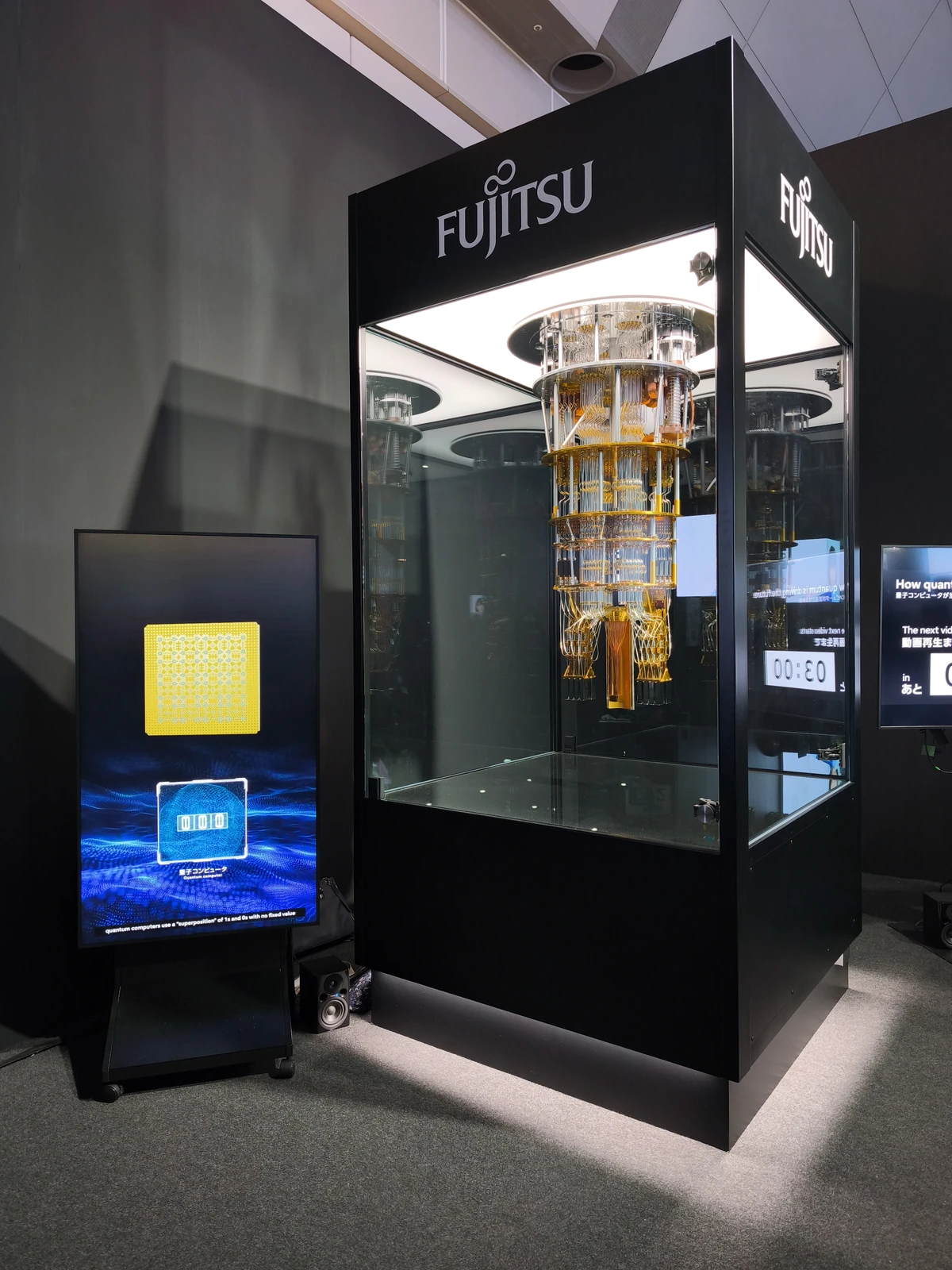
Fujitsu’s quantum-computing exhibition
Start this sequence with the whole exhibition rather than a tightly cropped piece of metal. The stand, branding and information screen establish that the scene is a public demonstration at Japan Mobility Show 2025. That context prevents an attractive close-up from being mistaken for a photograph taken during operation in a laboratory. The following detail views can help readers notice how the apparatus is arranged, but they cannot reveal a running algorithm or measured error rate. Use the series to teach observation: first identify the setting, then the visible components, then the questions that require documentation beyond the photograph.
- Organization
- Fujitsu
- Image type
- Photograph
- Capture date
- 2025-10-31
- Photographer / creator
- RuinDig/Yuki Uchida
- Reuse terms
- CC BY 4.0
RuinDig/Yuki Uchida — Japan-Mobility-Show-2025-RuinDig 0570.jpg — CC BY 4.0 — https://commons.wikimedia.org/wiki/File:Japan-Mobility-Show-2025-RuinDig_0570.jpg — https://creativecommons.org/licenses/by/4.0.
Full original frame retained; EXIF orientation normalized where present, resized without enlargement and converted to WebP. No crop or content alteration.
Read the image
Start a technical photo sequence with the whole exhibition
The full Fujitsu stand places the displayed assembly, glass, branding and adjacent screen in one frame. This is the orienting image for the closer photographs that follow. Without it, a detail of wiring could appear to come from an operating laboratory rather than a public exhibition.
A wide view does more than establish scale. It records how the object was presented to an audience. Signs and screens supply an educational setting, while the enclosure determines what a visitor can see. Those choices are part of the documentary context even when the gallery’s purpose is to explain technical functions.
The sequence should move from this full view to selected details with a clear change of question. First locate the apparatus. Then examine one structural relationship, such as plates or wiring. Use separate sourced explanations for function; avoid assigning a task to every visible part simply because it resembles a familiar component.
Why retain the stand around the assembly?
It establishes the exhibition setting and prevents the detail images from being mistaken for an undocumented laboratory installation.
Should every sign be transcribed?
Only if it is legible in the original and relevant. A guessed sign transcription creates a factual claim the photograph may not support.
What makes a detail worth adding?
It should answer a new visual question. Repeating nearly identical angles adds volume without improving understanding.
An independent QubitWire lesson based on this image and the cited source reading. The image does not establish a performance result.
Keep exploring
More from the same organization or hardware architecture.
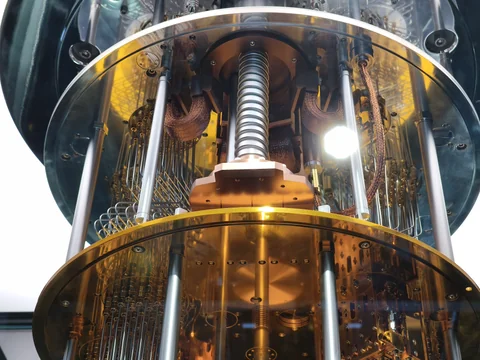 The upper stages of a displayed cryogenic assembly
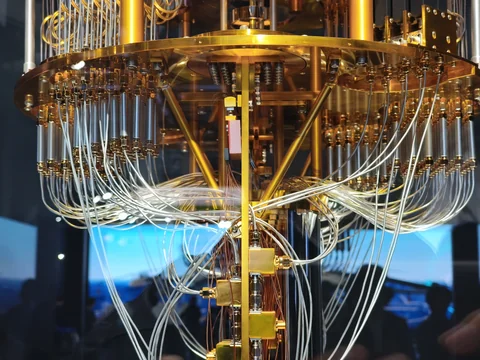 Wiring below a displayed cold stage
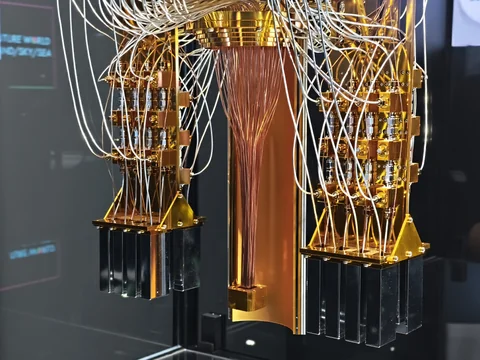 Connections at the bottom of the display
Back to all images · Explore the interactive Model · Image rights and corrections