
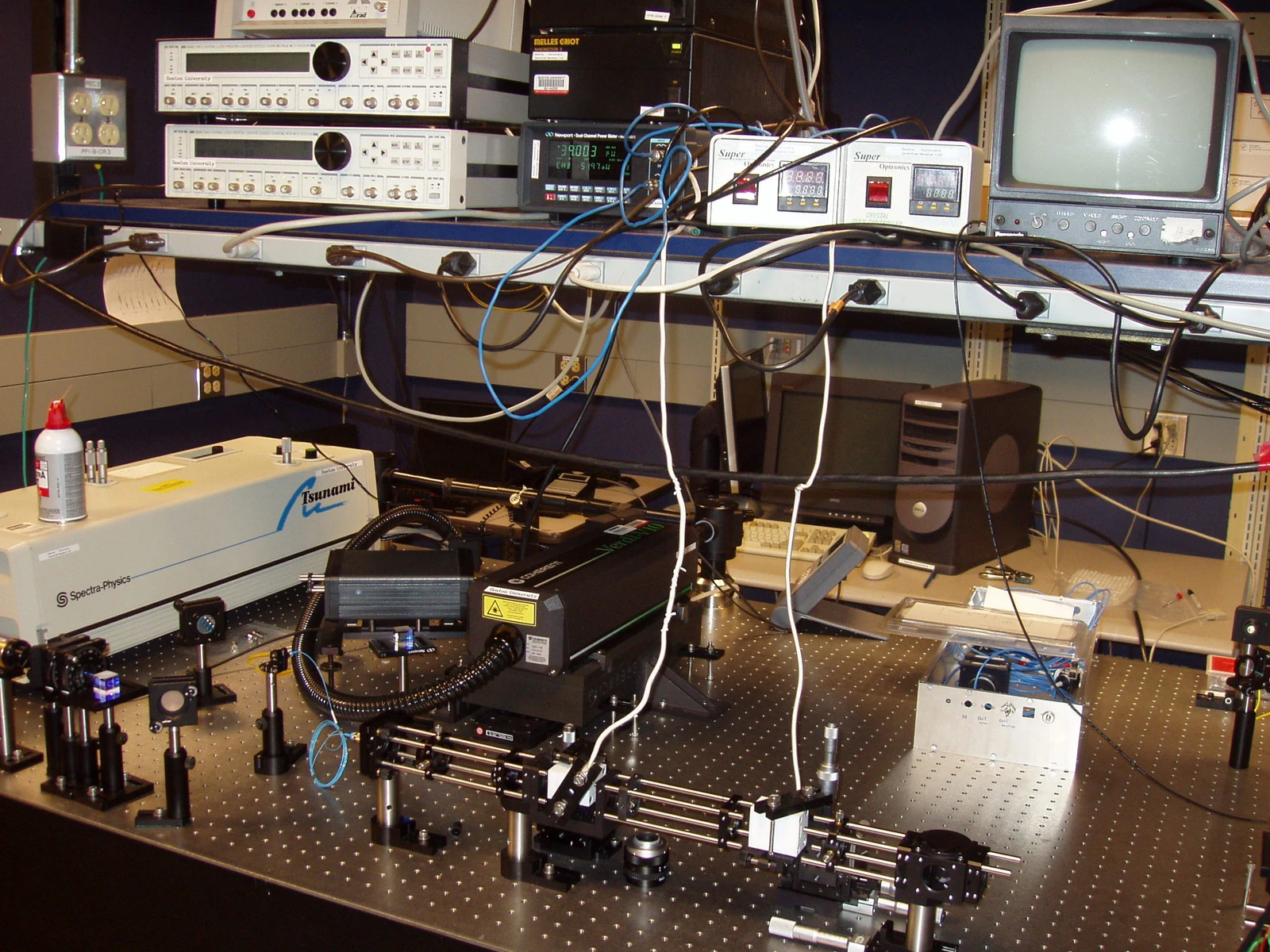
The optical bench of an early quantum-network link
This archive photograph makes a network link tangible. The source identifies the Alex optical subsystem in the DARPA Quantum Network, a useful reminder that a link includes hardware at its endpoints as well as whatever carries light between them. Invite readers to distinguish the optical table from the electronics above it without inventing the function of every box. The scene is historical and should carry that date whenever reused. A companion essay can compare a logical network diagram with a real laboratory bench, showing how much practical equipment a clean line between two endpoints leaves out.
- Organization
- DARPA Quantum Network / BBN
- Image type
- Photograph
- Capture date
- Not supplied by source
Source describes December 2004 archive context. The implausible 1899 EXIF date is omitted; capture date is unresolved.
- Photographer / creator
- Daderot
- Reuse terms
- CC0
Daderot — Entangled link - Alex optical system - DARPA Quantum Network - P1010004.jpg — CC0 — https://commons.wikimedia.org/wiki/File:Entangled_link_-_Alex_optical_system_-_DARPA_Quantum_Network_-_P1010004.jpg — http://creativecommons.org/publicdomain/zero/1.0/deed.en.
Full original frame retained; EXIF orientation normalized where present, resized without enlargement and converted to WebP. No crop or content alteration.
Read the image
An early quantum-network link was a laboratory assembly
Optical mounts cover a table beneath electronic instruments and a monitor. The source identifies this as the Alex optical subsystem of the DARPA Quantum Network at BBN in December 2004. It is an archival view of a network function implemented through a substantial laboratory arrangement.
An optical link needs more than a line connecting two boxes in a network diagram. Light must be prepared, routed, coupled and detected, while electronic equipment supplies control and records. The exact role of each pictured component is not fully established by the photograph, but the coexistence of optics and electronics is visible.
This frame is a useful companion to a modern schematic because it gives physical scale to abstract network functions. Keep the diagram conceptual and the photograph historical. A present-day network product should not inherit specifications or architecture simply because it shares the broad goal of quantum communication.
What does the laboratory view add to a link diagram?
It shows the physical apparatus and workspace behind a network function, making integration and alignment tangible.
Can the cables identify the protocol?
No. Protocol details require a source describing the experiment. Similar-looking hardware can support different procedures.
Why include the year prominently?
It prevents an early research arrangement from being mistaken for a current deployment or a newly released system.
An independent QubitWire lesson based on this image and the cited source reading. The image does not establish a performance result.
Keep exploring
More from the same organization or hardware architecture.
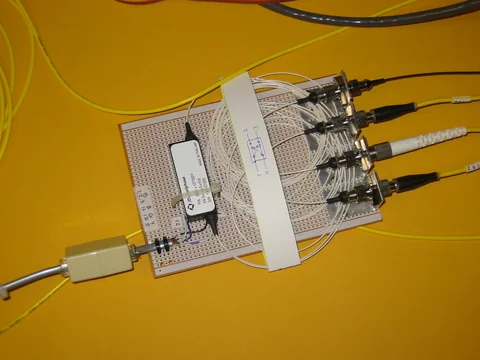 An optical switch in a quantum-network experimentDaderot · CC0
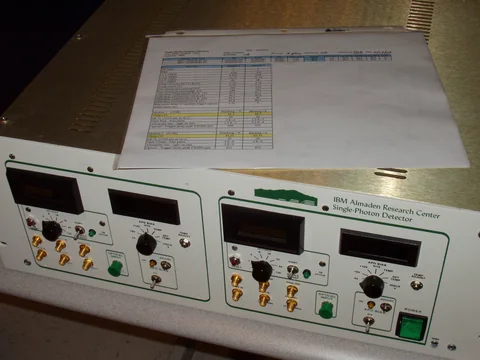 An early single-photon detector instrumentDaderot · CC0
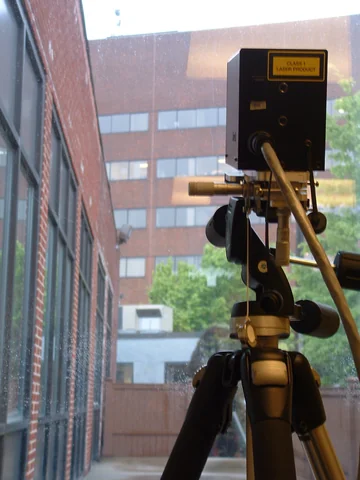 A free-space endpoint facing another buildingDaderot · CC0
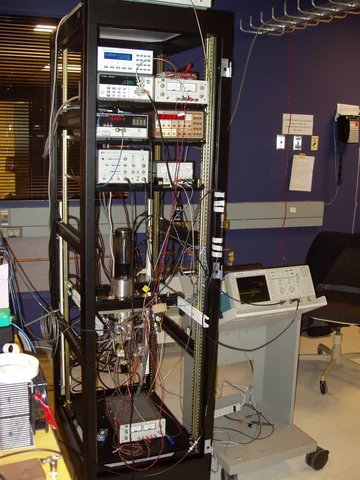 The instrument stack around a photon detectorDaderot · CC0
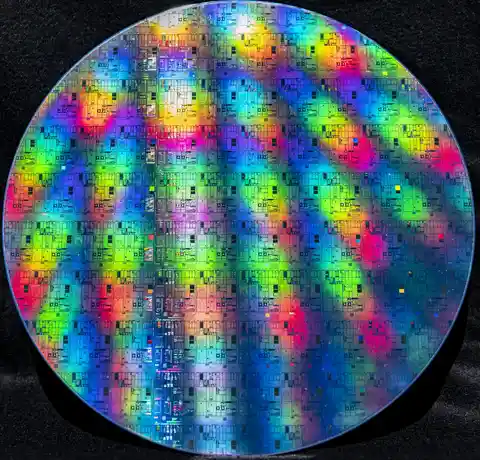 A 300 mm quantum photonic waferAFRL Information Directorate · NQI gallery reuse permission
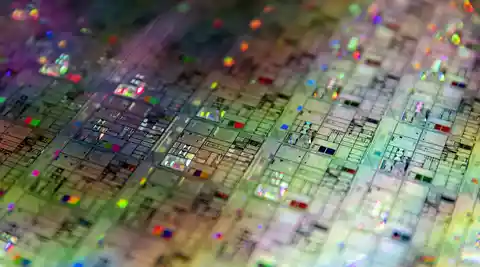 Patterns on a photonic waferAFRL Information Directorate · NQI gallery reuse permission
Back to all images · Explore the interactive Model · Image rights and corrections