
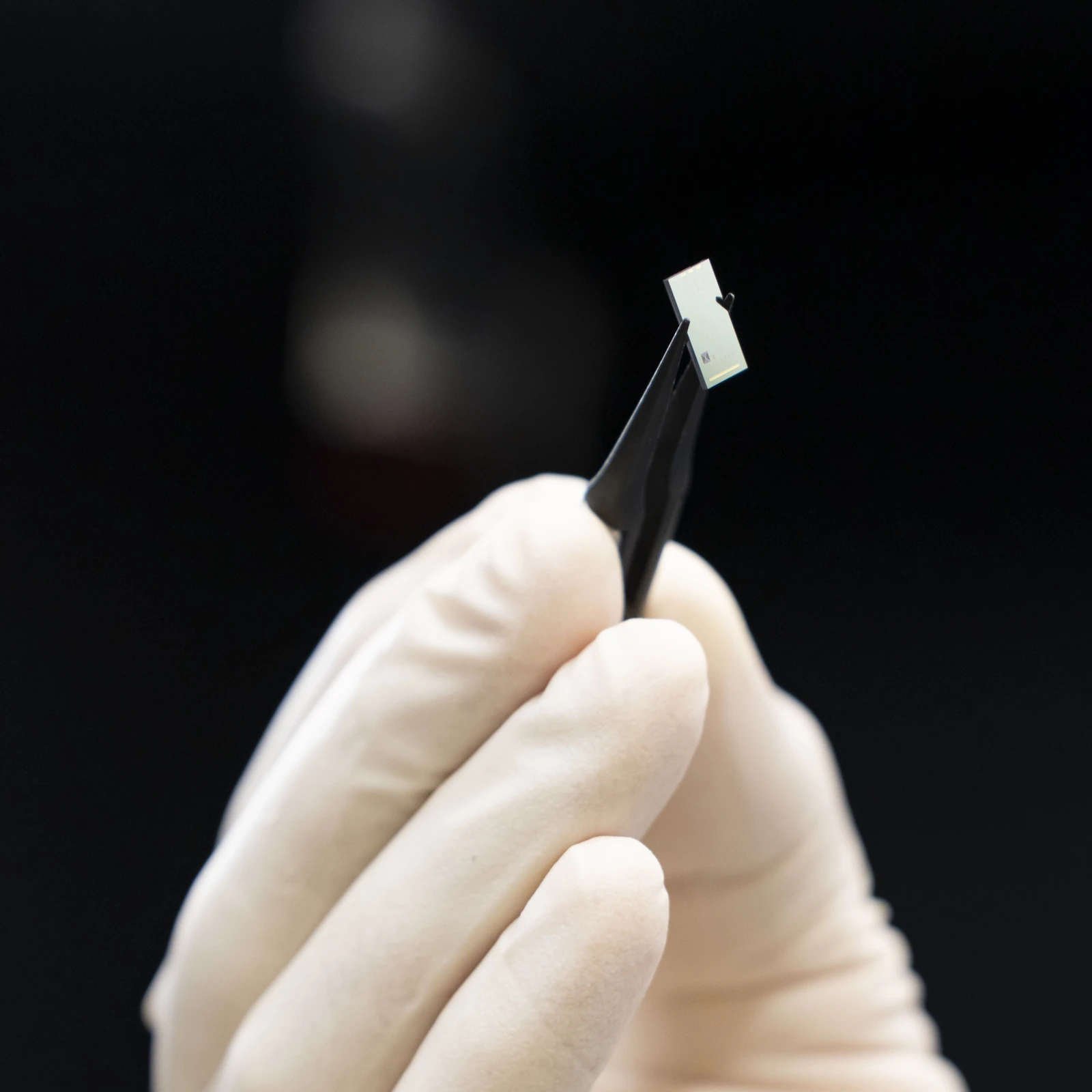
A photonic chip held in tweezers
A rectangular chip and the tips of the tweezers are almost the only sharp objects in the frame. That simple composition makes this a practical lead image for a story about packaging, provided the caption names what it can establish. NIST supplied the photograph with reporting on connections designed for demanding environments. The image shows the object’s small physical scale; it does not show the bond chemistry or certify that every proposed environment has been tested. Keep the complete chip and tweezer tips in any crop. Use the accompanying article to explain tested conditions and distinguish them from future applications.
- Organization
- NIST
- Image type
- Photograph
- Capture date
- Not supplied by source
Source publication and upload dates are separate from capture dates. The capture date is not verified.
- Photographer / creator
- M. King/NIST
- Reuse terms
- Public domain in the United States; NIST worldwide reuse terms
M. King/NIST — A photonic chip held in tweezers — Public domain in the United States; NIST worldwide reuse terms — https://www.nist.gov/news-events/news/2026/03/nist-researchers-develop-photonic-chip-packaging-can-withstand-extreme — https://www.nist.gov/open/copyright-fair-use-and-licensing-statements-srd-data-software-and-technical-series-publications.
Full original frame retained; EXIF orientation normalized where present, resized without enlargement and converted to WebP. No crop or content alteration.
Read the image
Let a close-up explain one thing well
The close-up concentrates attention on three objects: a gloved hand, tweezers and the rectangular chip. A simple composition is useful because a newcomer can locate the device immediately. The editorial job is to connect that clarity to a precise claim rather than overload the image with invisible achievements.
For the packaging feature, the photograph can establish the object’s scale and the practical act of handling it. The engineering explanation must then identify the interface being studied and the boundary of the tests. A photograph taken for a news story should not be relabeled as an image of a specific test unless the source says that it is.
The source article’s image history provides a further quality check: these actual photographs replaced an earlier AI illustration. Preserve the real file and its credit in the working package. Subsequent crops should keep the entire chip and the gripping tips visible, with the modification dated and described according to the NIST terms.
What does a clean composition make easier?
It helps a reader identify the subject and follow a concise explanation. It does not increase the amount of scientific evidence the image contains.
Why preserve the untouched original?
It provides a stable reference for future crops, attribution and comparison. Reviewers can see whether an adaptation has removed context or altered the apparent scene.
An independent QubitWire lesson based on this image and the cited source reading. The image does not establish a performance result.
Keep exploring
More from the same organization or hardware architecture.
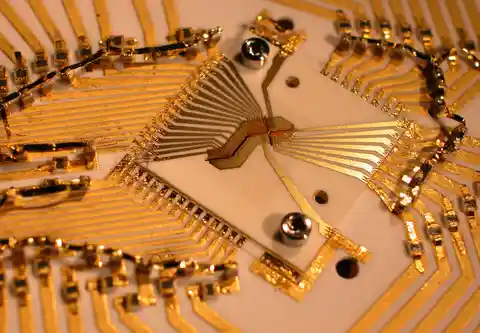 Gold electrodes for trapped ionsBlakestad/NIST · NQI gallery reuse permission
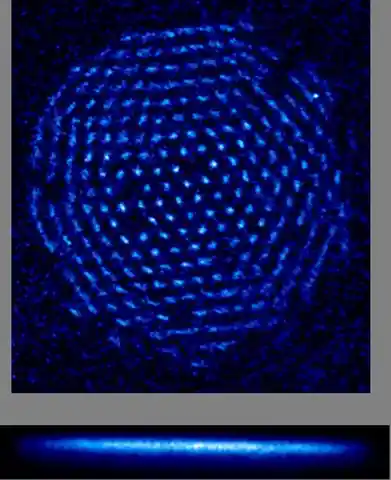 A crystal of trapped ionsNational Institute of Standards and Technology · Public domain (U.S. Government)
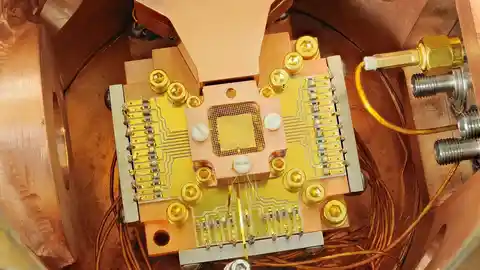 NIST’s beryllium-ion apparatusY. Colombe / NIST · Public domain (U.S. Government)
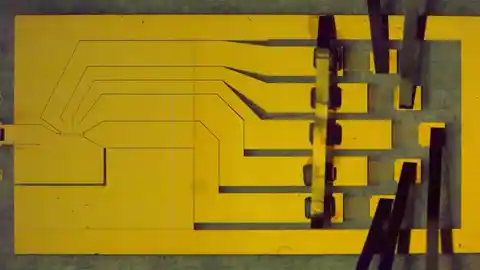 Gold electrodes for trapping ionsSigne Seidelin and John Chiaverini / NIST · Public domain (U.S. Government)
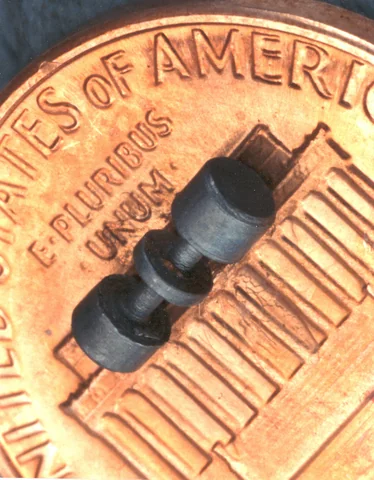 An ion trap resting on a pennyJ. Bergquist and D. Wineland / NIST · Public domain
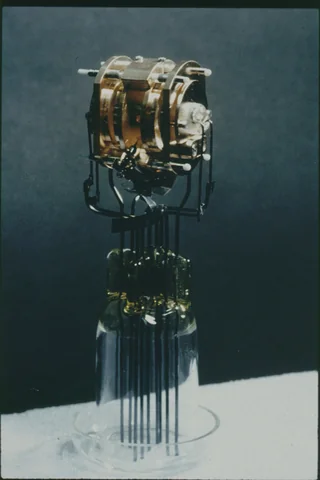 An early laser-cooling ion trapNIST · Public domain
Back to all images · Explore the interactive Model · Image rights and corrections