
Skip to content

2026 SELECTION

QubitWire 100

100 people recognized for contributions to quantum computing. Unranked and alphabetical by surname.

An unranked collection. Browse by surname or start with an idea.

Browse by topic
Explain these topics
Error correction
Methods that protect encoded quantum information by detecting and correcting certain errors.
Neutral atoms
A hardware approach that stores quantum information in electrically neutral atoms.
Quantum networks
Links that distribute quantum information or entanglement between locations.
Algorithms & complexity
How quantum calculations work and what resources they require.
Foundations
The concepts and physical principles that quantum information builds on.

The 2026 selection4 of 100 people

About algorithms & complexity
Algorithms & complexity
How quantum calculations work and what resources they require.

Jump to surname

A

1 person

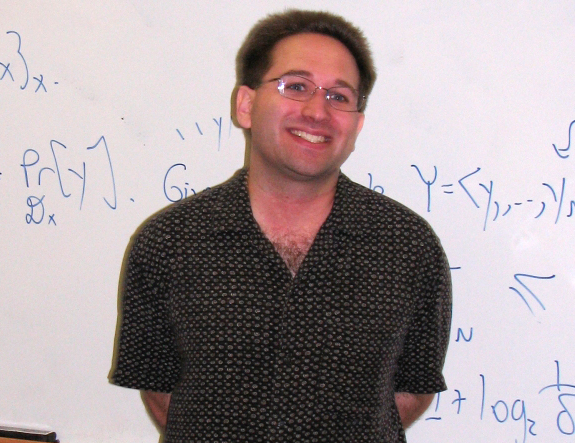
Aaronson studies the capabilities and limits of quantum computers, helping readers ask exactly what a comparison proves before calling it an advantage.

University of Texas at Austin

Professor of Computer Science and director of the Quantum Information Center

Read profile
Why included? 4 sources

Aaronson supplies a mathematical lens for deciding what a quantum result demonstrates. His work with Alex Arkhipov made sampling from linear-optical networks a central example of a restricted quantum task with potentially prohibitive classical cost under stated complexity assumptions. His postselection theorem links a modified quantum model to a classical complexity class, separating physically available computation from stronger hypothetical resources. These contributions make the problem definition, computational model and assumptions part of the result itself. His current academic homepage identifies his UT Austin affiliation and Quantum Information Center directorship. Use his bibliography to explore original research, while keeping a theoretical result, an implemented experiment and an end-to-end application as distinct claims.

Algorithms & complexity

Documented work base: United States

Identification checked Explore the contributions and sources

K

1 person

Killoran builds software connecting quantum computation with modern programming, coauthoring PennyLane’s differentiable framework and Strawberry Fields’ tools for designing and simulating photonic quantum circuits.

Xanadu

Senior Vice President, Fault-Tolerant Quantum Computing Software, Xanadu

Read profile
Why included? 3 sources

Killoran’s work makes quantum ideas accessible through executable software. Strawberry Fields provides a programming and simulation environment for continuous-variable photonic circuits, while PennyLane connects parameterized quantum circuits with automatic differentiation and classical optimization. Both are collaborative projects documented in their research papers. His current PennyLane profile identifies a focus on software for fault-tolerant computing at Xanadu. The combination of algorithms, interfaces and open tools gives researchers a practical route from a mathematical circuit to an experiment.

Quantum softwareAlgorithms & complexity
Identification checked Explore the contributions and sources

L

1 person

Contributed to the Jiuzhang photonic sampling experiments and their programmable successor, advancing the experimental study of quantum computational advantage with large optical systems.

University of Science and Technology of China

Chair Professor

Read profile
Why included? 3 sources

Lu adds a distinct experimental perspective to the directory: photonic sampling as a test of quantum computational advantage. He is a co-author of the 2020 Jiuzhang result and the 2021 phase-programmable follow-up, which brought together squeezed-light sources, interferometers and photon detection. His contribution is represented through those original papers and his verified USTC identification. The profile keeps the claim bounded: these experiments address specialized sampling problems, and their published comparisons depend on the classical algorithms and assumptions used at the time.

Algorithms & complexityControl & measurement

Documented work base: China

Identification checked Explore the contributions and sources

S

1 person

Connects photonic experiments and quantum algorithms with industrial system design, from a variational molecular-energy demonstration to scientific leadership of PsiQuantum’s photonic computing program.

PsiQuantum

Co-Founder and Chief Scientific Officer

Read profile
Why included? 3 sources

Shadbolt’s work spans two scales of photonic quantum computing. As a researcher, he co-authored a small quantum–classical experiment for estimating molecular energy. As a PsiQuantum co-founder and scientific leader, he works on the system-level challenge of building a useful photonic computer. That combination makes his contribution distinctive: algorithm experiments test how quantum hardware might be used, while architecture and manufacturing work address how such hardware might grow. The experimental result and the company’s larger ambitions remain separate claims.

Algorithms & complexityQuantum hardware
Identification checked Explore the contributions and sources
About these checks

Linked sources support selected statements in each profile. Research sources include papers and preprints. A source count is not a ranking or a quality score.

The identification check date relates to the recorded professional description. Individual sources have their own check dates. The fixed 2026 selection stays separate from later profile corrections.

THE EDITORIAL VIEW

Why these people.
Why this field.

Quantum computing is shaped by more than headline breakthroughs. Progress also depends on the people who establish its limits, make its systems more reliable and turn difficult ideas into tools others can use.

The QubitWire 100 recognizes contributions across that work. Each profile explains what is being recognized and connects the account to its supporting evidence.

View the permanent 2026 record