
Skip to content

2026 SELECTION

QubitWire 100

100 people recognized for contributions to quantum computing. Unranked and alphabetical by surname.

An unranked collection. Browse by surname or start with an idea.

Browse by topic
Explain these topics
Error correction
Methods that protect encoded quantum information by detecting and correcting certain errors.
Neutral atoms
A hardware approach that stores quantum information in electrically neutral atoms.
Quantum networks
Links that distribute quantum information or entanglement between locations.
Algorithms & complexity
How quantum calculations work and what resources they require.
Foundations
The concepts and physical principles that quantum information builds on.

The 2026 selection2 of 100 people

About algorithms & complexity
Algorithms & complexity
How quantum calculations work and what resources they require.

Jump to surname

B

1 person

Boixo connects complexity theory and experiment through random-circuit sampling and cross-entropy benchmarking, helping researchers evaluate the behavior and computational demands of superconducting quantum processors.

Google Quantum AI

Quantum-computing researcher

Read profile
Why included? 3 sources

Boixo’s work helps turn an abstract claim of quantum advantage into a defined experimental task. His research with collaborators proposed random-circuit sampling and cross-entropy methods for comparing measured outputs with circuit expectations. He also coauthored the Sycamore experiment, which applied this approach to a 53-qubit processor. These contributions connect theory, classical simulation and hardware measurement. The profile treats the experiment as a task-specific historical milestone; it does not carry forward an old classical-runtime estimate as a permanent record or imply an advantage for useful applications generally.

Algorithms & complexity
Identification checked Explore the contributions and sources
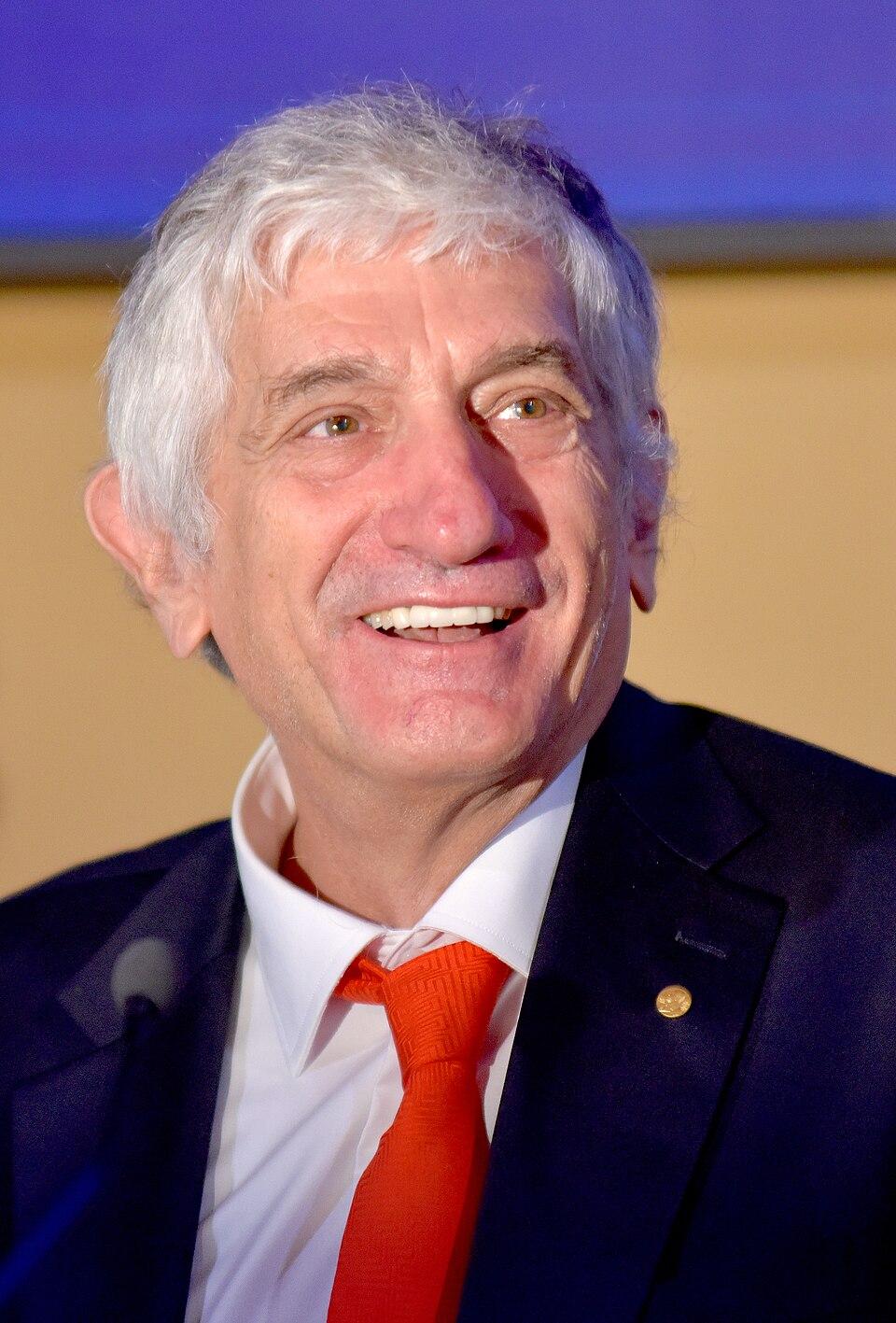
M

1 person

Martinis develops superconducting quantum hardware, contributing to surface-code architecture and the Sycamore random-circuit experiment, and now works on scalable processor engineering as Qolab’s CTO.

Qolab

Chief Technology Officer and cofounder, Qolab

Read profile
Why included? 3 sources

Martinis connects superconducting device engineering with the demands of quantum computation. His collaborative surface-code paper makes protection requirements concrete through logical operations and resource estimates. The Sycamore experiment later tested programmable superconducting hardware on a specific sampling benchmark. Its historical performance comparison should be read in that setting, rather than as a claim of advantage for all useful applications. His current Qolab role continues the engineering focus on building and scaling quantum processors.

Quantum hardwareError correction
Identification checked Explore the contributions and sources
About these checks

Linked sources support selected statements in each profile. Research sources include papers and preprints. A source count is not a ranking or a quality score.

The identification check date relates to the recorded professional description. Individual sources have their own check dates. The fixed 2026 selection stays separate from later profile corrections.

THE EDITORIAL VIEW

Why these people.
Why this field.

Quantum computing is shaped by more than headline breakthroughs. Progress also depends on the people who establish its limits, make its systems more reliable and turn difficult ideas into tools others can use.

The QubitWire 100 recognizes contributions across that work. Each profile explains what is being recognized and connects the account to its supporting evidence.

View the permanent 2026 record