
Skip to content

2026 SELECTION

QubitWire 100

100 people recognized for contributions to quantum computing. Unranked and alphabetical by surname.

An unranked collection. Browse by surname or start with an idea.

Browse by topic
Explain these topics
Error correction
Methods that protect encoded quantum information by detecting and correcting certain errors.
Neutral atoms
A hardware approach that stores quantum information in electrically neutral atoms.
Quantum networks
Links that distribute quantum information or entanglement between locations.
Algorithms & complexity
How quantum calculations work and what resources they require.
Foundations
The concepts and physical principles that quantum information builds on.

The 2026 selection9 of 100 people

About error correction
Error correction
Methods that protect encoded quantum information by detecting and correcting certain errors.

Jump to surname

A

1 person

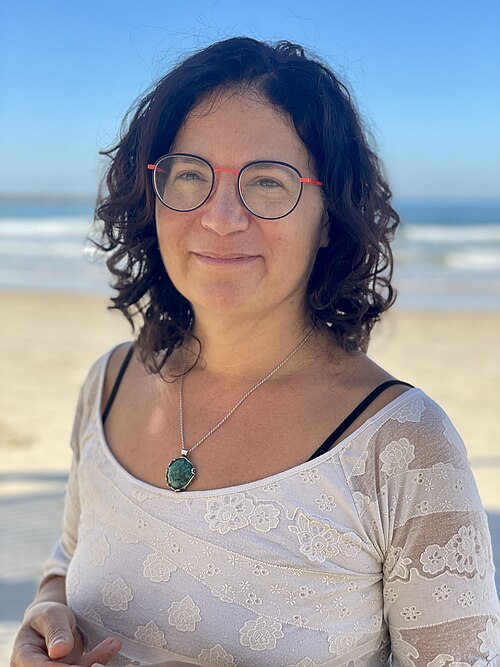
Aharonov helped establish when noisy quantum computation can scale and showed that adiabatic evolution can reproduce the power of the standard quantum circuit model.

Hebrew University of Jerusalem

Professor of Computer Science

Read profile
Why included? 3 sources

Two obstacles recur in quantum computing: errors threaten long computations, and different hardware approaches need a common theoretical language. Aharonov has contributed foundational results on both. With Michael Ben-Or, she established a threshold result for computation with a constant local error rate. With collaborators, she proved the polynomial equivalence of adiabatic and circuit-based computation. These are mathematical results with explicit models and assumptions, rather than promises about a particular device. They continue to frame how researchers assess scalable architectures and alternative ways to organize a quantum algorithm.

Error correctionAlgorithms & complexity

Documented work base: Israel

Identification checked Explore the contributions and sources
B

2 people

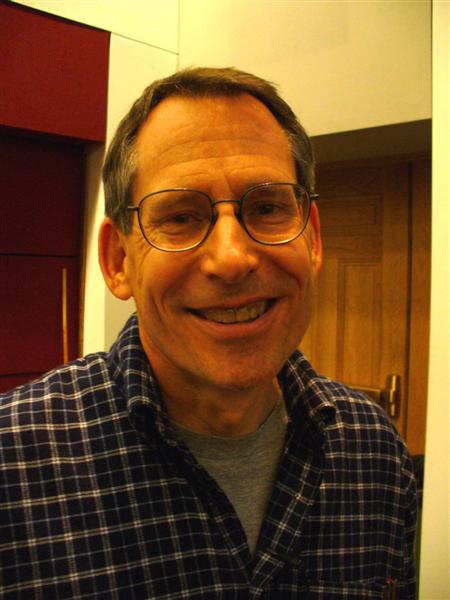
Biercuk connects experimental quantum control with software, developing ways to protect fragile quantum states and translating control research into tools for quantum-computing teams.

Q-CTRL

Founder and Chief Executive Officer

Read profile
Why included? 3 sources

Biercuk’s research and company-building address a practical problem that spans hardware platforms: a useful calculation must survive imperfect control and environmental noise. His experimental work on optimized dynamical decoupling showed how pulse sequences can preserve a quantum memory more effectively. Q-CTRL extends that control perspective into software used to characterize, optimize and operate quantum devices. This contribution sits alongside, rather than substitutes for, quantum error correction. The profile distinguishes his published experiments from the broader engineering and product work performed by the company he founded.

Control & measurementError correction
Identification checked Explore the contributions and sources
Brierley founded Riverlane to build quantum error-correction infrastructure, connecting decoding software, real-time classical hardware and the control systems needed to operate protected quantum computations.

Riverlane

Founder and Chief Executive Officer

Read profile
Why included? 2 sources

Brierley’s role addresses a layer of quantum computing that is easy to overlook: the classical machinery that must interpret error measurements quickly enough to guide a quantum processor. Riverlane develops this infrastructure through integrated decoding and control products. As founder and chief executive, Brierley has focused an organization on making that work available across hardware approaches. His inclusion reflects that effort to turn error correction into a functioning systems component. It does not assign individual invention credit for every decoder or treat a company roadmap as proof that scalable fault tolerance has already been achieved.

Error correctionQuantum software

Documented work base: United Kingdom

Identification checked Explore the contributions and sources

G

1 person

Gottesman develops ways to protect quantum information, giving researchers a mathematical language for diagnosing errors while preserving the information a calculation needs.

University of Maryland

Brin Family Endowed Professor in Theoretical Computer Science and Co-Director of QuICS

Read profile
Why included? 4 sources

Quantum information cannot be protected by treating an unknown quantum state as an ordinary file to copy. Gottesman’s stabilizer formalism instead supplies a structured language for describing encoded information and the checks used to diagnose errors. His work with Alexei Kitaev and John Preskill on oscillator encoding connects continuous physical systems with discrete logical information. These contributions make the relationship between a code, the operations it supports and its resource cost easier to reason about across hardware platforms. The current QuICS profile identifies him as its co-director and the Brin Family Endowed Professor in Theoretical Computer Science at the University of Maryland, with an appointment in the Institute for Advanced Computer Studies.

Error correctionFoundations

Documented work base: United States

Identification checked Explore the contributions and sources

L

1 person

Laflamme helped establish the theory of quantum error correction, a route to computing with linear optics, and Waterloo’s Institute for Quantum Computing. He died in 2025.

University of Waterloo

Quantum-information physicist; founding executive director of the Institute for Quantum Computing (historical)

Read profile
Why included? 3 sources

Laflamme’s enduring contribution combines mathematical foundations with institution building. His work with Emanuel Knill formalized conditions for recovering encoded quantum information after noise. With Knill and Gerard Milburn, he also developed a route to quantum computation using linear optics, photon detection and feedback. At Waterloo he served as the founding executive director of the Institute for Quantum Computing. This historical profile recognizes that continuing scientific legacy while explicitly recording his death in June 2025.

Error correctionFoundations

Documented work base: Canada

Identification checked Explore the contributions and sources

P

1 person

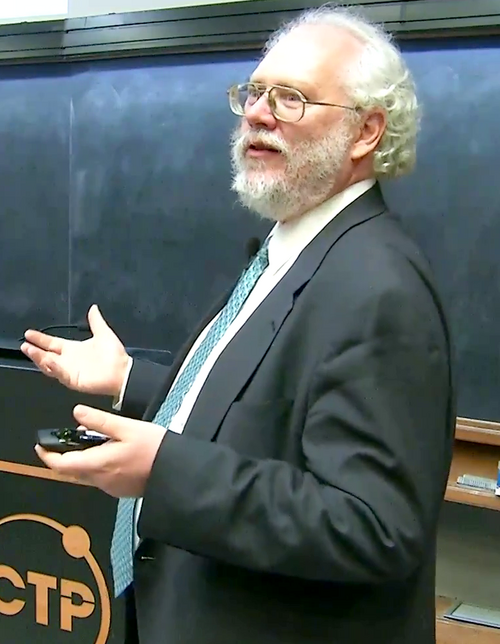
Preskill connects the theory of reliable quantum computation with a practical question: what can a noisy machine accomplish, and what would it take to protect a useful calculation?

California Institute of Technology

Richard P. Feynman Professor of Theoretical Physics

Read profile
Why included? 5 sources

Preskill’s work links methods for protecting quantum information with a framework for reading the field’s promises. With Daniel Gottesman and Alexei Kitaev, he introduced an oscillator encoding that protects against small displacement errors. His NISQ-era analysis examines opportunities and limitations before comprehensive error correction is available. Together, these contributions explain why physical-qubit counts alone cannot tell a reader whether a machine can perform a reliable calculation. His current Caltech curriculum vitae also lists a Senior Scientist role at Oratomic beginning in 2026, alongside his academic appointments. That concurrent affiliation provides context for reading company forecasts; the underlying research and its assumptions remain the evidence to examine.

FoundationsError correction

Documented work base: United States

Identification checked Explore the contributions and sources

S

2 people

Showed that quantum algorithms can efficiently factor integers and compute discrete logarithms, and introduced a way to protect stored quantum information against decoherence.

Massachusetts Institute of Technology

Professor

Read profile
Why included? 3 sources

Shor changed both the motivation for quantum computing and the case that it could be made reliable. His factoring and discrete-logarithm algorithms supplied concrete computational tasks with striking quantum possibilities. His error-correction work then addressed the fragility of the quantum information those algorithms need. These are complementary contributions: one identifies a reason to build a quantum computer, and the other helps explain how imperfect physical components might support dependable quantum computation.

Algorithms & complexityError correction

Documented work base: United States

Identification checked Explore the contributions and sources

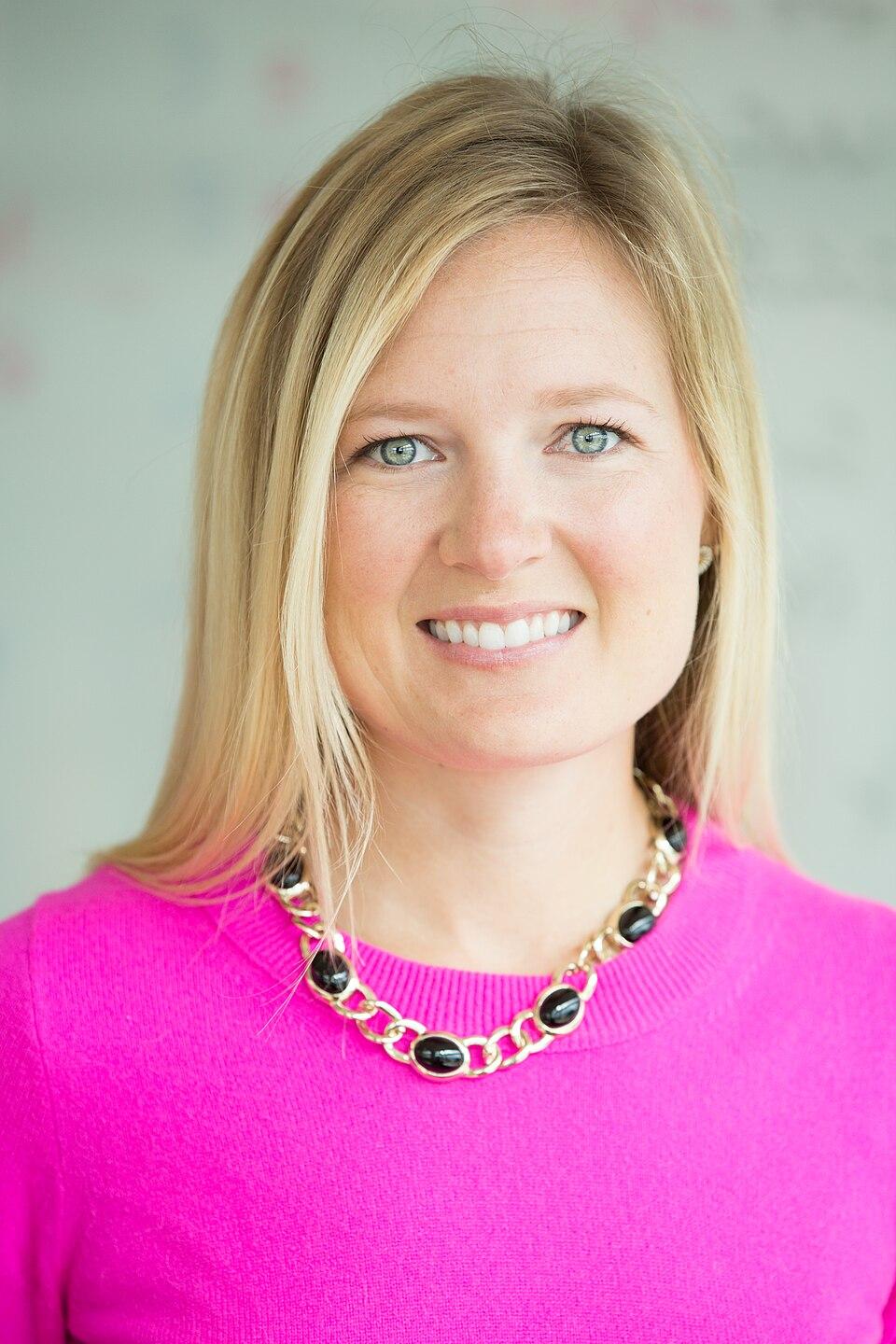
Builds the software and architecture needed to program quantum computers, with contributions to quantum development tools, algorithms and the coordination of hardware with error correction.

NVIDIA

Vice President of Applied Research for Quantum Computing

Read profile
Why included? 3 sources

Svore addresses the layers between a quantum algorithm and the machine that runs it. Her Microsoft research included software for representing and optimizing quantum circuits, and later work on programming infrastructure and fault-tolerant system design. She now leads applied quantum-computing research at NVIDIA. Her inclusion reflects this sustained work on usable quantum computing: languages, intermediate representations and resource-aware design make it possible to reason about programs before the required large machines exist.

Quantum softwareAlgorithms & complexity

Documented work base: United States

Identification checked Explore the contributions and sources

T

1 person

Studies how quantum information can survive noise, combining rigorous limits on quantum memories with error-correction theory and research connected to physical qubit architectures.

QuTech, Delft University of Technology

Group leader

Read profile
Why included? 3 sources

Terhal’s work asks which kinds of protection quantum information can actually obtain from a physical system. A rigorous limitation on passive stabilizer-code memories clarifies what some architectures cannot provide automatically. Her broader work on quantum error correction explains the active codes, thresholds and decoding strategies used to pursue reliable storage and computation. This combination of constructive theory and carefully stated limits makes her research valuable for judging hardware proposals without confusing a promising design with proven resilience.

Error correctionFoundations

Documented work base: Netherlands

Identification checked Explore the contributions and sources
About these checks

Linked sources support selected statements in each profile. Research sources include papers and preprints. A source count is not a ranking or a quality score.

The identification check date relates to the recorded professional description. Individual sources have their own check dates. The fixed 2026 selection stays separate from later profile corrections.

THE EDITORIAL VIEW

Why these people.
Why this field.

Quantum computing is shaped by more than headline breakthroughs. Progress also depends on the people who establish its limits, make its systems more reliable and turn difficult ideas into tools others can use.

The QubitWire 100 recognizes contributions across that work. Each profile explains what is being recognized and connects the account to its supporting evidence.

View the permanent 2026 record