
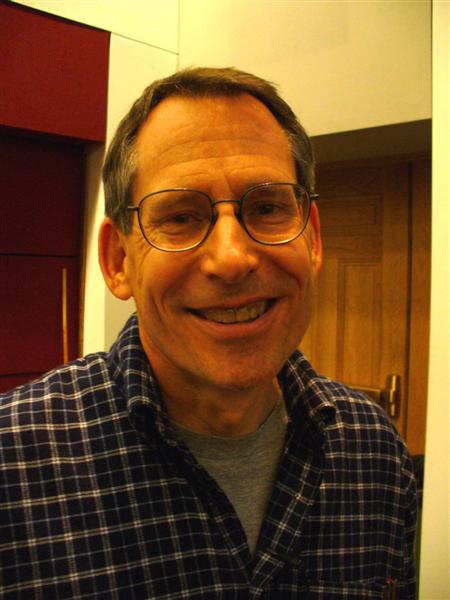


Preskill connects the theory of reliable quantum computation with a practical question: what can a noisy machine accomplish, and what would it take to protect a useful calculation?
arXiv / Physical Review AQuantumPreskill’s work links methods for protecting quantum information with a framework for reading the field’s promises. With Daniel Gottesman and Alexei Kitaev, he introduced an oscillator encoding that protects against small displacement errors. His NISQ-era analysis examines opportunities and limitations before comprehensive error correction is available. Together, these contributions explain why physical-qubit counts alone cannot tell a reader whether a machine can perform a reliable calculation. His current Caltech curriculum vitae also lists a Senior Scientist role at Oratomic beginning in 2026, alongside his academic appointments. That concurrent affiliation provides context for reading company forecasts; the underlying research and its assumptions remain the evidence to examine.
CaltecharXiv / Physical Review AQuantumJohn Preskill / CaltechCaltechA useful reading question: what has to be true for a physical-qubit resource estimate to become a dependable logical computation? Follow the noise model, error-correction overhead and operations the calculation requires before treating an estimate as a prediction.
The work behind the recognition
Work, in context- 2001
Encoding a qubit in an oscillator
With Daniel Gottesman and Alexei Kitaev, introduced an oscillator encoding that protects quantum information against small displacement errors, now commonly called the GKP code.
Coauthor with Daniel Gottesman and Alexei Kitaev of the GKP oscillator encoding.
Source-supported recordarXiv / Physical Review A - 2018
Defining the NISQ-era challenge
Analyzed the opportunities and limitations of noisy intermediate-scale quantum devices, establishing a shared vocabulary for research before fully error-corrected machines become available.
Sole author of the NISQ-era analysis and framing paper.
Source-supported recordQuantum
Keep in perspective
An affiliation or resource estimate is not independent evidence that a proposed machine has demonstrated the forecast capability.
The evidence map
Both views link each contribution to its sources. Choose a contribution on the map or read them all in the list.
Encoding a qubit in an oscillator
Encoding a qubit in an oscillator
Supports: Coauthorship, oscillator encoding and displacement-error correction; journal publication 2001
Published 8 Aug 2000 · Checked 19 Sept 2026Credit & limits: Coauthor with Daniel Gottesman and Alexei Kitaev of the GKP oscillator encoding.
Read the full contribution| Contribution | Evidence & what it supports | Credit & limits |
|---|---|---|
| Encoding a qubit in an oscillator2001 | Primary paperEncoding a qubit in an oscillator Coauthorship, oscillator encoding and displacement-error correction; journal publication 2001 Published 8 Aug 2000 · Checked 19 Sept 2026 | Coauthor with Daniel Gottesman and Alexei Kitaev of the GKP oscillator encoding. |
| Defining the NISQ-era challenge2018 | Primary paperQuantum Computing in the NISQ era and beyond Authorship and NISQ framework Published 6 Aug 2018 · Checked 19 Sept 2026 | Sole author of the NISQ-era analysis and framing paper. |
Follow the evidence
5 sourcesPrimary papers, institutional records and attributed announcements. Each source supports the claims linked above.
- CaltechInstitutional record
John Preskill
Identity, professional identification and contribution context
Checked 19 Sept 2026 - arXiv / Physical Review APrimary paper
Encoding a qubit in an oscillator
Coauthorship, oscillator encoding and displacement-error correction; journal publication 2001
Published 8 Aug 2000 · Checked 19 Sept 2026 - QuantumPrimary paper
Quantum Computing in the NISQ era and beyond
Authorship and NISQ framework
Published 6 Aug 2018 · Checked 19 Sept 2026 - John Preskill / CaltechResearcher profile
John Preskill — Curriculum Vitae
Current Caltech professorship and IQIM directorship; CV lists Senior Scientist, Oratomic, Inc., from 2026. Concurrent affiliation, not validation of a company forecast.
Checked 8 Oct 2026 - CaltechInstitutional record
John Preskill
Identity, professional identification and contribution context
Checked 8 Oct 2026