
Can AI help researchers decide which quantum errors matter?
Harvard and Cornell detailed a $12 million research effort to tailor quantum error protection to specific scientific problems and test those choices on real machines.
Reading tools for text size, copying, printing and your reading list
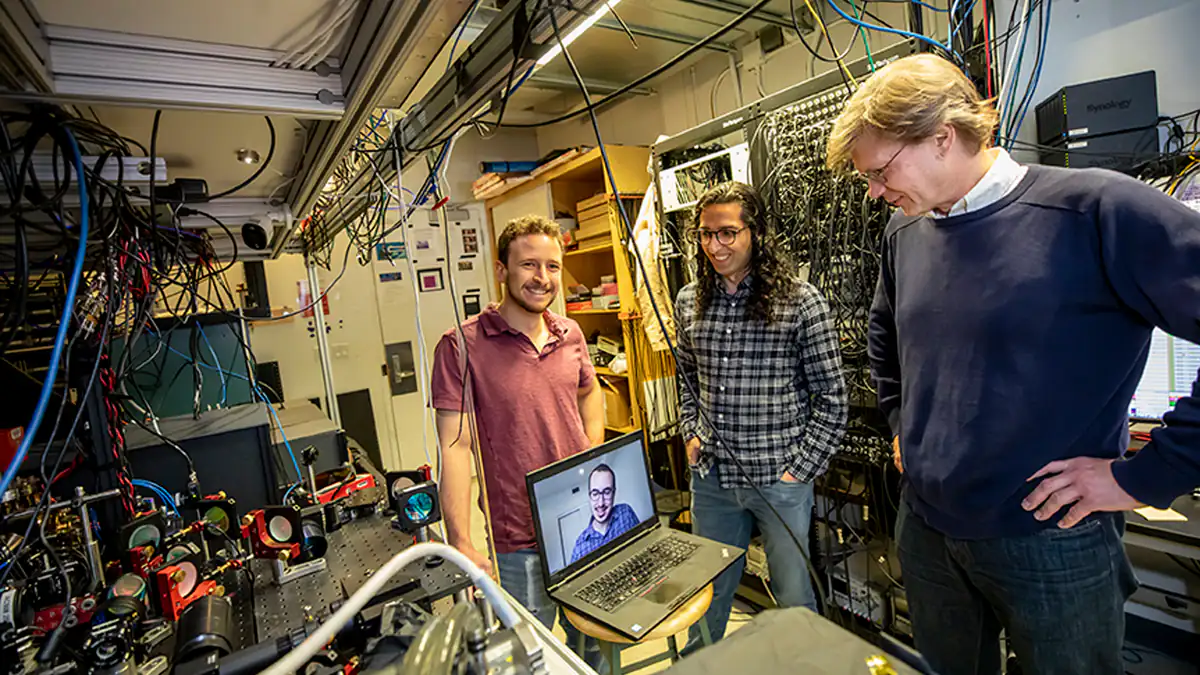
The team behind a $12 million federal quantum-computing project wants to ask a more practical question than how to eliminate every error: Which errors would actually change the answer you came for? Harvard and Cornell outlined the effort on November 20, naming the collaborators and explaining how they plan to use artificial intelligence to design and test different kinds of protection.[1][2]
The Energy Department announced the Harvard-led project in October as part of its Genesis Mission. At the time, the agency described the goal and gave a $159 million total for all 12 awards in that round. The November accounts specify the award amount for this project, what Cornell's team will build and where researchers intend to test their work. Harvard physicist Mikhail Lukin leads the collaboration, which includes MIT, three national labs, QuEra, NVIDIA and Anthropic. They did not announce a new grant or a new result from a quantum computer.[3][1][2]
Why the right kind of protection matters
A quantum computer can spread one unit of information across several fragile components, called . That lets researchers look for signs of an error without directly measuring the quantum information they are trying to preserve. A piece of software called a decoder interprets those signs. The extra qubits and the time spent checking them can make an already difficult calculation more expensive.
The Harvard-led team wants to see whether some of that work can be directed toward the mistakes that would change the answer to a particular scientific question. For example, suppose a scientist wants to estimate the energy of a material. Two mistakes could be equally common, but if one systematically skews the energy estimate and the other barely moves it, treating them as equally urgent could waste resources. That's an illustration of the idea, not a result the team has demonstrated.
Where AI could help
One role for AI is in writing instructions for the machine. Cornell physicist Eun-Ah Kim's group plans to train a system to translate an algorithm into sequences of operations and atom movements. In these quantum computers, tightly focused light holds individual atoms in place. Deciding which atoms to move and which operations to run is part of turning an abstract calculation into a real experiment.[2][5]
Another role is designing the error-correcting codes that spread out the information and the decoders that interpret the resulting warning signs. Cornell says Kim's team will help define a measure of how well a code serves a particular scientific task, so an AI system has a target it can work toward. The research group plans to use the behavior of strongly interacting electrons in materials as a test case. The wider collaboration plans trials on hardware at Harvard, MIT and QuEra.[1][2]
Machine learning has already helped with decoding. In 2024, researchers used a neural decoder called AlphaQubit on data from Google’s Sycamore processor. The new project asks a different question: can the choice of protection improve the particular scientific answer a researcher is trying to get?[4]
What a convincing result would look like
The test is not whether AI can design a more elaborate code. It's whether the design delivers a better scientific answer for the same resources, or the same quality of answer with fewer resources. That comparison would have to count the cost of moving the atoms, checking for errors and interpreting those checks. A win on one task would also leave open whether the same approach helps on another. The universities have described the experiment they want to run; the next useful evidence is what it costs to get an answer on the hardware.
Keep your reading trail
Keep up with these topics
Explore the subjects covered in this story.