
IBM, AMD and Oak Ridge launch a shared test bed for quantum error correction
The new platform puts IBM quantum hardware alongside Oak Ridge’s AMD-powered Umbra system to study how error correction works across the whole machine.
Reading tools for text size, copying, printing and your reading list
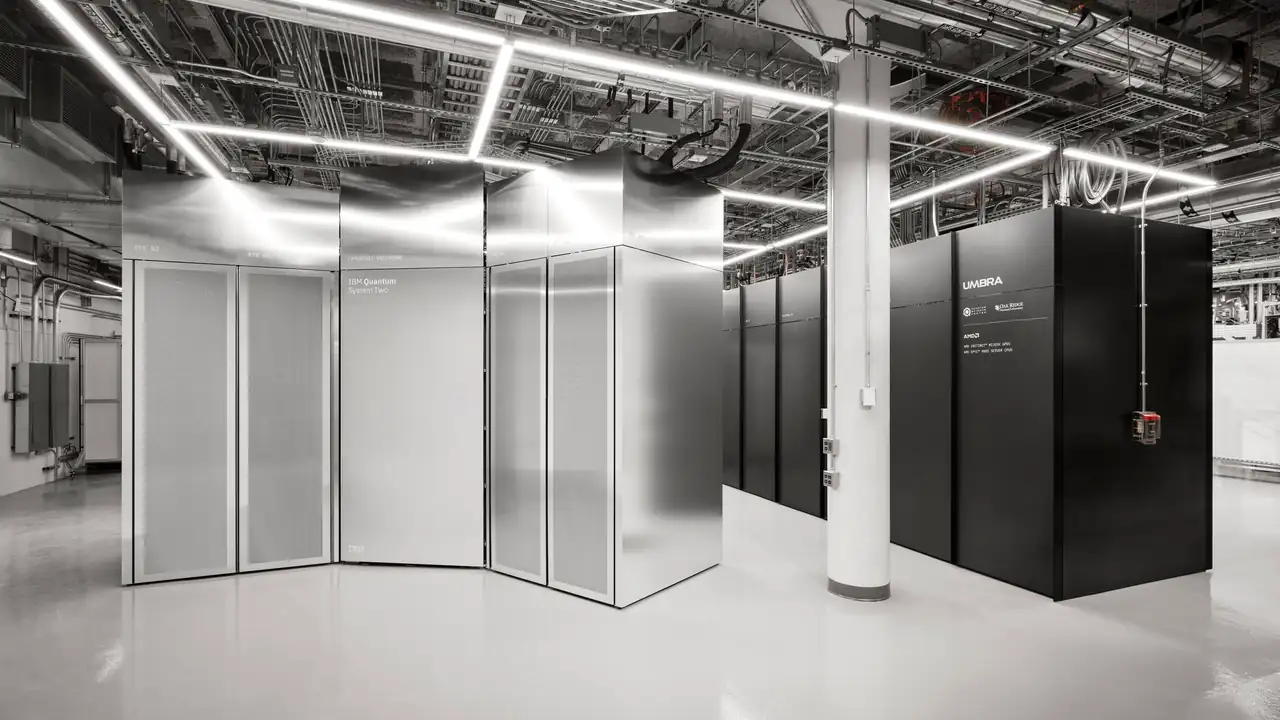
IBM, AMD and Oak Ridge National Laboratory announced a shared research platform on November 5 to test how quantum computers and conventional processors should work together to correct quantum errors.[1][6]
IBM says the first deployment places its quantum computers, including a 120- Nighthawk processor, alongside Oak Ridge’s Umbra high-performance computing system. Umbra uses AMD Instinct MI355X GPUs and fifth-generation EPYC processors. Oak Ridge’s Quantum Science Center and AMD are the initial partners in the platform.[1]
Nighthawk’s 120 programmable qubits are physical hardware units. They are not a claim that the system already offers 120 protected logical qubits for useful calculations.[2]
Why the classical computer matters
creates information about possible faults. Conventional computing must interpret those checks and help determine what happens next. Researchers call that interpretation decoding. Its accuracy, speed and computing requirements can affect whether the complete system is practical.
The new platform gives researchers a place to test those engineering choices together. IBM says teams will compare approaches by the qubits, time, experimental samples and classical resources they need. Its previously described directed-execution controls expose timing, resets and measurement signals to researchers designing error-management workflows.[1][7]
For an ordinary reader, the question is straightforward: how much machinery and time does it take to get a dependable answer? A technique that improves the quantum part can still have costs elsewhere. Decoding might require more processing; a method that rejects faulty attempts might need more repetitions. Those trade-offs belong in the same account.
This is why the deployment is worth watching. It creates a setting for measuring how the parts work together. The announcement itself does not report a new complete-system benchmark showing that the platform has reached a particular level of logical reliability.
What comes next
The partners say the platform will connect with the Oak Ridge Leadership Computing Facility. That connection is planned; the release does not describe it as already operating.[1]
The project also fits the Department of Energy’s Quantum Genesis effort, which targets scientifically relevant fault-tolerant systems with logical-qubit counts in the low hundreds in 2028. That is a program goal, separate from the capacity of the hardware announced today.[3]
The most useful next result would bring the pieces together: a reproducible protected calculation, a measured error rate, the time taken to finish, and the quantum and classical resources consumed. Those numbers would let readers see what closer integration has actually achieved.
Keep your reading trail
Keep up with these topics
Choose the subjects you want to find again in Your Updates.