
Qunova announces a new iron–sulfur energy estimate
Two extrapolated energies can agree without establishing a speed advantage. Here is how to read the comparison.
Reading tools for text size, copying, printing and your reading list
Qunova says its quantum–classical computing method has produced a new energy estimate for a difficult iron–sulfur chemistry model. The November 12 announcement reports an extrapolated result, but leaves its quoted uncertainty undefined and does not establish a computational advantage.[1]
The company reports −327.2482 ±0.0007 hartree, an energy unit used in chemistry, against a classical reference of −327.2471 hartree. QubitWire’s subtraction gives a central-value difference of 1.1 millihartree. That is smaller than the commonly used 1.6-millihartree chemical-accuracy threshold, but agreement between two estimates does not independently establish their accuracy.[1][2]
The classical reference is itself extrapolated. Its authors calculated increasingly demanding approximations, then estimated where the sequence would converge. Two fitting approaches produced values differing by 0.2 millihartree. This makes the fitting choices relevant on both sides of the comparison.[2]
The chemistry is challenging because the electrons’ behavior is strongly interdependent. Qunova’s earlier technical paper describes quantum hardware proposing electronic configurations and a classical solver calculating energy from those configurations. The quantum processor is therefore one part of the calculation, rather than a replacement for the supercomputer.[3]
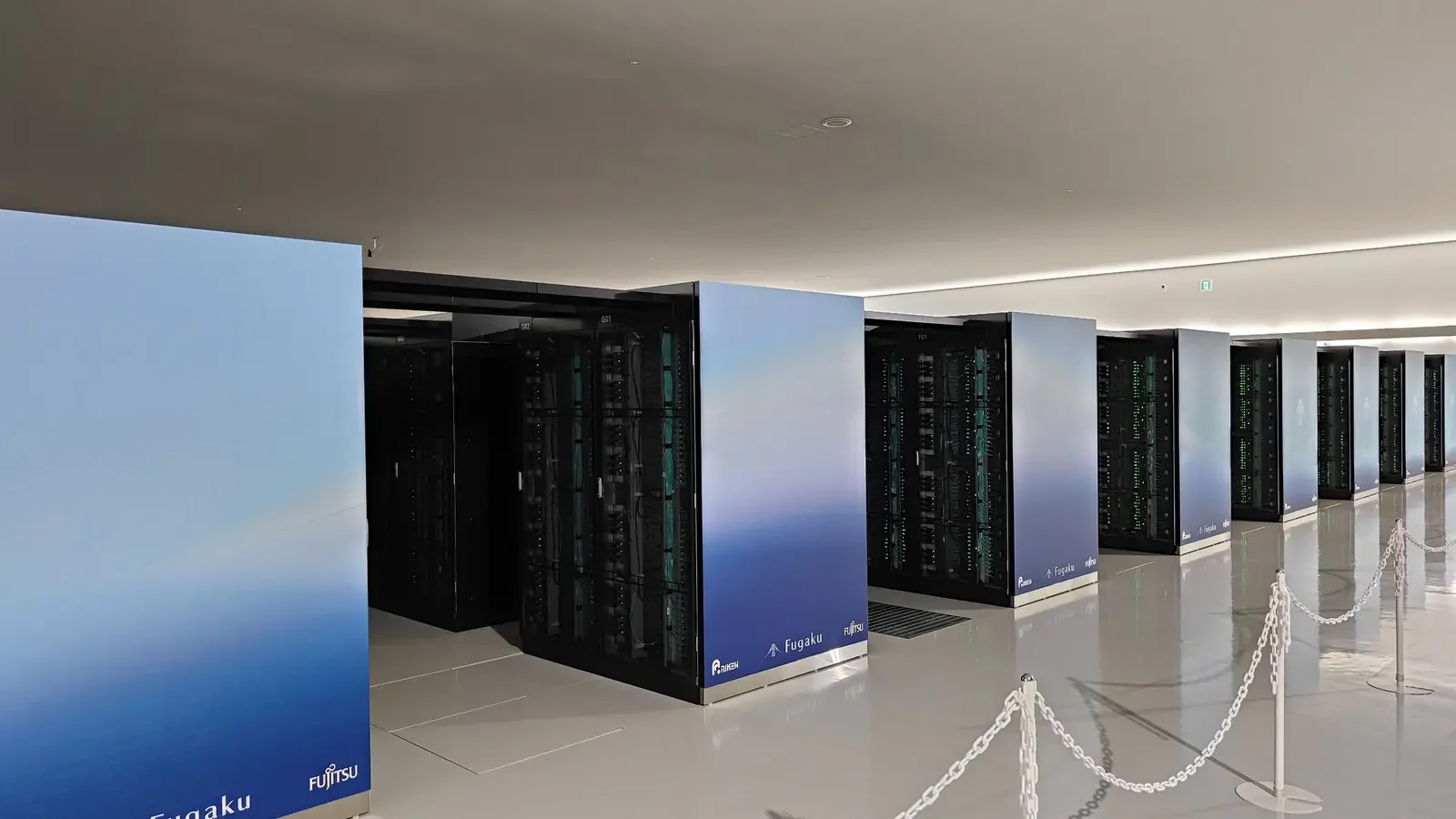
Qunova identifies IBM’s Quantum System Two at RIKEN and the Fugaku supercomputer as the participating systems.[1]
The next useful evidence would connect the new estimate to its underlying calculations: how the extrapolation was fitted, what the uncertainty represents, and the full quantum and classical resources needed to reach it. Those details would help distinguish a promising numerical comparison from a demonstrated practical advantage.
Keep your reading trail
Keep up with these topics
Explore the subjects covered in this story.