
Japan’s upgraded quantum computer takes on materials and molecules
Reimei now has 56 qubits. Two projects pair it with AI and supercomputers, while the test of practical advantage still lies ahead.
Reading tools for text size, copying, printing and your reading list

Japan’s Reimei quantum computer has completed an upgrade from 20 to 56 qubits, Quantinuum announced on November 10. The machine is being used alongside supercomputers and AI to investigate magnetic materials and molecules that absorb light. The upgrade gives researchers a larger quantum processor, but whether the combined system can outperform conventional computing remains unproven.[1][2][3]
Installed at RIKEN’s Wako campus, Reimei has moved from Quantinuum’s H1 system to H2. The upgrade was announced in April; completion is the new milestone. Two projects are already using the upgraded system, according to the company, before regular operations begin under RIKEN’s Test User Program.[1][2][4]
What the extra qubits do—and do not—mean
The hardware count is 2.8 times the previous total: 56 divided by 20. That is not a 2.8-fold speedup. These are , the devices that carry quantum information, rather than 56 error-corrected . What matters for an application is the accuracy, time and cost of the complete calculation.[3]
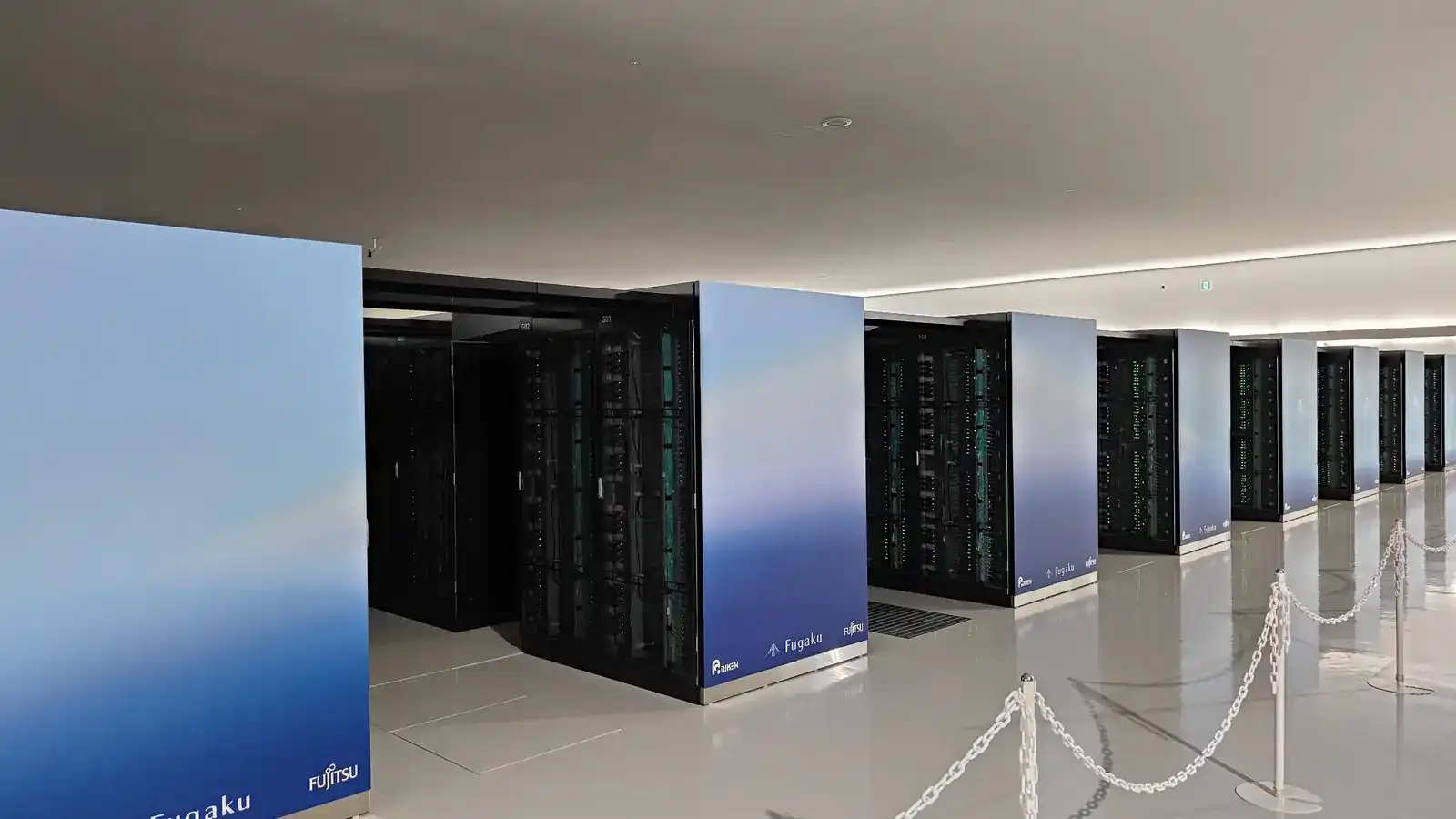
The projects divide work among three kinds of computer. Fugaku handles large conventional scientific calculations. ROQUO, RIKEN’s GPU supercomputer, supports simulation, AI training and other parallel calculations. Reimei supplies selected quantum calculations. The point is to choose the useful part for each machine, rather than ask the quantum processor to do everything.[2]
A map for materials, a closer look at molecules
For the materials project, the target is a phase diagram: a map of how a material changes as conditions such as temperature or magnetic field vary. Such maps help researchers understand magnetism and other collective behavior. Some regions are easier to calculate conventionally than others.[2]
Quantinuum says the team has collected quantum-hardware data for a model of interacting magnetic spins arranged in a six-by-six grid and is combining it with classical simulations to train AI. The model is intended to predict material behavior at conditions not yet calculated directly. Its preliminary accuracy claims remain company-reported research results; the announcement does not establish an independently validated industrial advantage.[1][2]
The chemistry project targets zinc porphyrin, a molecule that absorbs light. Researchers want to calculate its excited states, the higher-energy electronic states involved after light absorption. Understanding that response could eventually help researchers study light-harvesting materials, but no improved solar cell is announced here.[2]
The quantum processor is assigned a limited job: finding potentially important arrangements of electrons. Conventional computers use those candidates within a larger calculation of molecular energies and light absorption. That division is important: the quantum machine is not simulating the entire surrounding molecular environment on its own.[2]
The test is the whole calculation
A useful future comparison would report the final scientific accuracy and the total resources used, including quantum sampling, classical processing, AI training and communication between machines. A better result in one stage does not by itself make the combined workflow faster or cheaper than the best conventional alternative.
There are also two longer-term agreements. RIKEN and Quantinuum plan to work with Japanese universities and suppliers toward a fault-tolerant computer. A separate agreement with SoftBank will assess infrastructure readiness and explore direct connections between quantum machines and Japanese AI data centers. Neither agreement establishes that those services, or the fault-tolerant machine, already exist.[1]
What to watch next
QubitWire’s earlier report on RIKEN’s ROQUO platform explained the infrastructure behind this approach. The new announcement advances that story from an upgrade plan to completed H2 hardware and identified research workflows. The next evidence to watch for is published results with full comparisons and the start of regular Test User Program operations after the two projects conclude.[1][2]
Keep your reading trail
Keep up with these topics
Explore the subjects covered in this story.