
Rigetti puts a virtual chip model into its error-correction workflow
A new company disclosure moves Constellation beyond an exploratory collaboration. The missing evidence is how well its predictions hold up across complete computations.
Reading tools for text size, copying, printing and your reading list
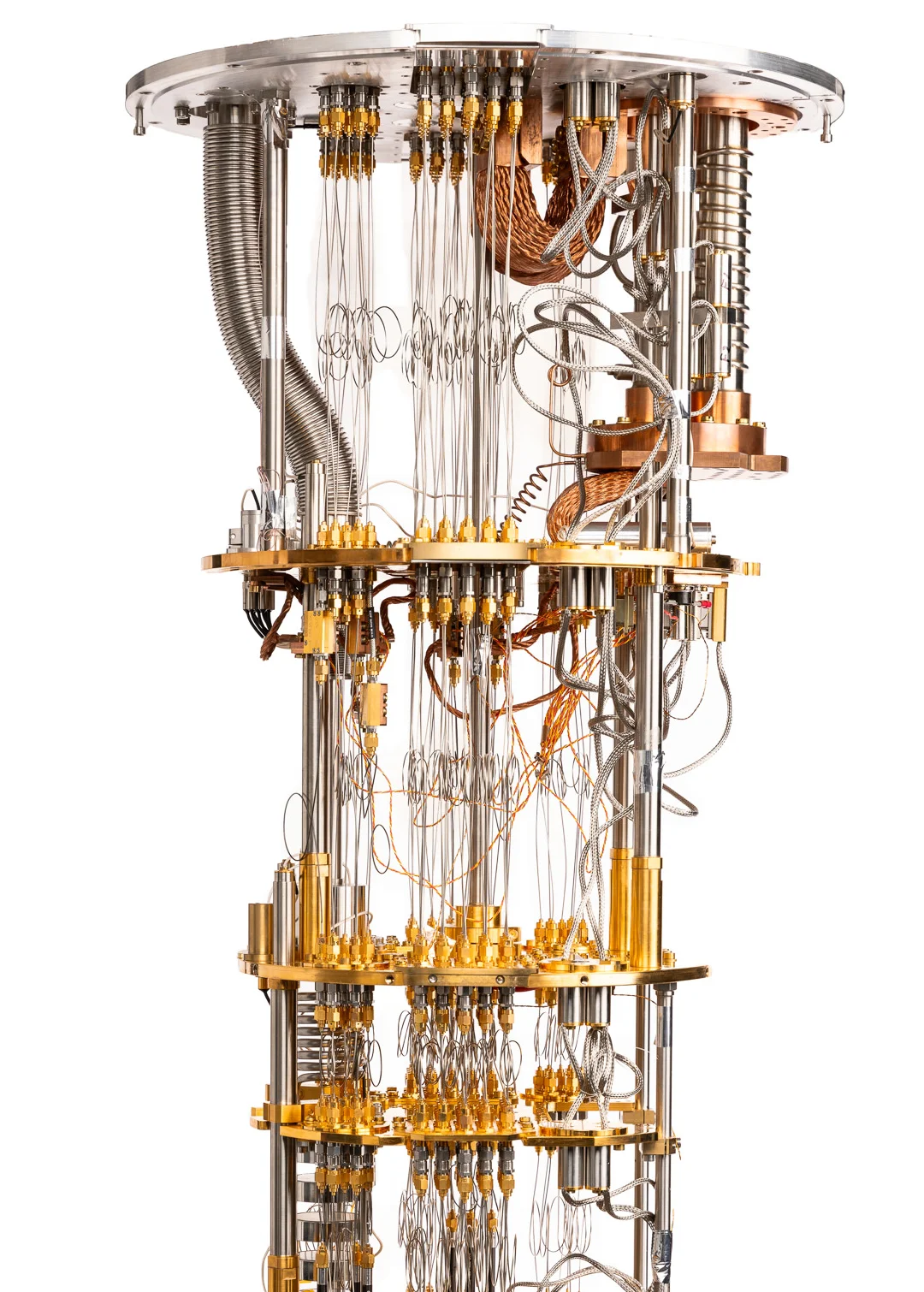
Rigetti is using a software model of its quantum hardware to help predict the errors that future error-corrected machines will face. In a November 12 announcement from Quantum Elements, Rigetti chief executive Subodh Kulkarni said Quantum Elements’ Constellation platform now supplies inputs to the noise models in Rigetti's pipeline.[1][2]
The change concerns engineering decisions made on conventional computers, not a newly demonstrated error-corrected quantum computer. Kulkarni said the collaborators had validated predictions of single- and two-qubit gate performance on Rigetti's 36- and 108-qubit processors. Those are , the individual hardware elements, rather than protected .[1]
A gate is an operation on one or more qubits. A digital twin is a mathematical model designed to reproduce relevant behavior of the real device. Engineers can use it to ask which sources of error matter most and whether a proposed hardware change is worth testing. Quantum Elements describes a chain that starts with device physics, estimates gate errors, converts them into a noise model, and runs an error-correction simulation.[1]
That sequence matters because getting an individual operation right and protecting a complete computation are different problems. The second prediction depends on the first model, plus assumptions about how errors behave and how the correction procedure handles them. A plausible simulation is useful design evidence; it does not replace a test on the resulting machine.[1]
The announcement also marks a clearer stage of adoption than Quantum Elements’ April 21 disclosure, which described exploratory simulations and said validated, reproducible results would follow. The new statement names two processor sizes and an actual place in Rigetti's workflow.[3][1]
What it does not publish is a table comparing predicted and measured errors, the range of operating conditions tested, or a measured improvement in protected computations. Quantum Elements' co-design page labels its example error maps and logical-error curves as illustrative. Its separate claim of accuracy within 2% concerns a fast surrogate model's agreement with a fuller software solver, not a disclosed 2% prediction error against Rigetti hardware.[1][2]
The useful next evidence would connect those steps: measured prediction accuracy on held-out device conditions, followed by tests showing whether design choices suggested by the model improve the real error-corrected system.[1]
Keep your reading trail
Keep up with these topics
Explore the subjects covered in this story.