
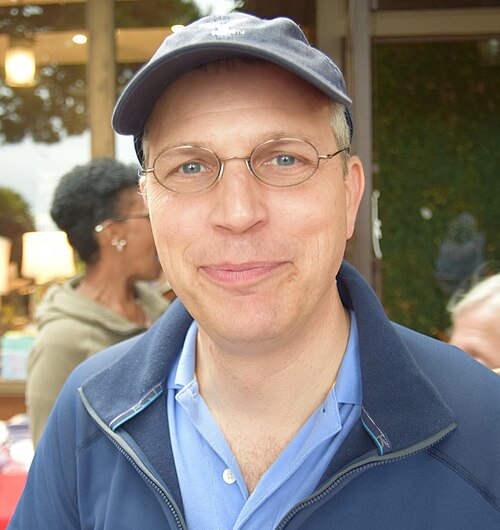


Helped establish circuit quantum electrodynamics and co-developed the transmon, connecting superconducting qubits to microwave circuits that can control and protect quantum information.
Yale UniversityarXiv / Physical Review ASchoelkopf helped turn superconducting electrical circuits into a platform for manipulating quantum information. Circuit quantum electrodynamics provides a way to couple artificial atoms to microwave photons, while the transmon design reduces a major source of qubit sensitivity. These contributions concern the physical building blocks of a processor, not just a single demonstration. His Yale research also connects those devices to quantum operations and error correction, linking foundational circuit design to the demands of computation.
Yale UniversityarXiv / Physical Review ACan a quantum gate preserve useful clues about errors?
Some quantum encodings make a lost excitation visible as an erasure: information about where an error happened can help the correction process. A useful question is whether that advantage survives a gate, rather than appearing only while information is stored. [1]
An entangling gate for dual-rail erasure qubits, published online on 5 August 2026, explores that problem experimentally. Robert J. Schoelkopf is a coauthor. The publisher’s contribution statement credits him with project management and co-writing the paper, alongside collaborators whose roles include proposing, building and measuring the gate. [1][2]
A measured gate, an error model and a simulator that uses that model provide different kinds of evidence. Keep the August hardware paper separate from an October software release. The publisher also discloses that Schoelkopf is a D-Wave shareholder and consultant, and identifies a related provisional patent application involving him and other authors. [2]
Keep asking: Which errors are flagged during an operation, and which remain undetected?
Sources for this question
- An entangling gate for dual-rail erasure qubits — Nature.
Experimental gate, erasure hierarchy and collaborative author-contribution statement. The operation’s results do not establish a complete fault-tolerant computer.
Paper published online 5 August 2026; print issue 6 August 2026. Checked 2026-10-11. - Publisher record and disclosures for DOI 10.1038/s41586-026-10822-y — Nature / Crossref Crossmark.
Exact author list, publication dates, financial interests and patent disclosure. The record supports attribution without implying exclusive credit.
Publisher-deposited record for the August 2026 paper. Checked 2026-10-11.
The work behind the recognition
Work, in context- 2004
Circuit quantum electrodynamics
Schoelkopf co-authored the demonstration of strong coupling between a superconducting qubit and a single microwave photon. This work helped establish circuit quantum electrodynamics as a framework for controlling quantum states in engineered electrical circuits.
Co-author of the 2004 strong-coupling experiment with the circuit-QED team.
Source-supported recordYale University - 2007
The transmon qubit design
With collaborators, Schoelkopf introduced a qubit design that greatly reduces sensitivity to charge noise by changing the balance of Josephson and charging energies. The transmon retains enough anharmonicity to permit selective quantum control.
Co-author of the transmon proposal with Koch and the other named collaborators.
Source-supported recordarXiv / Physical Review A
Keep in perspective
The circuit and transmon contributions were collaborative; this profile does not assign sole inventorship.
The evidence map
Both views link each contribution to its sources. Choose a contribution on the map or read them all in the list.
Circuit quantum electrodynamics
Robert J. Schoelkopf
Supports: Current professorship, circuit-QED research, 2004 strong-coupling publication and later circuit work.
Checked 19 Sept 2026Credit & limits: Co-author of the 2004 strong-coupling experiment with the circuit-QED team.
Read the full contribution| Contribution | Evidence & what it supports | Credit & limits |
|---|---|---|
| Circuit quantum electrodynamics2004 | Institutional recordRobert J. Schoelkopf Current professorship, circuit-QED research, 2004 strong-coupling publication and later circuit work. Checked 19 Sept 2026 | Co-author of the 2004 strong-coupling experiment with the circuit-QED team. |
| The transmon qubit design2007 | Primary paperCharge insensitive qubit design derived from the Cooper pair box Co-authorship and the transmon design, charge-noise suppression and retained controllability. Published 28 Feb 2007 · Checked 19 Sept 2026 | Co-author of the transmon proposal with Koch and the other named collaborators. |
Follow the evidence
2 sourcesPrimary papers, institutional records and attributed announcements. Each source supports the claims linked above.
- Yale UniversityInstitutional record
Robert J. Schoelkopf
Current professorship, circuit-QED research, 2004 strong-coupling publication and later circuit work.
Checked 19 Sept 2026 - arXiv / Physical Review APrimary paper
Charge insensitive qubit design derived from the Cooper pair box
Co-authorship and the transmon design, charge-noise suppression and retained controllability.
Published 28 Feb 2007 · Checked 19 Sept 2026