
Skip to content

2026 SELECTION

QubitWire 100

100 people recognized for contributions to quantum computing. Unranked and alphabetical by surname.

An unranked collection. Browse by surname or start with an idea.

Browse by topic
Explain these topics
Error correction
Methods that protect encoded quantum information by detecting and correcting certain errors.
Neutral atoms
A hardware approach that stores quantum information in electrically neutral atoms.
Quantum networks
Links that distribute quantum information or entanglement between locations.
Algorithms & complexity
How quantum calculations work and what resources they require.
Foundations
The concepts and physical principles that quantum information builds on.

The 2026 selection9 of 100 people

About algorithms & complexity
Algorithms & complexity
How quantum calculations work and what resources they require.

Jump to surname

A

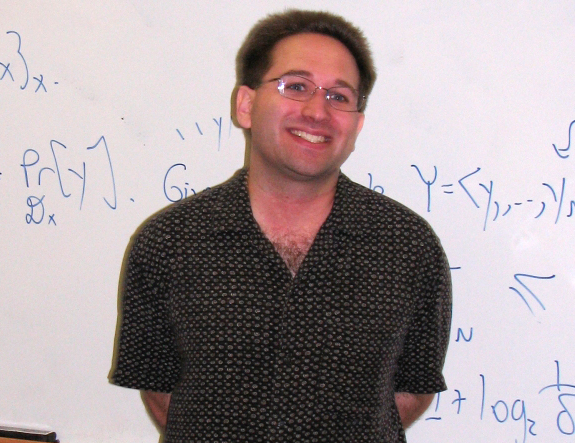
1 person

Aaronson studies the capabilities and limits of quantum computers, helping readers ask exactly what a comparison proves before calling it an advantage.

University of Texas at Austin

Professor of Computer Science and director of the Quantum Information Center

Read profile
Why included? 4 sources

Aaronson supplies a mathematical lens for deciding what a quantum result demonstrates. His work with Alex Arkhipov made sampling from linear-optical networks a central example of a restricted quantum task with potentially prohibitive classical cost under stated complexity assumptions. His postselection theorem links a modified quantum model to a classical complexity class, separating physically available computation from stronger hypothetical resources. These contributions make the problem definition, computational model and assumptions part of the result itself. His current academic homepage identifies his UT Austin affiliation and Quantum Information Center directorship. Use his bibliography to explore original research, while keeping a theoretical result, an implemented experiment and an end-to-end application as distinct claims.

Algorithms & complexity

Documented work base: United States

Identification checked Explore the contributions and sources
C

2 people

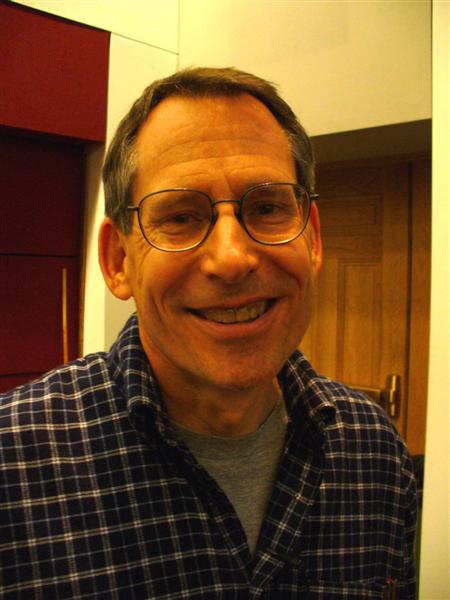
Childs develops quantum algorithms based on walks and simulation, showing how quantum dynamics can produce provable computational advantages and even implement universal quantum computation.

University of Maryland

Professor of Computer Science

Read profile
Why included? 3 sources

Childs’s research treats quantum evolution as an algorithm-design resource. His collaborative quantum-walk result constructed a black-box problem with an exponential separation from classical computation, providing a different mechanism from familiar Fourier-transform algorithms. His later universality result showed that suitably designed graphs can encode arbitrary quantum computation in a walk. Together, these works explain both why quantum dynamics can be useful and how expressive a simple-looking model can become. Their importance lies in explicit constructions and resource analysis, rather than an assertion that ordinary random walks or every physical system deliver an advantage.

Algorithms & complexityQuantum simulation

Documented work base: United States

Identification checked Explore the contributions and sources
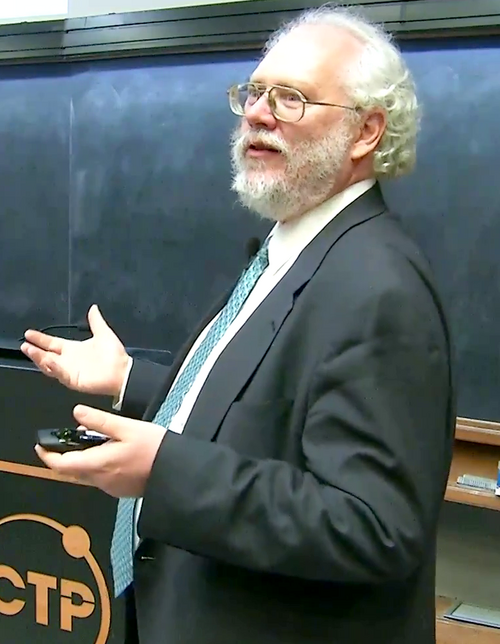
An experimentalist and theorist whose work spans early quantum computation with nuclear spins and algorithms that improve how quantum computers simulate physical systems.

Massachusetts Institute of Technology

Julius A. Stratton Professor in Electrical Engineering and Physics

Read profile
Why included? 3 sources

Chuang connects two demanding parts of quantum computing: controlling a physical experiment and determining what an ideal machine can calculate efficiently. His coauthored nuclear magnetic resonance experiment implemented a small instance of Shor’s algorithm. Later work with Guang Hao Low developed quantum signal processing for Hamiltonian simulation. Together these contributions give readers a route from early demonstrations to the algorithmic tools used to reason about more capable quantum processors.

Algorithms & complexityQuantum simulation

Documented work base: United States

Identification checked Explore the contributions and sources

F

1 person

A theorist who helped develop adiabatic quantum computation and the quantum approximate optimization algorithm, exploring ways quantum dynamics can be used to solve computational problems.

Massachusetts Institute of Technology; Google

Cecil and Ida Green Professor of Physics, Emeritus; researcher at Google

Read profile
Why included? 3 sources

Farhi’s research expands the set of ways to organize quantum computation. Adiabatic computation encodes a problem in the gradual evolution of a physical system, while the quantum approximate optimization algorithm uses alternating operations and adjustable parameters. Both approaches connect mathematical problems with quantum dynamics. Their inclusion here reflects the influence of these frameworks on research; it does not assume that either delivers a general practical advantage over the best classical methods.

Algorithms & complexityQuantum simulation

Documented work base: United States

Identification checked Explore the contributions and sources

H

1 person

Harrow develops mathematical tools for quantum computation, from the HHL linear-systems algorithm to a resource framework connecting communication, entanglement and quantum information protocols.

Massachusetts Institute of Technology

Professor of Physics, MIT

Read profile
Why included? 3 sources

Harrow connects the search for useful quantum algorithms with rigorous accounts of the resources they consume. With Hassidim and Lloyd, he showed how a quantum computer could estimate properties of certain linear-system solutions under explicit input and conditioning assumptions. With Devetak and Winter, he developed a language for combining quantum communication protocols. These contributions make him a useful guide to both the potential of quantum processing and the conditions that an advantage claim must satisfy.

Algorithms & complexityFoundations

Documented work base: United States

Identification checked Explore the contributions and sources

P

1 person

Preskill connects the theory of reliable quantum computation with a practical question: what can a noisy machine accomplish, and what would it take to protect a useful calculation?

California Institute of Technology

Richard P. Feynman Professor of Theoretical Physics

Read profile
Why included? 5 sources

Preskill’s work links methods for protecting quantum information with a framework for reading the field’s promises. With Daniel Gottesman and Alexei Kitaev, he introduced an oscillator encoding that protects against small displacement errors. His NISQ-era analysis examines opportunities and limitations before comprehensive error correction is available. Together, these contributions explain why physical-qubit counts alone cannot tell a reader whether a machine can perform a reliable calculation. His current Caltech curriculum vitae also lists a Senior Scientist role at Oratomic beginning in 2026, alongside his academic appointments. That concurrent affiliation provides context for reading company forecasts; the underlying research and its assumptions remain the evidence to examine.

FoundationsError correction

Documented work base: United States

Identification checked Explore the contributions and sources

S

2 people

Showed that quantum algorithms can efficiently factor integers and compute discrete logarithms, and introduced a way to protect stored quantum information against decoherence.

Massachusetts Institute of Technology

Professor

Read profile
Why included? 3 sources

Shor changed both the motivation for quantum computing and the case that it could be made reliable. His factoring and discrete-logarithm algorithms supplied concrete computational tasks with striking quantum possibilities. His error-correction work then addressed the fragility of the quantum information those algorithms need. These are complementary contributions: one identifies a reason to build a quantum computer, and the other helps explain how imperfect physical components might support dependable quantum computation.

Algorithms & complexityError correction

Documented work base: United States

Identification checked Explore the contributions and sources

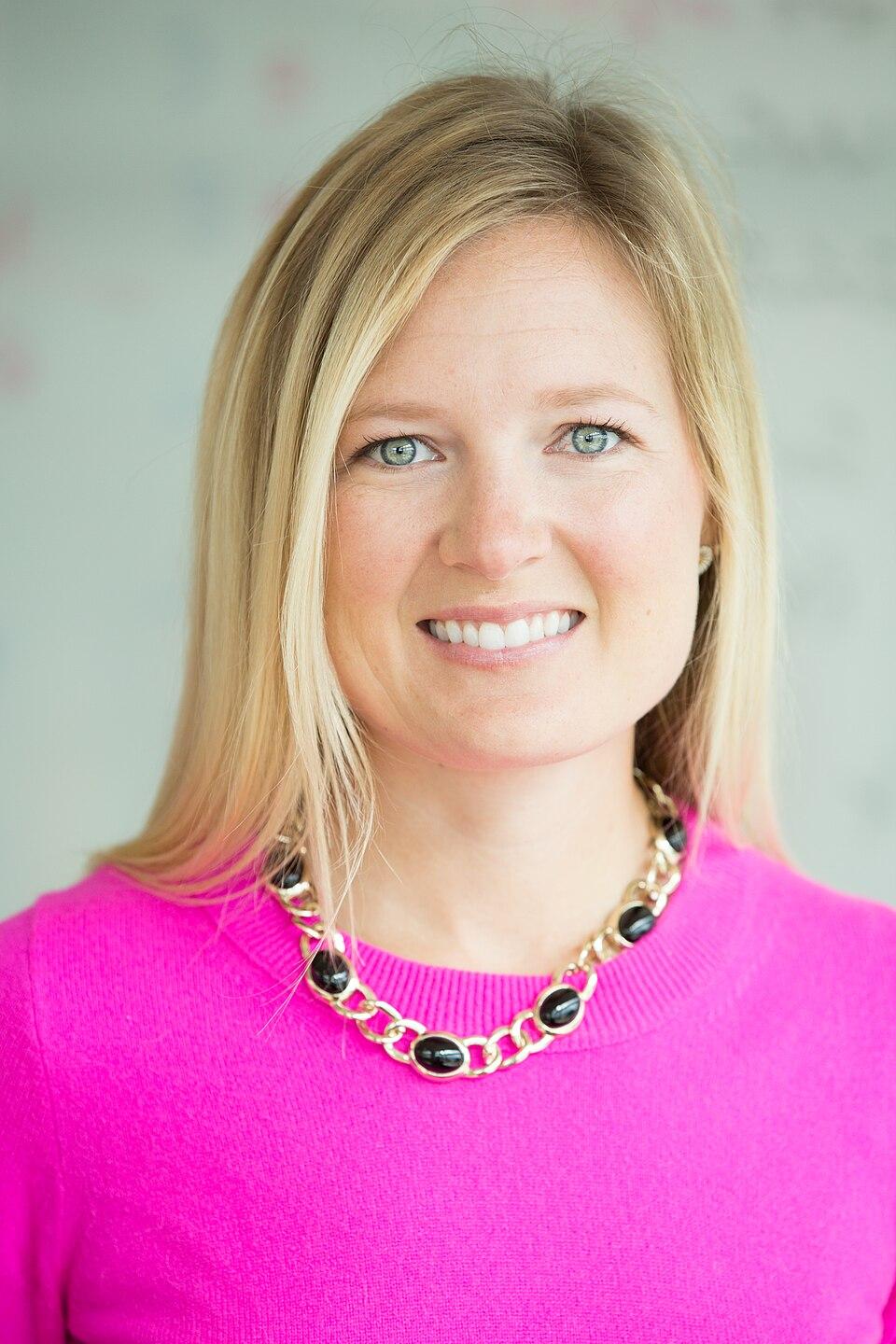
Builds the software and architecture needed to program quantum computers, with contributions to quantum development tools, algorithms and the coordination of hardware with error correction.

NVIDIA

Vice President of Applied Research for Quantum Computing

Read profile
Why included? 3 sources

Svore addresses the layers between a quantum algorithm and the machine that runs it. Her Microsoft research included software for representing and optimizing quantum circuits, and later work on programming infrastructure and fault-tolerant system design. She now leads applied quantum-computing research at NVIDIA. Her inclusion reflects this sustained work on usable quantum computing: languages, intermediate representations and resource-aware design make it possible to reason about programs before the required large machines exist.

Quantum softwareAlgorithms & complexity

Documented work base: United States

Identification checked Explore the contributions and sources

V

1 person

Develops the theoretical foundations used to compare quantum and classical computation, including quantum complexity theory and analyses of the difficulty of sampling quantum circuits.

University of California, Berkeley

Roger A. Strauch Professor of EECS; co-director, Berkeley Quantum Computation Center

Read profile
Why included? 3 sources

Vazirani helps establish what a claimed quantum advantage means mathematically. Quantum complexity theory supplies a framework for comparing computational models, and his later work examines the difficulty of reproducing the output of randomly chosen quantum circuits. These contributions matter because experimental performance alone does not explain whether a task is classically difficult. His profile emphasizes the theoretical evidence and its assumptions, keeping complexity results separate from the engineering performance or commercial usefulness of a device.

Algorithms & complexityFoundations

Documented work base: United States

Identification checked Explore the contributions and sources
About these checks

Linked sources support selected statements in each profile. Research sources include papers and preprints. A source count is not a ranking or a quality score.

The identification check date relates to the recorded professional description. Individual sources have their own check dates. The fixed 2026 selection stays separate from later profile corrections.

THE EDITORIAL VIEW

Why these people.
Why this field.

Quantum computing is shaped by more than headline breakthroughs. Progress also depends on the people who establish its limits, make its systems more reliable and turn difficult ideas into tools others can use.

The QubitWire 100 recognizes contributions across that work. Each profile explains what is being recognized and connects the account to its supporting evidence.

View the permanent 2026 record