
Skip to content

2026 SELECTION

QubitWire 100

100 people recognized for contributions to quantum computing. Unranked and alphabetical by surname.

An unranked collection. Browse by surname or start with an idea.

Browse by topic
Explain these topics
Error correction
Methods that protect encoded quantum information by detecting and correcting certain errors.
Neutral atoms
A hardware approach that stores quantum information in electrically neutral atoms.
Quantum networks
Links that distribute quantum information or entanglement between locations.
Algorithms & complexity
How quantum calculations work and what resources they require.
Foundations
The concepts and physical principles that quantum information builds on.

The 2026 selection15 of 100 people

About foundations
Foundations
The concepts and physical principles that quantum information builds on.

Jump to surname

B

1 person

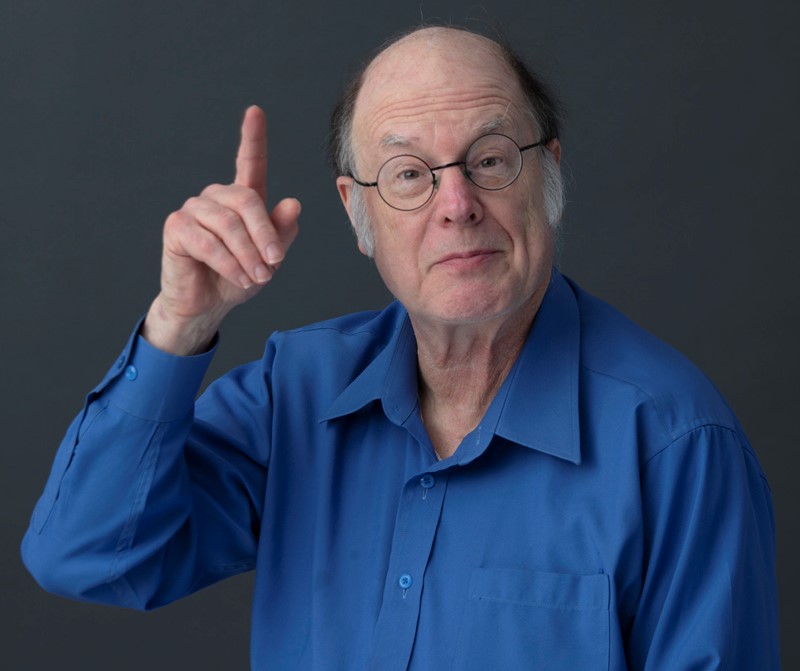
Bennett helped establish quantum information as a discipline, co-developing quantum key distribution and the teleportation protocol that turns shared entanglement into a communication resource.

IBM Research

IBM Fellow

Read profile
Why included? 2 sources

Bennett’s work recast information as something governed by physical law. The BB84 protocol with Gilles Brassard made quantum states part of a cryptographic procedure, while the teleportation paper with five collaborators showed how entanglement and classical communication can transfer an unknown quantum state. These are defining building blocks for quantum communication and information processing. His inclusion recognizes their conceptual and technical reach, while preserving the conditions that make them meaningful: teleportation needs classical information, and a cryptographic protocol’s security must be assessed together with its assumptions and implementation.

FoundationsQuantum networks

Documented work base: United States

Identification checked Explore the contributions and sources
C

2 people

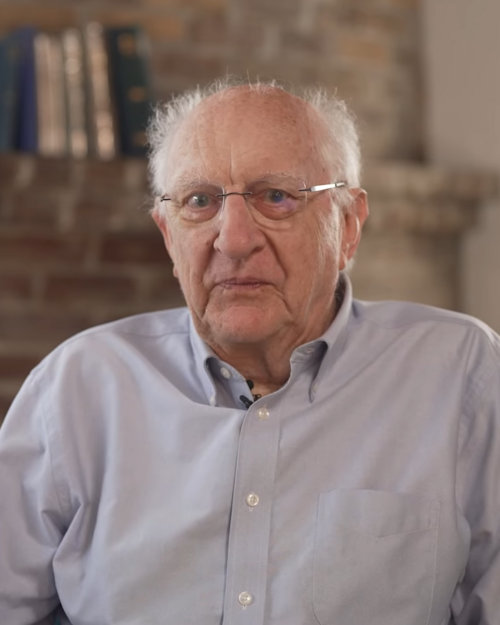
An experimentalist and theorist whose work spans early quantum computation with nuclear spins and algorithms that improve how quantum computers simulate physical systems.

Massachusetts Institute of Technology

Julius A. Stratton Professor in Electrical Engineering and Physics

Read profile
Why included? 3 sources

Chuang connects two demanding parts of quantum computing: controlling a physical experiment and determining what an ideal machine can calculate efficiently. His coauthored nuclear magnetic resonance experiment implemented a small instance of Shor’s algorithm. Later work with Guang Hao Low developed quantum signal processing for Hamiltonian simulation. Together these contributions give readers a route from early demonstrations to the algorithmic tools used to reason about more capable quantum processors.

Algorithms & complexityQuantum simulation

Documented work base: United States

Identification checked Explore the contributions and sources
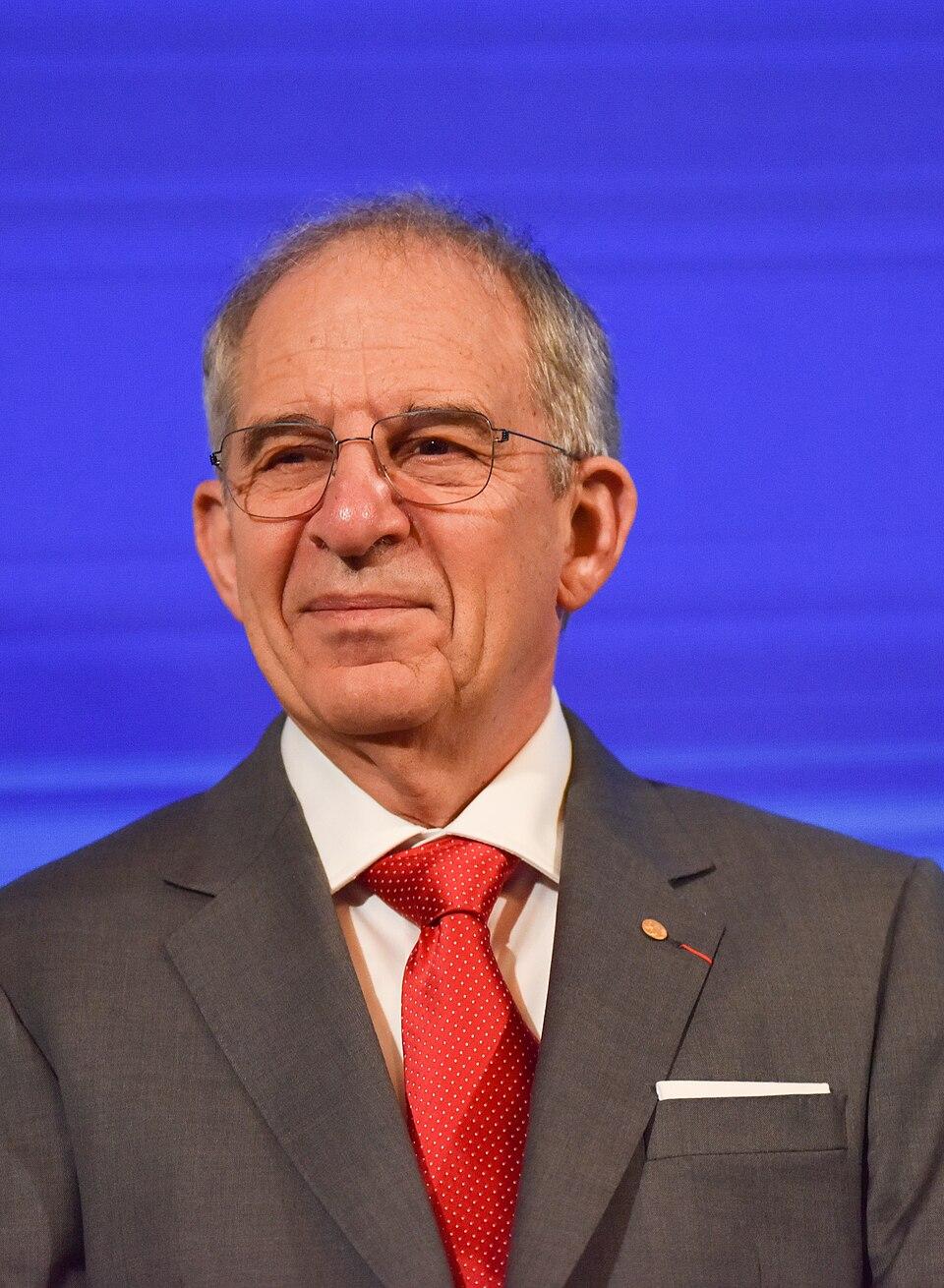
Helped demonstrate macroscopic quantum tunnelling and quantized energy levels in electrical circuits, establishing experimental foundations for superconducting quantum devices and precision qubit measurement.

University of California, Berkeley

Professor Emeritus of the Graduate School

Read profile
Why included? 3 sources

Clarke’s contributions connect the foundations of superconducting quantum behavior to the problem of measuring a quantum device. The 1985 experiments with Michel Devoret and John Martinis demonstrated tunnelling and discrete energy levels in Josephson-junction circuits. His subsequent research includes SQUID detection and controllable coupling between superconducting qubits. These links make his work relevant to how electrical circuits can store, manipulate and reveal quantum information. The profile treats those achievements as collaborative experimental results, without equating the foundational demonstrations with today’s complete processors.

FoundationsControl & measurement

Documented work base: United States

Identification checked Explore the contributions and sources
D

1 person

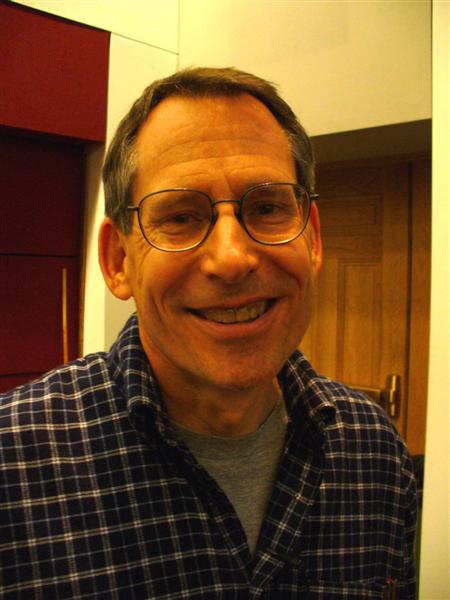
An experimental physicist whose circuit-quantum research connects macroscopic quantum behavior with superconducting qubit designs, including collaborative development of the charge-noise-resistant transmon.

University of California, Santa Barbara; Google Quantum AI

Professor of Physics at UC Santa Barbara and Chief Scientist of Google Quantum AI

Read profile
Why included? 2 sources

Devoret’s work links foundational tests of quantum mechanics in electrical circuits with the engineering of superconducting quantum processors. His early experiments with John Clarke and John Martinis established macroscopic quantum behavior in circuit systems. Later collaborative work contributed to the transmon qubit. That path matters because building a processor requires both confidence in the underlying physical system and designs that reduce its sensitivity to environmental disturbances while preserving control.

Quantum hardwareControl & measurement

Documented work base: United States

Identification checked Explore the contributions and sources

G

2 people

A theoretical physicist whose collaborative research helped establish circuit quantum electrodynamics and the transmon, linking superconducting circuits with controllable interactions between qubits and microwave fields.

Yale University

Sterling Professor of Physics and Professor of Applied Physics

Read profile
Why included? 3 sources

Girvin’s work helps explain how superconducting electrical circuits can function as engineered quantum systems. The circuit-QED architecture he coauthored described how microwave resonators could support interactions, control and measurement. His subsequent participation in the transmon proposal addressed a key source of qubit noise. These ideas connect theoretical descriptions of light–matter interaction with the design choices needed to build and operate circuit-based quantum processors.

Quantum hardwareControl & measurement

Documented work base: United States

Identification checked Explore the contributions and sources

Gottesman develops ways to protect quantum information, giving researchers a mathematical language for diagnosing errors while preserving the information a calculation needs.

University of Maryland

Brin Family Endowed Professor in Theoretical Computer Science and Co-Director of QuICS

Read profile
Why included? 4 sources

Quantum information cannot be protected by treating an unknown quantum state as an ordinary file to copy. Gottesman’s stabilizer formalism instead supplies a structured language for describing encoded information and the checks used to diagnose errors. His work with Alexei Kitaev and John Preskill on oscillator encoding connects continuous physical systems with discrete logical information. These contributions make the relationship between a code, the operations it supports and its resource cost easier to reason about across hardware platforms. The current QuICS profile identifies him as its co-director and the Brin Family Endowed Professor in Theoretical Computer Science at the University of Maryland, with an appointment in the Institute for Advanced Computer Studies.

Error correctionFoundations

Documented work base: United States

Identification checked Explore the contributions and sources

H

1 person

Harrow develops mathematical tools for quantum computation, from the HHL linear-systems algorithm to a resource framework connecting communication, entanglement and quantum information protocols.

Massachusetts Institute of Technology

Professor of Physics, MIT

Read profile
Why included? 3 sources

Harrow connects the search for useful quantum algorithms with rigorous accounts of the resources they consume. With Hassidim and Lloyd, he showed how a quantum computer could estimate properties of certain linear-system solutions under explicit input and conditioning assumptions. With Devetak and Winter, he developed a language for combining quantum communication protocols. These contributions make him a useful guide to both the potential of quantum processing and the conditions that an advantage claim must satisfy.

Algorithms & complexityFoundations

Documented work base: United States

Identification checked Explore the contributions and sources

K

1 person

Kitaev developed foundational approaches to protecting quantum information, including computation with anyons and the oscillator encoding now known as the Gottesman–Kitaev–Preskill code.

California Institute of Technology

Ronald and Maxine Linde Professor of Theoretical Physics and Mathematics, Caltech

Read profile
Why included? 3 sources

Kitaev’s work changes how quantum information can be represented and protected. His anyon construction connects fault-tolerant operations to the structure of a two-dimensional quantum system. With Gottesman and Preskill, he also showed how a discrete logical qubit could be embedded in a continuous-variable oscillator and protected against small shifts. These ideas provide architectural building blocks across different hardware programs. They are theoretical constructions whose physical realization requires additional experimental control and error-management work.

Error correctionFoundations

Documented work base: United States

Identification checked Explore the contributions and sources

N

1 person

Connects the theory of non-Abelian particles and topological quantum computation with Microsoft’s long-term quantum-hardware program, pursuing ways to encode information with protection built into the physical system.

Microsoft

Technical Fellow and Corporate Vice President of Quantum Hardware

Read profile
Why included? 2 sources

Nayak’s inclusion rests on a documented theoretical contribution and a clearly identified hardware leadership role. His coauthored review connects non-Abelian statistics, braiding and fault-tolerant computation, providing a framework for evaluating proposed topological machines. At Microsoft he leads efforts to translate that approach into hardware. The distinction between a theoretical architecture and a demonstrated, scalable processor is essential here. This profile does not treat company announcements about Majorana devices as independent confirmation that universal topological quantum computation has been achieved.

Error correctionQuantum hardware

Documented work base: United States

Identification checked Explore the contributions and sources

P

1 person

Preskill connects the theory of reliable quantum computation with a practical question: what can a noisy machine accomplish, and what would it take to protect a useful calculation?

California Institute of Technology

Richard P. Feynman Professor of Theoretical Physics

Read profile
Why included? 5 sources

Preskill’s work links methods for protecting quantum information with a framework for reading the field’s promises. With Daniel Gottesman and Alexei Kitaev, he introduced an oscillator encoding that protects against small displacement errors. His NISQ-era analysis examines opportunities and limitations before comprehensive error correction is available. Together, these contributions explain why physical-qubit counts alone cannot tell a reader whether a machine can perform a reliable calculation. His current Caltech curriculum vitae also lists a Senior Scientist role at Oratomic beginning in 2026, alongside his academic appointments. That concurrent affiliation provides context for reading company forecasts; the underlying research and its assumptions remain the evidence to examine.

FoundationsError correction

Documented work base: United States

Identification checked Explore the contributions and sources

S

3 people

Develops neutral-atom quantum processors, with research spanning multi-qubit entanglement, quantum algorithms and measurements that preserve the information stored in neighboring atomic qubits.

University of Wisconsin–Madison

Johannes Rydberg Professor of Physics

Read profile
Why included? 3 sources

Saffman connects the physics of individually controlled atoms to the operations a programmable quantum computer needs. His publications address both entangling several qubits and measuring selected atoms while protecting other qubits. These are distinct engineering steps: preparing useful quantum states does not by itself provide the repeated measurements required for error correction. His inclusion reflects documented experimental contributions to that progression and an active neutral-atom research program at Wisconsin.

Quantum hardwareError correction

Documented work base: United States

Identification checked Explore the contributions and sources

Engineers interactions among laser-cooled atoms to study quantum many-body behavior and create entanglement that can improve the precision of atomic measurements and clocks.

Stanford University

Associate Professor of Physics

Read profile
Why included? 2 sources

Schleier-Smith makes collective quantum behavior experimentally controllable. Her work uses light to mediate interactions between atoms, allowing researchers to tune how information and correlations spread through an atomic ensemble. The same ability to engineer entanglement supports both quantum simulation and improved measurement. She belongs in this directory for research that links those purposes: learning how complex quantum systems behave while developing methods to extract more precise information from them.

Quantum simulationControl & measurement

Documented work base: United States

Identification checked Explore the contributions and sources

Showed that quantum algorithms can efficiently factor integers and compute discrete logarithms, and introduced a way to protect stored quantum information against decoherence.

Massachusetts Institute of Technology

Professor

Read profile
Why included? 3 sources

Shor changed both the motivation for quantum computing and the case that it could be made reliable. His factoring and discrete-logarithm algorithms supplied concrete computational tasks with striking quantum possibilities. His error-correction work then addressed the fragility of the quantum information those algorithms need. These are complementary contributions: one identifies a reason to build a quantum computer, and the other helps explain how imperfect physical components might support dependable quantum computation.

Algorithms & complexityError correction

Documented work base: United States

Identification checked Explore the contributions and sources

V

1 person

Develops the theoretical foundations used to compare quantum and classical computation, including quantum complexity theory and analyses of the difficulty of sampling quantum circuits.

University of California, Berkeley

Roger A. Strauch Professor of EECS; co-director, Berkeley Quantum Computation Center

Read profile
Why included? 3 sources

Vazirani helps establish what a claimed quantum advantage means mathematically. Quantum complexity theory supplies a framework for comparing computational models, and his later work examines the difficulty of reproducing the output of randomly chosen quantum circuits. These contributions matter because experimental performance alone does not explain whether a task is classically difficult. His profile emphasizes the theoretical evidence and its assumptions, keeping complexity results separate from the engineering performance or commercial usefulness of a device.

Algorithms & complexityFoundations

Documented work base: United States

Identification checked Explore the contributions and sources

Y

1 person

Uses precise laser control, optical clocks and ultracold matter to investigate quantum behavior, including entanglement-enhanced timekeeping and controllable systems for quantum many-body research.

JILA / National Institute of Standards and Technology

Fellow, JILA and NIST

Read profile
Why included? 3 sources

Ye’s work shows how precise measurement and quantum control reinforce one another. Optical lattice clocks demand exceptional control over atoms and light; the same tools enable experiments on interactions, entanglement and ultracold molecules. His research therefore contributes to the broader experimental capabilities on which quantum computing and simulation depend. The profile highlights a measured improvement from entanglement alongside a continuing many-body research program, without presenting an atomic clock as a general-purpose quantum processor.

Control & measurementQuantum simulation

Documented work base: United States

Identification checked Explore the contributions and sources
About these checks

Linked sources support selected statements in each profile. Research sources include papers and preprints. A source count is not a ranking or a quality score.

The identification check date relates to the recorded professional description. Individual sources have their own check dates. The fixed 2026 selection stays separate from later profile corrections.

THE EDITORIAL VIEW

Why these people.
Why this field.

Quantum computing is shaped by more than headline breakthroughs. Progress also depends on the people who establish its limits, make its systems more reliable and turn difficult ideas into tools others can use.

The QubitWire 100 recognizes contributions across that work. Each profile explains what is being recognized and connects the account to its supporting evidence.

View the permanent 2026 record