
Skip to content

2026 SELECTION

QubitWire 100

100 people recognized for contributions to quantum computing. Unranked and alphabetical by surname.

An unranked collection. Browse by surname or start with an idea.

Browse by topic
Explain these topics
Error correction
Methods that protect encoded quantum information by detecting and correcting certain errors.
Neutral atoms
A hardware approach that stores quantum information in electrically neutral atoms.
Quantum networks
Links that distribute quantum information or entanglement between locations.
Algorithms & complexity
How quantum calculations work and what resources they require.
Foundations
The concepts and physical principles that quantum information builds on.

The 2026 selection5 of 100 people

About quantum networks
Quantum networks
Links that distribute quantum information or entanglement between locations.

Jump to surname

B

1 person

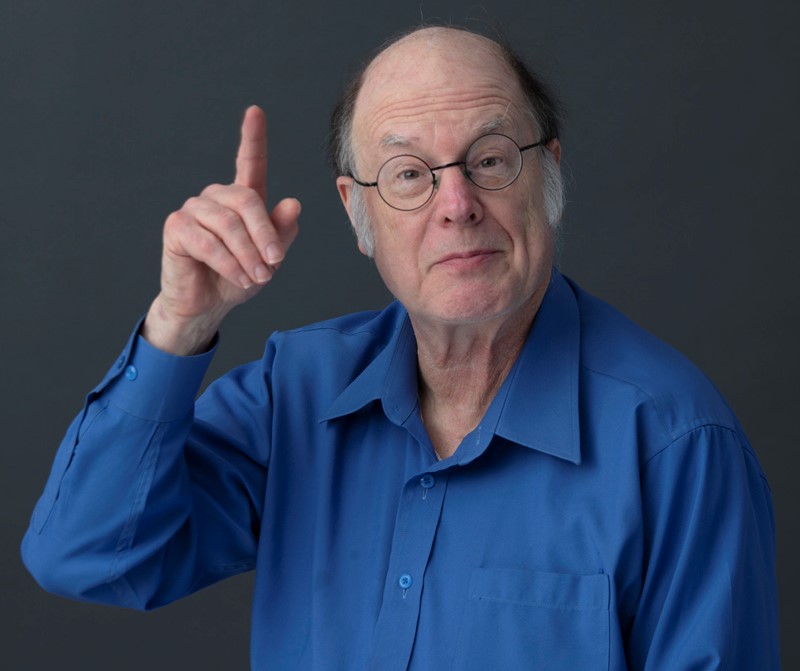
Bennett helped establish quantum information as a discipline, co-developing quantum key distribution and the teleportation protocol that turns shared entanglement into a communication resource.

IBM Research

IBM Fellow

Read profile
Why included? 2 sources

Bennett’s work recast information as something governed by physical law. The BB84 protocol with Gilles Brassard made quantum states part of a cryptographic procedure, while the teleportation paper with five collaborators showed how entanglement and classical communication can transfer an unknown quantum state. These are defining building blocks for quantum communication and information processing. His inclusion recognizes their conceptual and technical reach, while preserving the conditions that make them meaningful: teleportation needs classical information, and a cryptographic protocol’s security must be assessed together with its assumptions and implementation.

FoundationsQuantum networks

Documented work base: United States

Identification checked Explore the contributions and sources
K

1 person

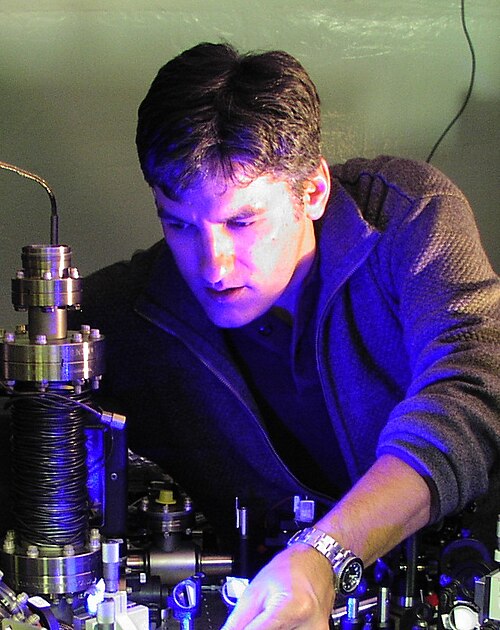
Kim develops engineering approaches for scalable trapped-ion computers and networks, connecting ion-trap design and photonics with academic research and the commercialization of quantum hardware through IonQ.

Duke University

Schiciano Family Distinguished Professor, Duke University; cofounder of IonQ

Read profile
Why included? 4 sources

Kim’s contributions connect the physics of individual ions with the engineering required for larger processors. His work with Christopher Monroe analyzed architectures involving microfabricated traps and photonic connections, making scale a concrete systems question. He then cofounded IonQ to translate university research into a computing business. Duke’s current faculty profile anchors his professional identification. The profile treats IonQ’s creation as an entrepreneurial contribution and reserves technical claims for the research that directly supports them.

Quantum hardwareQuantum networks

Documented work base: United States

Identification checked Explore the contributions and sources

L

1 person

Lukin connects quantum optics with computation and communication, contributing to atomic-ensemble networking protocols and experiments that process encoded logical qubits in reconfigurable neutral-atom arrays.

Harvard University

Joshua and Beth Friedman University Professor, Harvard University

Read profile
Why included? 3 sources

Lukin’s contributions span ways to distribute quantum information and ways to process it while controlling errors. The Duan–Lukin–Cirac–Zoller proposal uses atomic ensembles and optical measurements to address long-distance communication. More recently, his collaborations have operated encoded logical qubits in reconfigurable atom arrays, testing how logical control and error detection improve computations. These strands share a focus on controlling light and matter at the level of quantum information, with achievements attributed to their full research teams.

Error correctionQuantum networks

Documented work base: United States

Identification checked Explore the contributions and sources

M

1 person

Develops trapped-ion quantum computers and photonic interconnects, linking precise control of individual atomic qubits with architectures that connect separate quantum processors into larger systems.

Duke University

Gilhuly Family Presidential Distinguished Professor

Read profile
Why included? 3 sources

Monroe’s work addresses both computation inside an ion processor and communication between processors. The reviewed experiments show why those tasks belong together: mid-circuit measurement must avoid damaging stored data, while modular machines need entanglement across physically separated memories. His Duke group’s recent papers offer concrete examples of each. These are specific experimental building blocks for scalable systems, rather than evidence that a useful, fully fault-tolerant machine has already been delivered.

Quantum networksQuantum hardware

Documented work base: United States

Identification checked Explore the contributions and sources

N

1 person

Designs fault-tolerant architectures for photonic quantum computers, developing ways to assemble small entangled resources and use connectivity efficiently while controlling the cost of error correction.

PsiQuantum

Vice President of Quantum Architecture

Read profile
Why included? 3 sources

Nickerson works on the architecture between physical photonic components and reliable computation. Fusion-based quantum computing makes small resource states and entangling measurements the building blocks of a larger machine. Her work with Daniel Litinski on active volume asks a complementary question: how can available nonlocal connections reduce the cost of logical operations? These are theoretical architecture contributions with explicit assumptions. They help define what hardware must deliver rather than establish that the full proposed computer has already been built.

Error correctionQuantum hardware

Documented work base: United States

Identification checked Explore the contributions and sources
About these checks

Linked sources support selected statements in each profile. Research sources include papers and preprints. A source count is not a ranking or a quality score.

The identification check date relates to the recorded professional description. Individual sources have their own check dates. The fixed 2026 selection stays separate from later profile corrections.

THE EDITORIAL VIEW

Why these people.
Why this field.

Quantum computing is shaped by more than headline breakthroughs. Progress also depends on the people who establish its limits, make its systems more reliable and turn difficult ideas into tools others can use.

The QubitWire 100 recognizes contributions across that work. Each profile explains what is being recognized and connects the account to its supporting evidence.

View the permanent 2026 record